Introduction
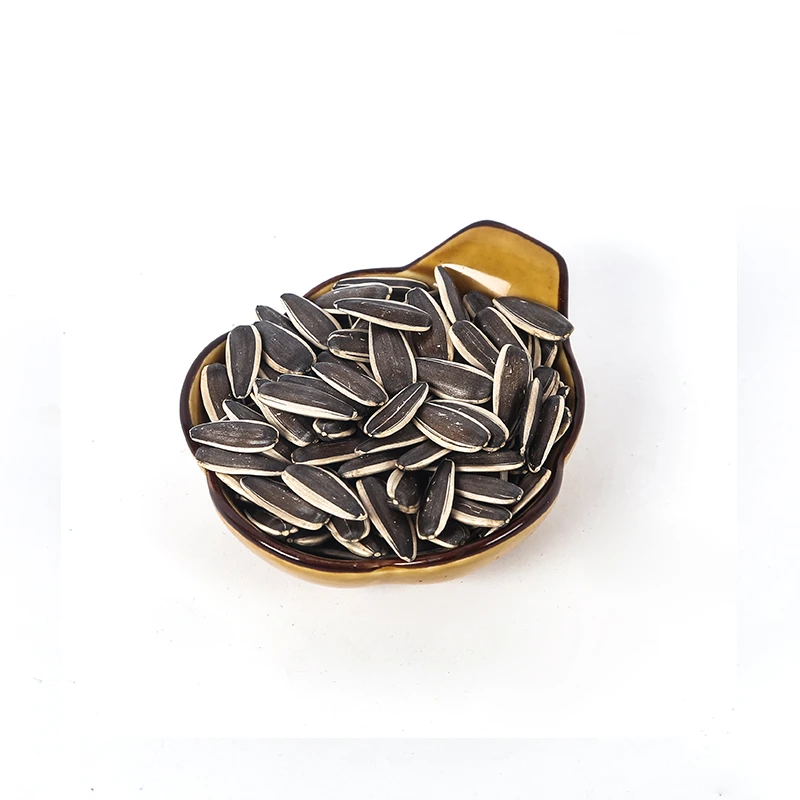
Unsalted sunflower seeds in shell ( Helianthus annuus) represent a significant segment of the global snack food and agricultural commodity markets. Positioned between primary agricultural production and consumer packaged goods, these seeds undergo a series of processing steps to achieve optimal flavor, texture, and shelf stability. Technically, they are the fruit of the sunflower plant, comprised of a kernel enclosed within a protective pericarp (shell). The core performance characteristics revolve around kernel weight, oil content, protein content, and shell integrity. A key industry challenge lies in balancing kernel quality with shell robustness to minimize breakage during processing and maintain consumer appeal. This guide provides an in-depth analysis of the material science, manufacturing, performance, failure modes, and industry standards governing unsalted sunflower seeds in shell.
Material Science & Manufacturing
The primary raw material is the sunflower seed itself, composed of approximately 40-50% oil, 20-30% protein, 10-20% carbohydrate, and 5-10% moisture. The oil is primarily linoleic acid (omega-6) with significant amounts of oleic acid (omega-9). The protein fraction comprises globulins, albumin, and glutenin, influencing seed texture. The shell (pericarp) is composed primarily of cellulose, hemicellulose, and lignin, providing structural integrity. Manufacturing begins with harvesting, followed by drying to a moisture content of 8-10% to inhibit microbial growth. Cleaning removes debris, stalks, and foreign material. Shelling, while common for kernel production, is avoided for “in-shell” seeds. Key parameters during drying include temperature (typically below 60°C to prevent oil oxidation) and airflow rate, meticulously controlled to prevent cracking or uneven moisture distribution. Grading is performed based on kernel size and shell integrity, often utilizing optical sorting technologies. A critical step is the application of a food-grade coating (typically a thin layer of vegetable oil, often sunflower oil itself) to enhance shine, protect against moisture absorption, and improve palatability. Post-coating, seeds undergo a final quality inspection before packaging. Parameter control relies heavily on near-infrared spectroscopy (NIRS) for oil and moisture content analysis, and physical testing for shell strength and kernel weight.
Performance & Engineering
Performance assessment centers on several key factors. Shell strength is crucial, quantified by impact resistance (measured in Joules) and compression strength (measured in MPa). These properties dictate the seeds’ ability to withstand handling during packaging, transportation, and consumer use. Kernel integrity, assessed by percentage of broken kernels, directly impacts consumer acceptance. Oil stability, measured by peroxide value (PV) and acid value (AV), is critical for preventing rancidity and extending shelf life. Environmental resistance concerns primarily moisture absorption, leading to microbial growth and reduced crispness. Packaging plays a vital role in mitigating these effects; typically, multi-layer films with barrier properties against oxygen, moisture, and light are employed. Compliance requirements are stringent, governed by food safety regulations (e.g., FDA in the US, EFSA in Europe) concerning permissible levels of heavy metals (lead, cadmium), pesticides, and aflatoxins. Force analysis during shelling (even partial shelling during handling) reveals stress concentrations within the shell structure. Finite element analysis (FEA) can be used to optimize shell geometry for increased impact resistance. Moisture vapor transmission rate (MVTR) of packaging materials is a key engineering parameter to control, aiming for values below 5 g/m²/day.
Technical Specifications
| Parameter | Unit | Typical Value | Acceptable Range |
|---|---|---|---|
| Kernel Weight | g | 0.5 – 0.7 | 0.4 – 0.8 |
| Oil Content (Dry Basis) | % | 40 – 50 | 38 – 55 |
| Protein Content (Dry Basis) | % | 20 – 25 | 18 – 28 |
| Moisture Content | % | 8 – 10 | 6 – 12 |
| Shell Strength (Impact Resistance) | J | 2.5 – 4.0 | 1.5 – 5.0 |
| Shell Strength (Compression) | MPa | 30 – 50 | 20 – 60 |
Failure Mode & Maintenance
Failure modes in unsalted sunflower seeds in shell are diverse. Shell cracking, induced by mechanical stress during handling and transportation, is a common issue, exposing the kernel to moisture and oxidation. Kernel rancidity, stemming from lipid oxidation, results in off-flavors and reduced nutritional value; this is accelerated by high temperatures, exposure to oxygen, and inadequate packaging. Microbial contamination, particularly by Aspergillus species producing aflatoxins, poses a significant safety hazard; this is driven by high moisture content and improper storage. Insect infestation can also lead to product loss. Delamination of the shell from the kernel can occur if drying is too rapid or uneven. Oxidation of unsaturated fatty acids in the kernel leads to changes in flavor and texture. Maintenance, in this context, refers to proper storage conditions. Seeds should be stored in a cool, dry, and dark environment with relative humidity below 65%. Packaging integrity should be regularly inspected. First-in, first-out (FIFO) inventory management is crucial to minimize storage time. Regular monitoring for aflatoxins and other contaminants is recommended. Preventative measures include using high-quality seeds, optimizing drying and coating processes, and implementing robust packaging solutions.
Industry FAQ
Q: What are the key indicators of sunflower seed quality beyond oil content?
A: Beyond oil content, key indicators include kernel plumpness (size and fullness), shell integrity (resistance to cracking), moisture content (influencing shelf life and microbial growth), and the absence of visible defects like insect damage or mold. Free fatty acid (FFA) content is also a critical indicator of oil quality, and peroxide value is essential for assessing oxidation levels.
Q: How does the sunflower variety impact the shell strength and overall product performance?
A: Different sunflower varieties exhibit significant variations in shell thickness and composition. Confectionery-type varieties generally have thicker shells and a higher proportion of lignin, providing greater impact resistance. Oilseed varieties tend to have thinner shells. Selecting the appropriate variety is crucial for achieving desired product characteristics and minimizing breakage during handling.
Q: What packaging materials are best suited for maximizing shelf life and preventing rancidity?
A: Multi-layer films incorporating a metallic layer (e.g., aluminum foil) and a high-barrier polymer (e.g., EVOH) are ideal for minimizing oxygen and moisture permeation. Nitrogen flushing before sealing can further reduce oxygen levels. The packaging material should also be opaque to protect against light-induced oxidation.
Q: What are the acceptable levels of aflatoxins in unsalted sunflower seeds in shell, and how are they monitored?
A: Regulatory limits for aflatoxins vary by country. In the US, the FDA limit is 20 parts per billion (ppb). In Europe, the limit is generally 2 ppb. Aflatoxin levels are monitored using High-Performance Liquid Chromatography (HPLC) with fluorescence detection. Regular testing of raw materials and finished products is essential to ensure compliance.
Q: How does the drying process affect the final quality and shell integrity of the sunflower seeds?
A: The drying process is critical. Rapid drying or excessive temperatures can cause shell cracking and kernel damage. Slow, controlled drying at temperatures below 60°C is preferred. Maintaining consistent airflow and monitoring moisture content are essential for achieving optimal shell integrity and preventing localized overheating. Uneven drying introduces stress concentrations in the shell.
Conclusion
Unsalted sunflower seeds in shell represent a complex agricultural product with a sophisticated manufacturing process and demanding performance requirements. The interplay between material science – specifically the characteristics of the kernel and shell – and engineering controls during processing and packaging dictates product quality, shelf life, and safety. Maintaining optimal moisture content, protecting against oxidation, and ensuring shell integrity are paramount concerns.
Future trends will likely focus on enhancing shell strength through breeding programs, developing more sustainable packaging materials with improved barrier properties, and implementing advanced monitoring technologies to detect and mitigate aflatoxin contamination. A deeper understanding of the biochemical pathways involved in lipid oxidation will also be crucial for developing more effective antioxidant strategies and extending product shelf life. Continuous improvement in these areas will ensure the continued availability of a high-quality, safe, and palatable snack food.
