Introduction
Unroasted sunflower seeds ( Helianthus annuus ) represent a crucial intermediary product within the broader edible seed industry, positioned between agricultural production and the final consumer-packaged snack food market. Unlike their roasted counterparts, unroasted seeds retain a higher moisture content and distinct biochemical profile, influencing their subsequent processing and final product characteristics. Their primary role lies in providing a raw material for roasting, salting, flavoring, and oil extraction, serving both the human food sector and the animal feed industry. Core performance characteristics include oil content, protein concentration, moisture activity, and kernel size, directly impacting processing efficiency and finished product quality. The industry faces ongoing challenges regarding seed maturity at harvest, storage stability, and minimizing the presence of aflatoxins and other mycotoxins. This guide provides an in-depth technical overview of unroasted sunflower seed characteristics, manufacturing considerations, performance parameters, potential failure modes, and relevant industry standards.
Material Science & Manufacturing
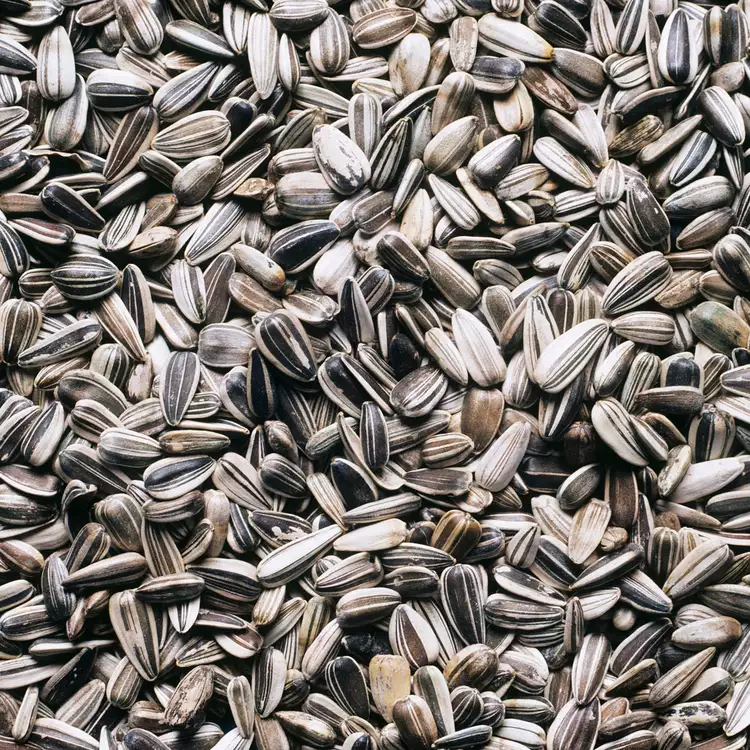
Sunflower seeds are composed primarily of three fractions: the kernel (cotyledon), the hull (pericarp), and the germ. The kernel constitutes approximately 65-75% of the seed's weight and is rich in lipids (40-55% dry weight), proteins (18-25%), and carbohydrates (15-20%). Lipids are predominantly polyunsaturated fatty acids (linoleic, oleic), contributing to oxidative instability. The hull, accounting for 20-30% of the seed weight, is largely cellulose and lignin, providing physical protection. The germ contains valuable nutrients but is susceptible to rancidity. Manufacturing begins with harvesting, typically employing combine harvesters equipped with specialized seed-saving components. Post-harvest processing includes cleaning (removal of stalks, leaves, and other debris), drying (reducing moisture content from 30-35% to 8-10% to inhibit microbial growth and enzymatic activity), dehulling (optional, depending on intended use), and grading (separation based on size and quality). Drying is a critical control point, with temperatures exceeding 45°C potentially damaging oil quality. Dehulling efficiency is influenced by seed variety, moisture content, and impact force. Improperly dried or dehulled seeds exhibit increased susceptibility to breakage during subsequent handling and processing. Key parameters monitored include moisture content (using a moisture analyzer), oil content (Soxhlet extraction or NIR spectroscopy), hulling percentage, and foreign material content (visual inspection and sieving).
Performance & Engineering
The performance of unroasted sunflower seeds is fundamentally linked to their structural integrity and biochemical composition. Tensile strength, relevant during dehulling and handling, is dependent on hull thickness and kernel firmness. Seed moisture content directly affects its susceptibility to cracking and breakage under stress. Moisture activity (aw), a crucial parameter for storage stability, must be maintained below 0.6 to prevent mold growth. Oil stability, measured by peroxide value (PV) and anisidine value (AV), degrades over time due to lipid oxidation. Environmental resistance considerations include temperature fluctuations and humidity levels during storage. Prolonged exposure to high temperatures accelerates oxidation, while high humidity promotes microbial proliferation. Compliance requirements pertain to food safety regulations (e.g., FDA, EFSA) regarding mycotoxin levels (aflatoxins, ochratoxins) and pesticide residues. Engineering considerations focus on optimizing processing parameters to minimize seed damage and maintain quality. This includes designing efficient drying systems, impact-resistant dehulling machines, and controlled-atmosphere storage facilities. Proper ventilation is crucial for removing moisture generated during respiration and preventing localized hotspots.
Technical Specifications
| Parameter | Typical Value | Test Method | Industry Standard |
|---|---|---|---|
| Moisture Content | 8-10% | Oven Drying (130°C, 2h) | ISO 649-1 |
| Oil Content (Dry Basis) | 45-55% | Soxhlet Extraction | AOCS Official Method Ja 5 |
| Protein Content (Dry Basis) | 18-25% | Kjeldahl Method | ISO 1871 |
| Hull Content | 20-30% | Visual Sorting & Weighing | N/A (Supplier Specification) |
| Kernel Size (Diameter) | 8-12 mm | Sieve Analysis | N/A (Supplier Specification) |
| Aflatoxin B1 | < 2 ppb | HPLC-FLD | FDA Action Level (20 ppb) |
Failure Mode & Maintenance
Failure modes in unroasted sunflower seeds can manifest as physical damage (cracking, breakage), biochemical degradation (lipid oxidation, protein denaturation), and microbial contamination. Fatigue cracking during handling is often initiated by pre-existing defects or stress concentrations. Delamination of the kernel can occur due to improper drying or excessive impact forces. Lipid oxidation, leading to rancidity and off-flavors, is accelerated by exposure to oxygen, light, and elevated temperatures. Microbial growth, particularly molds producing mycotoxins, is favored by high moisture content and warm temperatures. Maintenance strategies involve implementing stringent quality control measures throughout the supply chain, including proper harvesting techniques, optimized drying protocols, controlled-atmosphere storage, and regular monitoring for mycotoxins and lipid oxidation products. Storage facilities should be thoroughly cleaned and sanitized to prevent microbial contamination. Seed lots should be rotated on a first-in, first-out (FIFO) basis to minimize storage duration. Regular inspections for insect infestation are also essential. Preventative maintenance on processing equipment, such as dryers and dehullers, is crucial for minimizing seed damage and ensuring consistent quality.
Industry FAQ
Q: What are the key factors influencing the storage life of unroasted sunflower seeds?
A: The primary determinants of storage life are moisture content, temperature, and oxygen exposure. Maintaining a moisture content below 8%, storing seeds at low temperatures (below 10°C), and minimizing oxygen contact (e.g., using airtight containers or modified atmosphere packaging) are crucial for maximizing shelf life and preventing lipid oxidation and microbial growth.
Q: How does seed maturity at harvest affect the quality of unroasted seeds?
A: Prematurely harvested seeds typically have lower oil content and a higher moisture content, leading to increased susceptibility to breakage and microbial spoilage. Overmature seeds may exhibit reduced oil quality and increased hull toughness, making dehulling more difficult.
Q: What are the most common methods for detecting aflatoxins in sunflower seeds?
A: High-performance liquid chromatography with fluorescence detection (HPLC-FLD) is the standard method for quantifying aflatoxin B1 and other aflatoxins. Enzyme-linked immunosorbent assay (ELISA) is a faster, more cost-effective alternative, but may be less accurate. Rapid test kits are also available for preliminary screening.
Q: What is the impact of dehulling on the final oil yield and quality?
A: Efficient dehulling increases the kernel-to-hull ratio, maximizing oil yield. However, aggressive dehulling can damage the kernels, leading to increased oil loss during extraction and potentially reducing oil quality by releasing free fatty acids. Optimization of dehulling parameters is critical.
Q: How do different sunflower varieties compare in terms of their suitability for unroasted seed production?
A: Different varieties exhibit variations in oil content, kernel size, hull thickness, and susceptibility to disease. High-oleic acid varieties are preferred for improved oxidative stability. Varieties with thinner hulls are easier to dehull. Selecting a variety adapted to the local climate and growing conditions is essential.
Conclusion
Unroasted sunflower seeds, despite their intermediary status, represent a technically complex agricultural product requiring careful management throughout the entire supply chain. Optimizing harvesting, drying, and storage conditions is paramount to preserving seed quality and minimizing losses due to physical damage, biochemical degradation, and microbial contamination. A thorough understanding of the material science principles governing seed structure and composition is crucial for effective process control and ensuring compliance with stringent food safety regulations.
Future advancements will likely focus on improved seed breeding for enhanced oil content and disease resistance, as well as the development of more efficient and sustainable processing technologies. Non-destructive quality assessment methods, such as near-infrared spectroscopy (NIR), offer promising avenues for real-time monitoring of seed composition and quality during processing, leading to further optimization and reduced waste. Continued adherence to international standards and best practices remains fundamental for maintaining the integrity and safety of this vital agricultural commodity.
