Introduction
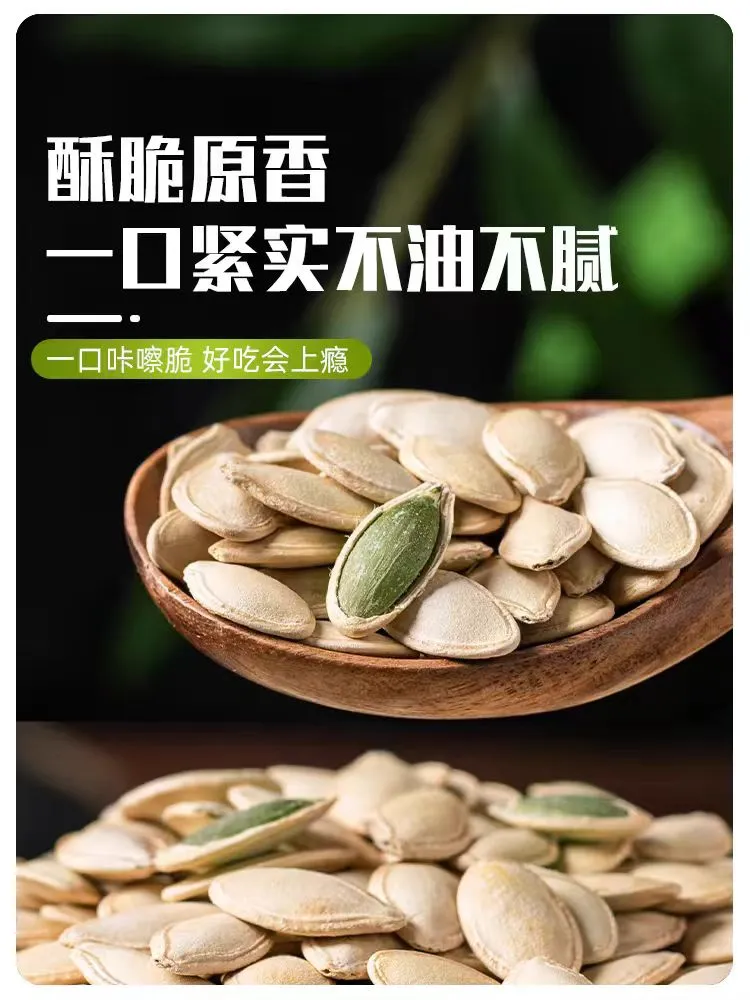
The melon seed, Cucurbita pepo (specifically referring to the seed derived from cultivated melon varieties), represents a significant agricultural product with applications spanning human consumption, animal feed, and increasingly, industrial materials. Its technical position within the food and agricultural chain is that of a post-harvest byproduct, traditionally considered waste, but now recognized for its substantial oil content, protein profile, and potential for bio-composite material development. Core performance characteristics include oil yield (typically 40-50% by weight), protein content (25-35%), and the presence of bioactive compounds like phytosterols and antioxidants. The increasing demand for sustainable materials and plant-based proteins drives the need for optimized processing and utilization of this resource, necessitating detailed understanding of its inherent properties and engineering limitations.
Material Science & Manufacturing
Melon seeds are primarily composed of a hard outer shell (testa) consisting of cellulose, hemicellulose, and lignin, providing structural integrity. The kernel within contains the majority of the oil and protein. Oil composition is predominantly linoleic acid (omega-6) and oleic acid (omega-9), impacting its oxidative stability and suitability for various applications. Manufacturing processes begin with seed cleaning and drying to reduce moisture content, typically to below 8% to prevent mold growth and facilitate efficient oil extraction. Oil extraction is commonly performed using mechanical pressing (expeller pressing) or solvent extraction (using hexane). Mechanical pressing yields a lower oil yield but produces a higher-quality oil with less residual solvent. Solvent extraction offers higher yields but necessitates stringent solvent removal procedures. Following oil extraction, the seed cake (residual solid material) is further processed to recover protein through techniques like aqueous extraction or enzymatic hydrolysis. Critical parameters during processing include temperature control to prevent protein denaturation, moisture control to optimize oil yield, and solvent purity to ensure food-grade oil quality. Failure to control these parameters results in reduced oil yield, degraded protein quality, and potential contamination.

Performance & Engineering
Engineering applications of melon seed derivatives focus on utilizing the oil as a bio-lubricant, biofuel component, or polymer precursor, and the seed cake as a reinforcement filler in composite materials. When used as a bio-lubricant, the oil’s viscosity index, pour point, and oxidative stability are key performance indicators. Additives are often required to enhance these properties, particularly to improve oxidation resistance. As a biofuel component, the oil undergoes transesterification to produce biodiesel, with performance evaluated by cetane number, cloud point, and kinematic viscosity. In composite materials, the seed cake's particle size distribution, aspect ratio, and surface modification (e.g., with silane coupling agents) directly affect the mechanical properties of the resulting composite, particularly tensile strength, flexural strength, and impact resistance. Environmental resistance considerations include susceptibility to biodegradation, particularly in moist environments, and thermal degradation at elevated temperatures. Compliance requirements depend on the intended application, ranging from food safety standards (for oil used in food processing) to environmental regulations governing biofuel production and waste disposal.
Technical Specifications
| Parameter | Unit | Typical Value (Melon Seed Oil) | Test Method |
|---|---|---|---|
| Oil Content | % (w/w) | 45-55 | AOAC 920.39 |
| Acid Value | mg KOH/g | < 2.0 | ISO 660 |
| Peroxide Value | meq O2/kg | < 5.0 | ISO 3960 |
| Iodine Value | g I2/100g | 110-130 | ISO 3785 |
| Linoleic Acid Content | % (of total fatty acids) | 50-65 | Gas Chromatography (GC-FID) |
| Protein Content (Seed Cake) | % (w/w) | 28-38 | Kjeldahl Method (ISO 8968) |
Failure Mode & Maintenance
Failure modes in melon seed-derived products vary depending on the application. In edible oil, rancidity due to lipid oxidation is a primary concern, leading to off-flavors and decreased nutritional value. This is accelerated by exposure to air, light, and elevated temperatures. In composite materials, degradation of the seed cake filler due to moisture absorption and microbial attack can reduce mechanical strength and dimensional stability. Fatigue cracking can occur under cyclic loading, particularly in composites with high filler content. For biodiesel applications, fuel degradation due to oxidation and polymerization can lead to engine deposits and performance loss. Maintenance strategies include storing oil in airtight, opaque containers in cool, dark environments. For seed cake composites, applying surface coatings or using hydrophobic treatments can mitigate moisture absorption. Regular monitoring of oil quality parameters (acid value, peroxide value) is crucial for identifying early signs of degradation. Antioxidant additives can be used to prolong oil shelf life. Appropriate selection of resin matrix and filler loading levels are key to preventing fatigue cracking in composites.
Industry FAQ
Q: What is the impact of seed variety on the oil profile and resultant biodiesel quality?
A: Seed variety significantly influences the fatty acid composition of the oil. Different melon cultivars exhibit varying levels of linoleic, oleic, and other fatty acids. Higher linoleic acid content, while beneficial for certain applications, can reduce the oxidative stability of biodiesel and increase its cloud point. Cultivars specifically bred for higher oleic acid content are preferred for biodiesel production as they yield a more stable and higher-quality fuel.
Q: How does the moisture content of the seeds affect the efficiency of oil extraction using mechanical pressing?
A: High moisture content reduces the efficiency of mechanical pressing. Water increases the plasticity of the seed mass, making it more difficult to deform and release the oil. Optimal moisture content for mechanical pressing is typically between 8-10%. Excessive moisture also promotes microbial growth and reduces the shelf life of the seeds.
Q: What surface treatments are recommended for seed cake filler to improve its compatibility with polymer matrices in composites?
A: Silane coupling agents are commonly used to improve the compatibility between the hydrophilic seed cake filler and the hydrophobic polymer matrix. Silanes create a chemical bridge between the two phases, enhancing interfacial adhesion and improving mechanical properties. Other surface treatments include acetylation and alkaline treatment, which modify the surface chemistry of the filler and promote better dispersion within the polymer.
Q: What are the primary challenges associated with using melon seed oil as a bio-lubricant, and how can they be addressed?
A: The primary challenges are its relatively low oxidative stability and limited high-temperature performance. Oxidation leads to increased viscosity and the formation of sludge, reducing lubrication effectiveness. Additives such as antioxidants (e.g., Vitamin E, butylated hydroxytoluene) and extreme pressure additives can significantly improve oxidative stability and high-temperature performance. Formulating with synthetic base oils can also enhance lubricant properties.
Q: What are the economic considerations when choosing between mechanical pressing and solvent extraction for melon seed oil production?
A: Mechanical pressing requires lower capital investment but yields a lower oil recovery rate, resulting in higher production costs per unit of oil. Solvent extraction has higher upfront costs due to specialized equipment and solvent handling requirements but provides significantly higher oil yields, often leading to lower overall production costs, especially at large scales. However, solvent extraction necessitates rigorous solvent recovery and purification processes to meet food safety regulations, adding to operational expenses.
Conclusion
The melon seed presents a compelling opportunity for value-added utilization, transforming a traditional byproduct into a versatile resource for diverse industrial applications. Understanding its material science, optimizing manufacturing processes, and addressing inherent performance limitations are crucial for maximizing its potential. The selection of appropriate processing techniques and formulations hinges on the intended end-use, demanding a nuanced approach to material characterization and engineering design.
Further research and development focused on genetic improvement of melon varieties for optimized oil profiles, advanced surface modification techniques for seed cake fillers, and innovative antioxidant formulations for enhanced oil stability are essential for driving the widespread adoption of melon seed-derived materials in sustainable industrial practices. The economic viability of processing this byproduct depends on continued innovation to reduce costs and improve product performance.
