Introduction
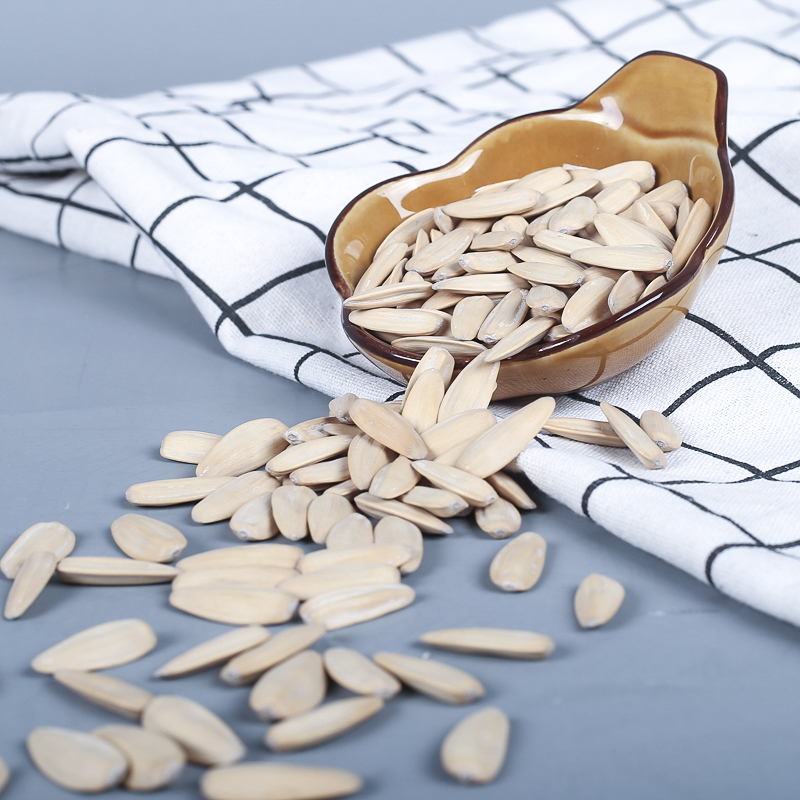
Sunflower seeds unsalted ( Helianthus annuus ) represent a significant commodity within the global snack food and ingredient market. Positioned within the agricultural processing chain, these seeds undergo harvesting, drying, dehulling, and sorting to yield a consumable product. Their primary value stems from their nutritional profile – rich in unsaturated fatty acids, vitamin E, and dietary fiber – and their versatility as a direct consumption snack, ingredient in confectionary goods, or as a feedstock for oil extraction. This guide provides a detailed technical overview of sunflower seed quality, manufacturing processes, performance characteristics related to shelf life and safety, common failure modes, and relevant industry standards. A key pain point within the industry is maintaining consistent seed quality, specifically minimizing lipid oxidation and ensuring adherence to increasingly stringent food safety regulations regarding aflatoxin contamination and shell fragments.
Material Science & Manufacturing
The primary material science considerations for sunflower seeds unsalted revolve around seed composition – approximately 35-55% oil (primarily linoleic acid, an omega-6 fatty acid), 20-30% protein, 10-20% hull, and 5-10% moisture. Seed oil composition varies significantly based on genetic cultivar. Hull composition is predominantly cellulose and lignin, impacting dehulling efficiency. Manufacturing begins with harvesting at optimal maturity (typically 30-35% moisture content). Drying, usually employing forced-air systems, reduces moisture content to 8-10% to inhibit microbial growth and enzymatic activity. Dehulling is a critical process, typically employing impact or friction methods. Parameter control is essential; excessive impact can damage the kernel, increasing oil exposure and accelerating rancidity. Sorting, often using optical sorting technology, removes foreign material (FM), broken kernels, and discolored seeds. Seed sizing is also performed to standardize the product. Quality control at each stage utilizes parameters such as moisture content (measured via near-infrared spectroscopy), oil content (solvent extraction), and kernel damage (visual inspection and sieve analysis). Maintaining low processing temperatures throughout the manufacturing process is crucial to preserve vitamin E content and minimize the formation of acrylamide. A critical control point is the removal of hull fragments, as these present a physical hazard.
Performance & Engineering
Performance characteristics of sunflower seeds unsalted are largely dictated by their structural integrity and chemical composition. Kernel strength, measured by resistance to cracking under compressive force, influences handling during packaging and transportation. Hull integrity during dehulling directly impacts yield and the presence of undesirable fragments. The key engineering challenge is mitigating lipid oxidation, a primary driver of off-flavor development and reduced shelf life. This is addressed through packaging strategies – employing oxygen-barrier films (e.g., metallized polypropylene, EVOH) and modified atmosphere packaging (MAP) using nitrogen flushing. Environmental resistance focuses on preventing moisture uptake, which promotes microbial growth and accelerates rancidity. Packaging materials with low water vapor transmission rates (WVTR) are essential. Compliance requirements, particularly relating to food safety, are stringent. Regulations like the Food Safety Modernization Act (FSMA) in the US and equivalent regulations in the EU mandate hazard analysis and critical control points (HACCP) plans to minimize risks associated with biological (aflatoxin), chemical (pesticide residues), and physical (FM, hull fragments) hazards. The seeds’ inherent brittleness necessitates careful handling to minimize damage and dust generation during processing and packaging.
Technical Specifications
| Parameter | Unit | Typical Value | Acceptable Range |
|---|---|---|---|
| Moisture Content | % | 8.5 | 7.0 – 10.0 |
| Oil Content (Dry Basis) | % | 50 | 45 – 55 |
| Kernel Size (Diameter) | mm | 8-10 | 6-12 |
| Free Fatty Acid (FFA) | % (oleic acid) | 0.5 | <1.0 |
| Peroxide Value (PV) | meq O2/kg | 3.0 | <5.0 |
| Aflatoxin B1 | ppb | <2 | <20 (regulatory limit) |
Failure Mode & Maintenance
Common failure modes for sunflower seeds unsalted include rancidity (lipid oxidation), evidenced by off-flavors and odors, caused by exposure to oxygen, light, and elevated temperatures. Kernel cracking or chipping during handling and processing is another frequent issue, decreasing product appeal and potentially increasing dust formation. Microbiological spoilage, particularly mold growth (leading to aflatoxin contamination), can occur if moisture content is not adequately controlled. Delamination of the kernel can occur due to improper drying or dehulling, resulting in a less desirable texture. Maintenance practices focus on preventing these failures. Storage in cool, dry, and dark conditions is essential. Packaging integrity must be maintained to minimize oxygen and moisture ingress. Regular monitoring of peroxide value and FFA levels indicates the onset of rancidity. Implementing robust cleaning and sanitation protocols throughout the manufacturing process prevents microbial contamination. Preventative maintenance on processing equipment (dehullers, sorters) minimizes kernel damage. Regular inspection of stored seeds for signs of mold growth or insect infestation is crucial. Controlled atmosphere storage (nitrogen flushing) extends shelf life by inhibiting oxidation.
Industry FAQ
Q: What are the critical factors influencing the shelf life of sunflower seeds unsalted?
A: The primary factors are oxygen exposure, moisture content, temperature, and light exposure. Lipid oxidation is the dominant degradation pathway, accelerated by these factors. Effective packaging with oxygen-barrier properties and appropriate storage conditions (cool, dry, dark) are paramount. Monitoring peroxide value is an effective indicator of oxidation progression.
Q: How is aflatoxin contamination controlled in sunflower seed production?
A: Aflatoxin control requires a multi-faceted approach. This includes sourcing seeds from regions with low aflatoxin prevalence, implementing pre-harvest monitoring programs, employing good agricultural practices (GAP) to minimize fungal infection, proper drying of seeds to reduce moisture content, and rigorous testing of finished product to ensure compliance with regulatory limits. HACCP plans should identify aflatoxin as a critical control point.
Q: What is the impact of different dehulling methods on seed quality?
A: Different dehulling methods (impact vs. friction) have varying impacts. Excessive impact can cause kernel damage, increasing oil exposure and accelerating rancidity. Friction dehulling is generally gentler, but may result in lower dehulling efficiency and increased hull fragment contamination. Parameter optimization (impact force, friction intensity) is crucial for each method.
Q: How does seed size affect processing and consumer acceptance?
A: Seed size influences dehulling efficiency and sorting accuracy. Uniform seed size improves processing consistency. Consumer acceptance is also influenced by size; larger seeds are often preferred for their perceived fullness and eating experience. Size variations can affect packaging density and volumetric filling accuracy.
Q: What packaging materials are most effective for maintaining sunflower seed quality?
A: Multi-layer films incorporating materials with high oxygen barrier properties (e.g., metallized polypropylene, EVOH) and low water vapor transmission rates are most effective. Modified atmosphere packaging (MAP) with nitrogen flushing further extends shelf life by displacing oxygen. The packaging material must also be food-grade and comply with relevant regulations regarding plasticizer migration and residue levels.
Conclusion
Sunflower seeds unsalted represent a complex agricultural product requiring stringent quality control throughout the entire value chain. Maintaining optimal moisture content, preventing lipid oxidation, and mitigating aflatoxin contamination are critical technical challenges. Effective packaging, utilizing oxygen-barrier materials and potentially modified atmosphere packaging, is essential for extending shelf life and preserving product quality. Adherence to relevant food safety regulations and industry standards is paramount.
Future trends within the industry will likely focus on improved seed genetics to enhance oil stability and reduce aflatoxin susceptibility, advancements in optical sorting technology for more efficient removal of defects, and the development of sustainable packaging materials. Ongoing monitoring of regulatory changes and implementation of robust HACCP plans will remain crucial for ensuring the safety and quality of sunflower seeds unsalted.
