Introduction
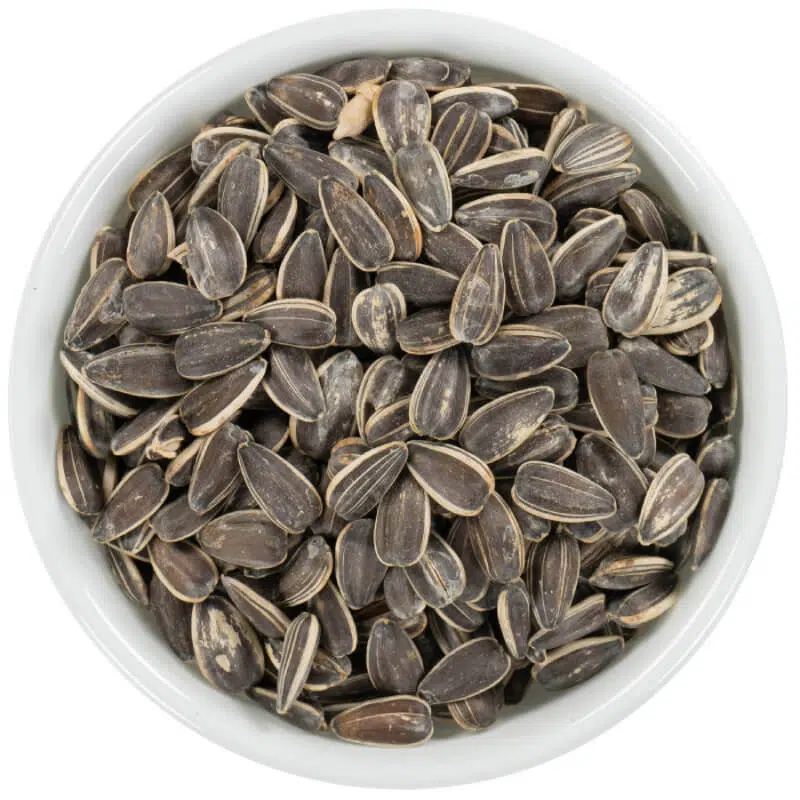
Roasted and salted sunflower seeds ( Helianthus annuus) represent a significant processed food product within the snack food industry. Positioned within the agricultural supply chain as a secondary processing output of sunflower oilseed production, these seeds undergo a complex transformation from raw agricultural commodity to consumer-ready product. The core performance characteristics center on flavor profile, texture (crispness and shell integrity), moisture content, and microbiological safety. Critical to quality is the even distribution of salt, the prevention of rancidity, and maintaining the inherent nutritional value of the seed – notably its protein and healthy fat content. The industry faces ongoing challenges concerning acrylamide formation during roasting, shell breakage during processing, and maintaining consistently low levels of microbial contamination. This guide provides an in-depth technical analysis of the material science, manufacturing processes, performance characteristics, potential failure modes, and industry standards governing the production of roasted and salted sunflower seeds.
Material Science & Manufacturing
Sunflower seeds, as a biological material, are composed primarily of lipids (40-50% by weight), protein (20-25%), carbohydrates (15-20%), and fiber (5-10%), along with moisture and ash. The lipid composition is rich in linoleic acid, an omega-6 fatty acid. The shell, or pericarp, is composed of cellulose and lignin, providing a protective barrier. Manufacturing begins with seed selection, cleaning to remove debris, and dehulling (partial or complete, depending on consumer preference and regional standards). The critical step is roasting, typically conducted via fluid bed roasting, drum roasting, or vacuum roasting. Fluid bed roasting offers superior heat transfer and uniformity, minimizing acrylamide formation. Roasting temperature (typically 120-180°C) and duration are meticulously controlled to achieve optimal moisture content (typically 2-4%), crispness, and flavor development. Salt application is performed post-roasting, using dry salt application or brining techniques. Dry application requires precise control of salt particle size and adhesion properties. Brining, while enhancing flavor penetration, necessitates careful drying to prevent microbial growth. Packaging utilizes moisture barrier films (typically multi-layer polypropylene or polyethylene) to maintain crispness and prevent oxidation. Key parameter control includes monitoring seed moisture content at each stage, controlling roasting airflow and temperature gradients, and managing salt adhesion and coverage. Pre-treatment with calcium chloride solutions can improve shell strength and reduce breakage during processing.
Performance & Engineering
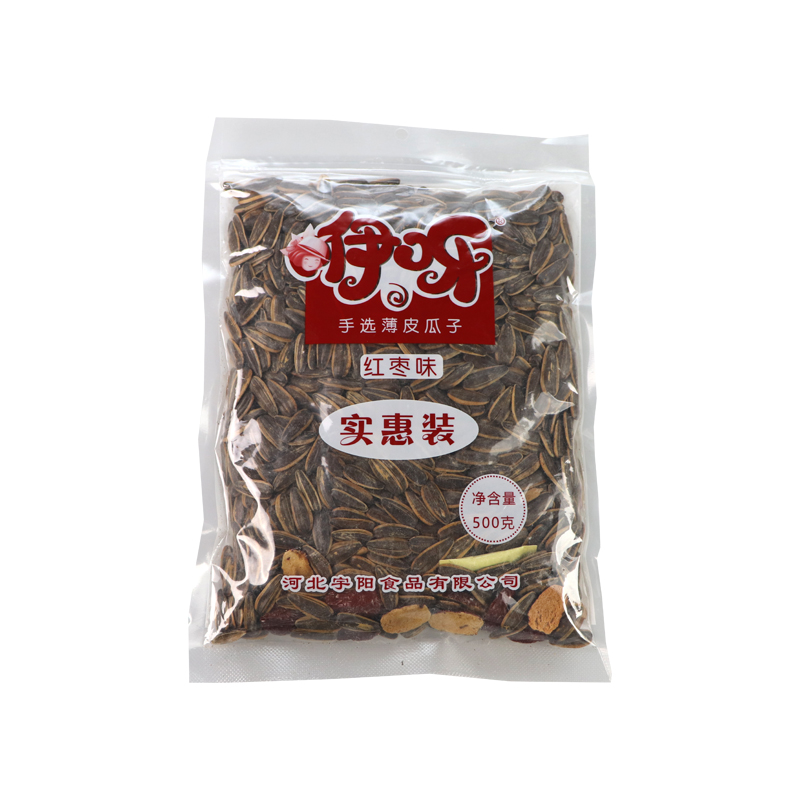
Performance analysis of roasted sunflower seeds centers around several key engineering considerations. Firstly, the compressive strength of the shell is critical for minimizing breakage during handling and transit. Finite Element Analysis (FEA) can be employed to model shell stress distribution under load, optimizing shell thickness and material composition (through seed selection). Secondly, moisture diffusion through the packaging material dictates shelf life. Fick's Law of Diffusion governs this process, and packaging material selection must balance moisture barrier properties with cost and processability. Thirdly, the thermal stability of the lipids is paramount. Lipid oxidation, leading to rancidity, is an Arrhenius process, accelerated by temperature. Packaging materials incorporating oxygen scavengers can mitigate this. Force analysis during processing (e.g., impacts during conveying and packaging) necessitates robust equipment design and appropriate cushioning materials. Compliance requirements, particularly regarding food safety (see Standards & Regulations), mandate adherence to strict hygiene protocols and regular monitoring for microbial contaminants (e.g., Salmonella, E. coli). The Maillard reaction, occurring during roasting, generates desirable flavor compounds but also produces acrylamide. Optimization of roasting parameters (temperature, time, moisture content) is essential to minimize acrylamide formation while maintaining flavor quality. Furthermore, the particle size distribution of the applied salt influences sensory perception and adherence to the seed surface, impacting overall product appeal.
Technical Specifications
| Parameter | Specification | Test Method | Acceptance Criteria |
|---|---|---|---|
| Moisture Content | 2.0 - 4.0% | Oven Drying (AOAC 925.10) | Within specified range; prevents microbial growth & maintains crispness |
| Salt Content | 1.5 - 2.5% | Argentometric Titration (AOAC 930.45) | Consistent flavor profile, consumer preference |
| Acrylamide Content | ≤ 100 ppb | GC-MS (Gas Chromatography-Mass Spectrometry) | Compliance with regulatory limits (e.g., EU Regulation 1881/2006) |
| Peroxide Value (PV) | ≤ 5 meq O2/kg | Titration with Potassium Iodide (AOCS Cd 8-53) | Indicator of lipid oxidation and rancidity development |
| Shell Breakage (%) | ≤ 5% | Visual Inspection and Weight Loss Analysis | Minimizes product loss and maintains aesthetic appeal |
| Total Plate Count (TPC) | ≤ 1,000 CFU/g | Plate Count Method (ISO 4833-1) | Ensures microbiological safety and product quality |
Failure Mode & Maintenance
Roasted and salted sunflower seeds are susceptible to several failure modes. Rancidity is a primary concern, resulting from lipid oxidation. This manifests as an off-flavor and odor, rendering the product unacceptable. Preventing rancidity requires optimized packaging, storage under cool, dark conditions, and the use of antioxidants. Shell breakage occurs due to mechanical stress during processing and handling. This can be minimized through improved equipment design, optimized seed selection (stronger shells), and controlled handling procedures. Moisture absorption leads to loss of crispness and increased susceptibility to microbial growth. Maintaining packaging integrity and controlling storage humidity are crucial. Microbial contamination (e.g., Salmonella, E. coli) poses a significant food safety risk. Strict hygiene protocols, regular sanitation, and HACCP (Hazard Analysis and Critical Control Points) implementation are essential. Acrylamide formation during roasting, while minimized through process control, remains a potential concern. Regular testing and optimization of roasting parameters are necessary. Maintenance of roasting equipment involves regular cleaning to prevent buildup of seed residue, calibration of temperature sensors, and inspection of airflow systems. Packaging equipment requires periodic inspection and replacement of sealing mechanisms to ensure airtight closures. Regular monitoring of environmental conditions (temperature, humidity) in storage and processing areas is critical.
Industry FAQ
Q: What is the primary driver for shell breakage, and how can it be addressed beyond seed selection?
A: Shell breakage is often driven by impact forces during conveying, sorting, and packaging. While selecting seeds with inherently stronger shells is a foundational step, mitigating impact forces is crucial. Implementing cushioned conveying systems (e.g., utilizing flexible belts or air-assisted conveying) and optimizing the drop height during packaging can significantly reduce breakage. Careful control of seed flow rate to prevent seed-on-seed impact is also important.
Q: How do different roasting methods (fluid bed vs. drum) affect acrylamide formation and flavor development?
A: Fluid bed roasting generally leads to lower acrylamide formation due to more uniform heat transfer and shorter roasting times, minimizing the Maillard reaction. However, it can sometimes result in a less developed, slightly “flat” flavor profile. Drum roasting, while potentially leading to higher acrylamide levels if not carefully controlled, often delivers a more robust and complex flavor due to prolonged exposure to heat and uneven heating. Vacuum roasting presents the lowest acrylamide risk.
Q: What are the key considerations when selecting a packaging material for roasted sunflower seeds?
A: The primary considerations are moisture barrier properties, oxygen barrier properties, and seal integrity. Multi-layer films incorporating polyethylene or polypropylene, often with an aluminum foil layer, are commonly used. Oxygen scavengers can extend shelf life by reducing oxidation. The material must also be food-grade and comply with relevant regulations (e.g., FDA, EFSA). Cost and processability on existing packaging lines are also factors.
Q: What is the role of salt particle size in achieving optimal flavor adhesion and sensory experience?
A: Smaller salt particle sizes generally provide better adhesion to the seed surface, leading to more uniform flavor distribution. However, excessively fine salt can result in a "dusty" mouthfeel. A balanced particle size distribution is optimal, typically ranging from 100 to 300 micrometers. The crystalline structure of the salt also impacts adhesion and perceived saltiness.
Q: What preventative measures should be taken to control Salmonella contamination throughout the production process?
A: Salmonella control requires a comprehensive approach. This includes sourcing seeds from reputable suppliers with robust quality control systems, thorough cleaning and sanitation of all equipment and facilities, implementation of a HACCP plan identifying critical control points, regular environmental monitoring, and employee training on hygiene practices. A final product testing program is also essential.
Conclusion
The production of high-quality roasted and salted sunflower seeds is a complex process demanding meticulous control over material science, manufacturing parameters, and quality assurance. Successful operation requires a deep understanding of lipid chemistry, heat transfer, moisture diffusion, and microbial control. Maintaining consistent product quality and ensuring food safety are paramount. Optimizing roasting parameters to minimize acrylamide formation while maximizing flavor development remains a key industry challenge.
Future trends in the industry are likely to focus on enhanced packaging technologies (e.g., active packaging with oxygen absorbers and antimicrobial agents), improved roasting techniques (e.g., pulsed electric field roasting), and the development of sunflower seed varieties with improved shell strength and lipid profiles. The adoption of data analytics and process automation will further optimize production efficiency and quality control. Continued adherence to international standards and proactive risk management will be crucial for long-term success.
