Introduction
Sunflower seeds, specifically the original roasted and salted variety, represent a significant segment within the snack food industry. Positioned between agricultural commodity and processed food, their production and quality control require meticulous attention to detail. These seeds, Helianthus annuus, are typically classified as oilseeds, though consumption often focuses on the kernel rather than oil extraction. The roasting and salting process are critical not merely for palatability, but also for shelf-life extension by reducing water activity, and for achieving desired textural characteristics. Industry pain points center around maintaining consistent kernel size and quality, mitigating acrylamide formation during roasting, achieving uniform salt adhesion, and ensuring compliance with food safety regulations regarding mycotoxin levels and foreign material contamination. This guide will detail the material science, manufacturing processes, performance characteristics, potential failure modes, and relevant industry standards pertaining to sunflower seeds, original roasted and salted.
Material Science & Manufacturing
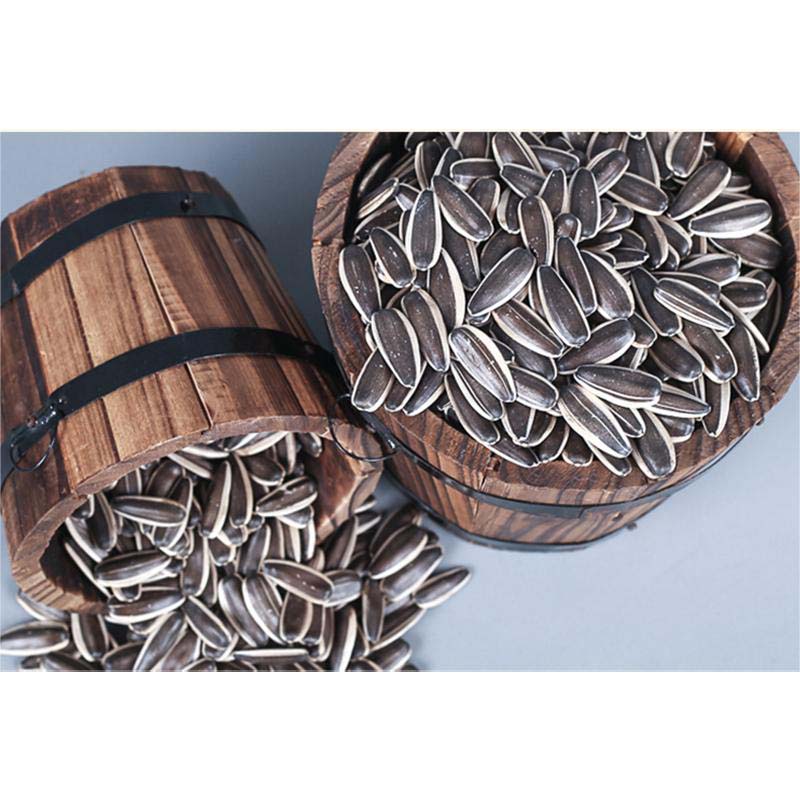
The primary raw material is the sunflower seed kernel. Chemically, the kernel is comprised of approximately 35-45% oil (primarily linoleic acid, an omega-6 fatty acid), 20-30% protein, 15-25% carbohydrate (primarily cellulose and hemicellulose in the hull), and 5-10% moisture. Kernel size varies significantly based on cultivar, ranging from 6mm to 12mm in length. Manufacturing commences with seed dehulling, typically mechanical using rubber rollers. Subsequent cleaning removes residual hulls and foreign matter (stones, stalks, etc.). The cleaned kernels undergo roasting, usually in rotary or fluid-bed roasters at temperatures ranging from 120-160°C for 15-30 minutes. Roasting parameters (temperature, time, airflow) are crucial for developing the characteristic flavor and texture, but also impact acrylamide formation – a key safety concern. Salt adhesion is achieved through spraying a brine solution (typically 15-20% NaCl) onto the roasted kernels while still warm, followed by drying to reduce surface moisture. Key parameter control includes maintaining consistent kernel moisture content prior to roasting, precise temperature control during roasting to optimize flavor and minimize acrylamide, and uniform brine application to ensure consistent salt coverage. The hulls are often used for biofuel or animal feed, contributing to the sustainability of the process. The final stage involves packaging, often in metallized films to provide a barrier against oxygen and moisture.
Performance & Engineering
Performance metrics for roasted and salted sunflower seeds relate to sensory attributes (taste, texture, aroma), physical properties (moisture content, water activity, particle size distribution), and chemical stability (oil oxidation, rancidity). The texture is critical; consumers generally prefer a crisp, yet not overly hard, kernel. This is directly linked to the roasting process and residual moisture content. Water activity (Aw) must be controlled below 0.6 to inhibit microbial growth and ensure shelf stability. Force analysis of the kernel during compression tests reveals the fracture strength, providing an objective measure of texture. Environmental resistance focuses on maintaining product quality during storage and transportation. High humidity can lead to softening of the kernel and salt caking, while elevated temperatures accelerate lipid oxidation, leading to rancidity. Packaging materials play a vital role in mitigating these effects. Compliance requirements, dictated by food safety agencies, mandate adherence to permissible levels of heavy metals (lead, cadmium), mycotoxins (aflatoxins), and acrylamide. Functional implementation, in terms of packaging, often involves modified atmosphere packaging (MAP) using nitrogen flushing to further reduce oxygen levels and extend shelf life. Surface salt adhesion strength is also an important parameter; insufficient adhesion leads to salt loss during handling and transport, impacting consumer perception of quality.
Technical Specifications
| Parameter | Specification | Test Method | Tolerance |
|---|---|---|---|
| Moisture Content | ≤ 8.0% | Oven Drying Method (AACC 14-06) | ± 0.5% |
| Water Activity (Aw) | ≤ 0.60 | Water Activity Meter (AACC 700) | ± 0.02 |
| Salt Content | 1.5 – 2.5% | Argentometric Titration (AOAC 930.45) | ± 0.1% |
| Kernel Size (Average Length) | 8 – 10 mm | Sieve Analysis | ± 1 mm |
| Oil Content | 45 – 55% | Soxhlet Extraction (AOCS Official Method Ak 3-91) | ± 2% |
| Acrylamide Content | ≤ 100 µg/kg | Gas Chromatography-Mass Spectrometry (GC-MS) | N/A (Regulatory Limit) |
Failure Mode & Maintenance
Common failure modes include rancidity (oxidative degradation of oils), softening of kernels due to moisture absorption, salt caking, kernel cracking during handling, and the presence of foreign materials. Rancidity is primarily mitigated through proper packaging and storage conditions (low temperature, low oxygen). Softening is a consequence of exceeding the critical water activity threshold; hermetic packaging is crucial for prevention. Salt caking occurs when moisture is absorbed onto the salt crystals, leading to clumping. Maintaining low humidity during packaging and storage is essential. Kernel cracking can result from impact during processing or transportation; optimized packaging and gentle handling procedures are required. Regular maintenance of roasting equipment is vital to ensure uniform heating and prevent scorching, which contributes to acrylamide formation. Preventative maintenance should include cleaning of roasters to remove accumulated seed debris, calibration of temperature sensors, and inspection of airflow systems. Proper storage of raw materials (sunflower seeds) is critical, including pest control and maintaining appropriate temperature and humidity levels. Shelf life is typically 6-12 months under optimal conditions.
Industry FAQ
Q: What are the primary drivers of acrylamide formation during the roasting process?
A: Acrylamide formation is primarily driven by the Maillard reaction, a chemical reaction between reducing sugars (like glucose and fructose) and asparagine (an amino acid) at elevated temperatures. The specific temperature range (typically 120-160°C) and moisture content during roasting significantly influence the rate of acrylamide formation. Kernel moisture content prior to roasting, roasting time, and temperature are the critical parameters to control.
Q: How do you ensure uniform salt adhesion to the roasted kernels?
A: Uniform salt adhesion relies on several factors: consistent kernel temperature after roasting, proper brine concentration (typically 15-20% NaCl), adequate brine spray pressure and nozzle design to achieve even coverage, and sufficient drying time to remove excess moisture. Using a wetting agent in the brine can also improve adhesion.
Q: What packaging materials provide the best barrier properties for maintaining product freshness?
A: Metallized films (e.g., polyester/aluminum/polyethylene) offer the best barrier properties against oxygen, moisture, and light. These materials significantly slow down oxidation and maintain the crispness of the kernels. Modified atmosphere packaging (MAP) with nitrogen flushing further reduces oxygen levels within the package.
Q: What are the acceptable limits for mycotoxin contamination, specifically aflatoxins?
A: Regulatory limits for aflatoxins vary by country. In the United States, the FDA limit is typically 20 parts per billion (ppb). In the European Union, the limit is 2 µg/kg (equivalent to 2 ppb). Regular testing of raw materials and finished products is essential to ensure compliance.
Q: How is kernel size distribution controlled during the dehulling process?
A: Kernel size distribution is controlled by the gap setting of the dehulling rollers and the rotational speed. Precise adjustment of these parameters is critical. Subsequent screening and grading processes are employed to remove kernels that fall outside the desired size range. Modern dehulling systems often incorporate optical sorting technology for more accurate size classification.
Conclusion
The production of high-quality roasted and salted sunflower seeds requires a comprehensive understanding of material science, rigorous process control, and adherence to stringent food safety standards. Maintaining optimal roasting parameters to balance flavor development with acrylamide mitigation, ensuring consistent salt adhesion, and employing effective packaging strategies to preserve freshness are crucial for success. The industry faces ongoing challenges related to consumer demand for healthier snack options, regulatory scrutiny regarding food safety, and the need for sustainable sourcing and manufacturing practices.
Future advancements will likely focus on optimized roasting technologies (e.g., microwave-assisted roasting) to reduce acrylamide formation, improved packaging materials with enhanced barrier properties, and innovative salt delivery systems to enhance consumer experience. Continued research into sunflower seed cultivars with naturally lower levels of acrylamide precursors is also warranted. Ultimately, the ability to consistently deliver a safe, flavorful, and high-quality product will determine the long-term viability of sunflower seed manufacturers in a competitive market.
