Introduction
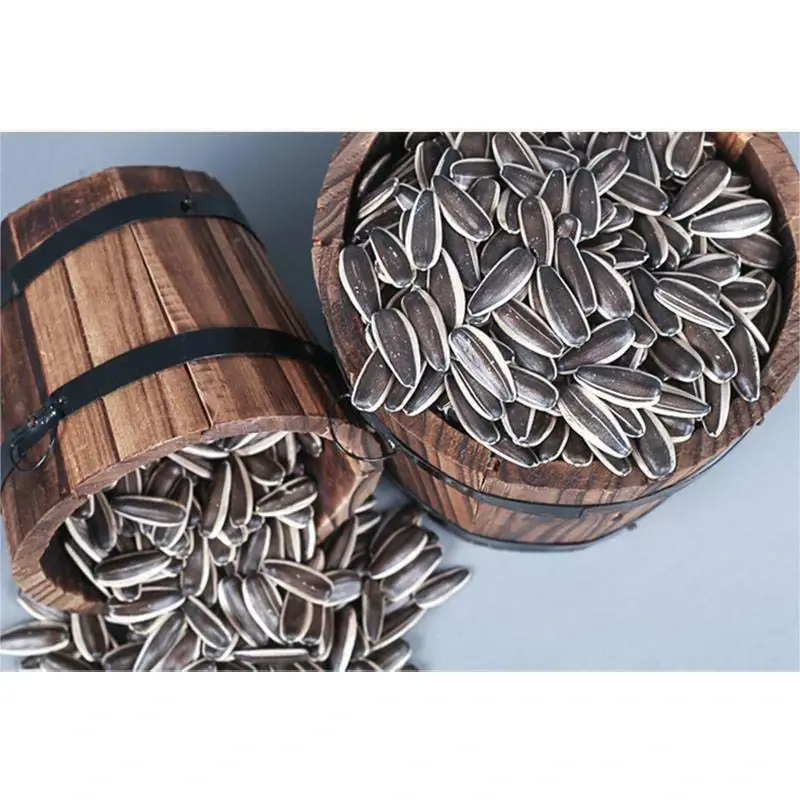
Sunflower seeds, derived from the Helianthus annuus plant, represent a significant agricultural commodity with applications spanning human consumption, livestock feed, and industrial oil production. This technical guide focuses on the sunflower seed as a component within the broader sunflower ecosystem – encompassing cultivation, harvesting, processing, and resultant seed quality influencing downstream applications. Sunflower seeds are functionally positioned between agricultural production and diverse industrial sectors, demanding rigorous quality control and understanding of their physicochemical properties. Core performance characteristics of sunflower seeds relate to oil content, protein content, fatty acid profile, hull percentage, and moisture content, all directly impacting processing efficiency and end-product quality. Achieving optimal seed characteristics necessitates precise control throughout the entire agricultural process, alongside sophisticated post-harvest handling and storage methodologies.
Material Science & Manufacturing
Sunflower seeds are comprised of approximately 35-55% oil, 20-30% protein, 10-20% hull (or husk), and 5-15% moisture, with trace amounts of carbohydrates and minerals. The oil primarily consists of triglycerides, with linoleic acid (omega-6) and oleic acid (omega-9) being the dominant fatty acids. The seed coat, or hull, is primarily composed of cellulose and lignin, providing physical protection during development and storage. Manufacturing processes begin with harvesting, typically employing mechanical combines. Post-harvest processing involves cleaning to remove debris, drying to reduce moisture content (typically to 8-10% for storage stability), dehulling to separate the kernel from the hull, and oil extraction, commonly via mechanical pressing (expelling) or solvent extraction (using hexane). Key parameter control during drying is crucial; exceeding 60°C can denature proteins and reduce oil quality. Dehulling efficiency impacts the final product’s purity and the potential for utilizing hulls in biofuel production. Oil extraction efficiency is influenced by seed moisture content, temperature, and solvent-to-seed ratio. Proper control of these parameters minimizes oil degradation and residual solvent levels.
Performance & Engineering
The performance of sunflower seeds, particularly concerning oil yield and quality, is intimately linked to the mechanical properties of the seed and hull. Force analysis during dehulling identifies the fracture strength of the hull, requiring optimization of impact forces to minimize kernel damage. Environmental resistance concerns focus on moisture uptake during storage, leading to fungal growth and aflatoxin contamination. Proper storage conditions – low temperature (<15°C) and low humidity (<65%) – are critical for maintaining seed viability and oil quality. Compliance requirements, dictated by food safety standards like those established by the FDA (USA) and EFSA (Europe), necessitate stringent control of aflatoxin levels, pesticide residues, and heavy metal content. Functional implementation, regarding the use of sunflower seed protein as a food ingredient, requires understanding its solubility, emulsifying properties, and allergenic potential. The oil’s oxidative stability, quantified by its peroxide value and acid value, is crucial for determining shelf life and suitability for various applications (e.g., cooking oil, biodiesel).
Technical Specifications
| Parameter | Unit | Typical Range | Testing Method |
|---|---|---|---|
| Oil Content | % (Dry Basis) | 42-58 | Nuclear Magnetic Resonance (NMR) – AOCS Official Method |
| Protein Content | % (Dry Basis) | 18-26 | Kjeldahl Method – AOCS Official Method |
| Hull Percentage | % (Weight Basis) | 20-40 | Visual Sorting & Weighing |
| Moisture Content | % | 8-12 | Oven Drying Method – AOCS Official Method |
| Linoleic Acid (C18:2) | % of Total Fatty Acids | 30-70 | Gas Chromatography (GC) – AOCS Official Method |
| Oleic Acid (C18:1) | % of Total Fatty Acids | 10-60 | Gas Chromatography (GC) – AOCS Official Method |
Failure Mode & Maintenance
Sunflower seeds are susceptible to several failure modes. Lipid oxidation is a primary concern, leading to rancidity and reduced oil quality. This is accelerated by exposure to oxygen, light, and elevated temperatures. Hull cracking during processing can result in increased fines and reduced oil yield. Fungal growth, particularly Aspergillus flavus, leads to aflatoxin contamination, rendering the seeds unusable for human consumption. Insect infestation during storage can cause significant losses. Maintenance strategies center on proper storage practices: maintaining low temperature and humidity, using airtight containers, and implementing regular pest control measures. Seed treatment with antifungal agents can mitigate fungal growth. Optimizing processing parameters (temperature, pressure, time) during dehulling and oil extraction minimizes mechanical damage and lipid oxidation. Regular monitoring of seed quality parameters (moisture content, oil quality, aflatoxin levels) is crucial for identifying potential issues early on and implementing corrective actions. Preventative maintenance of processing equipment, including cleaning and lubrication, also contributes to minimizing failure rates.
Industry FAQ
Q: What is the impact of varying linoleic/oleic acid ratios on the stability of sunflower oil?
A: Higher linoleic acid content results in lower oxidative stability, making the oil more prone to rancidity. High-oleic sunflower oil, with a higher percentage of oleic acid, exhibits significantly improved oxidative stability and is preferred for applications requiring extended shelf life, such as frying.
Q: How does the dehulling process affect the protein quality of the resulting sunflower meal?
A: Improper dehulling can lead to increased hull fragments in the meal, reducing the protein concentration. Excessive mechanical force during dehulling can also denature proteins, reducing their digestibility. Optimizing dehulling parameters is crucial for maximizing protein quality.
Q: What are the regulatory limits for aflatoxin contamination in sunflower seeds for human consumption in the US and EU?
A: The FDA (US) limits aflatoxin levels to 20 parts per billion (ppb). The European Food Safety Authority (EFSA) sets a maximum level of 2.5 µg/kg (equivalent to 2.5 ppb) for total aflatoxins in sunflower seeds intended for direct human consumption.
Q: What methods are used to assess the maturity and harvest readiness of sunflower heads?
A: Maturity is assessed by monitoring the back of the head; when the back turns from green to yellow-brown and the bracts are dry and brittle, the seeds are nearing physiological maturity. Seed moisture content is also a critical indicator, ideally between 18-20% at harvest.
Q: What are the advantages of using solvent extraction compared to mechanical pressing for oil extraction?
A: Solvent extraction (typically with hexane) yields a higher oil recovery rate than mechanical pressing, typically extracting 99% of the oil compared to 80-90% for pressing. However, solvent extraction requires stringent control to ensure complete solvent removal and compliance with residual solvent limits.
Conclusion
Sunflower seeds, as a multifaceted agricultural product, demand a thorough understanding of their material properties, manufacturing processes, and performance characteristics. Achieving optimal quality and maximizing value requires precise control at every stage, from cultivation and harvesting to processing and storage. The interplay between oil content, protein quality, hull integrity, and environmental resistance dictates the suitability of sunflower seeds for diverse applications.
Future research should focus on developing sunflower varieties with improved oil quality, enhanced disease resistance, and increased yield. Advanced processing technologies, such as supercritical fluid extraction, offer potential for improving oil extraction efficiency and reducing environmental impact. Continued adherence to stringent quality control standards and regulatory compliance will be essential for ensuring the safety and sustainability of the sunflower seed industry.
