Introduction
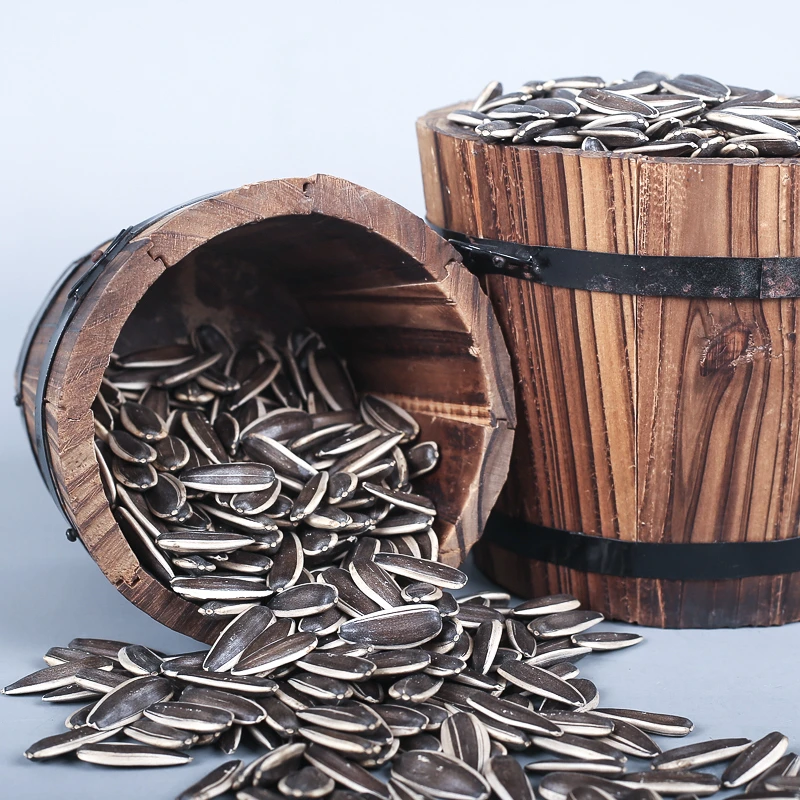
Sunflower seeds in shell ( Helianthus annuus) represent a significant segment within the global snack food and agricultural commodities market. Positioned between primary agricultural production and consumer packaged goods, these seeds are valued for their nutritional profile, shelf stability, and versatile applications. This technical guide details the material science, manufacturing considerations, performance characteristics, potential failure modes, and relevant standards governing sunflower seeds in shell, addressing core industry challenges related to quality control, storage longevity, and maintaining consumer acceptance. Core performance attributes include kernel recovery rate, shell integrity, oil content, and freedom from contaminants. Industry pain points center around optimizing dehulling efficiency, minimizing shell fragments in the final product, controlling aflatoxin levels, and ensuring consistent seed size and maturity for processing.
Material Science & Manufacturing
The primary components of sunflower seeds in shell are the kernel (the edible portion), the hull (the protective shell), and trace amounts of endosperm and embryo. The kernel’s composition consists approximately of 20-50% oil (primarily linoleic acid), 20-30% protein, 15-25% carbohydrates, and variable levels of vitamins and minerals. The hull is primarily composed of cellulose, hemicellulose, and lignin, providing structural rigidity and a barrier against moisture and physical damage. Manufacturing begins with agricultural cultivation, followed by harvesting, drying, cleaning, and grading. Drying is critical, typically employing forced-air systems to reduce moisture content to 8-10% to inhibit microbial growth and enzymatic activity. Key parameter control during drying includes temperature (typically below 60°C to prevent oil rancidity) and airflow rate. The shelling process, while often performed post-consumer, is a significant factor in commercial processing. Methods include impact shelling, centrifugal shelling, and roller shelling, each influencing kernel damage and hull fragment content. Shell integrity is dependent on cultivar, maturity at harvest, and drying rate. Improper drying can lead to brittle hulls prone to cracking. Contamination with ochratoxins or aflatoxins, produced by Aspergillus and Penicillium molds, respectively, is a significant concern requiring careful monitoring and control via proper harvesting, drying, and storage practices.
Performance & Engineering
Performance evaluation of sunflower seeds in shell centers on several key engineering properties. Shell strength, determined via compression testing, dictates resistance to cracking during handling and transportation. Kernel hardness, measured using penetrometers, influences dehulling efficiency and processing characteristics. Moisture content, monitored using near-infrared spectroscopy, is crucial for assessing storage stability and preventing fungal growth. The Bulk Density (kg/m3) impacts storage capacity and transportation efficiency. Environmental resistance is primarily related to moisture absorption and temperature fluctuations. High humidity can lead to increased moisture content, promoting microbial activity and lipid oxidation. Temperature cycling can induce stresses within the shell, potentially leading to cracking. Compliance requirements are governed by food safety regulations (e.g., FDA in the US, EFSA in Europe) regarding aflatoxin levels, pesticide residues, and heavy metal content. Functional implementation, particularly concerning packaging, necessitates consideration of barrier properties (moisture vapor transmission rate - MVTR, oxygen transmission rate - OTR) to maintain product quality during storage. Packaging materials are selected based on their ability to minimize moisture gain and prevent oxidation, utilizing materials such as polyethylene, polypropylene, or multilayer laminates.
Technical Specifications
| Parameter | Unit | Typical Value | Test Method |
|---|---|---|---|
| Kernel Recovery Rate | % | 60-75 | Weight Difference Method (Seed weight - Hull weight) / Seed Weight x 100 |
| Moisture Content (Kernel) | % | 8-10 | Oven Drying (130°C for 1 hour) |
| Oil Content (Kernel) | % | 40-50 | Soxhlet Extraction |
| Shell Strength (Compression) | N | 50-150 | Instron Universal Testing Machine |
| Aflatoxin B1 Level | ppb | < 20 | HPLC with Immunaffinity Column |
| Kernel Size (Diameter) | mm | 8-12 | Sieve Analysis |
Failure Mode & Maintenance
Sunflower seeds in shell are susceptible to several failure modes. Shell cracking, often induced by impact or thermal stress, compromises product integrity and increases susceptibility to moisture absorption. Kernel rancidity, resulting from lipid oxidation, degrades flavor and nutritional value. This is accelerated by high temperatures, exposure to oxygen, and the presence of metal ions. Microbial spoilage, particularly fungal contamination, can lead to aflatoxin production and render the seeds unusable. Dehulling damage, occurring during commercial processing, results in fragmented kernels and reduced yield. Maintenance of quality requires stringent storage conditions: cool (below 20°C), dry (below 65% relative humidity), and dark environments. Regular monitoring of moisture content and aflatoxin levels is essential. Packaging should provide adequate barrier protection against moisture, oxygen, and light. Proper cleaning and sanitation of processing equipment are critical to prevent microbial contamination. Periodic quality audits and adherence to HACCP (Hazard Analysis and Critical Control Points) principles are recommended. For extended storage, the use of modified atmosphere packaging (MAP) with nitrogen flushing can further reduce oxidation and microbial growth.
Industry FAQ
Q: What is the primary factor influencing aflatoxin contamination in sunflower seeds in shell?
A: The primary factor is improper drying and storage conditions. High moisture content and warm temperatures promote the growth of Aspergillus flavus and Aspergillus parasiticus, the fungi responsible for aflatoxin production. Thorough drying to 8-10% moisture content and maintaining cool, dry storage environments are crucial preventative measures.
Q: How does shell strength impact the commercial processing of sunflower seeds?
A: Shell strength directly affects dehulling efficiency. Weaker shells are more easily cracked during processing, leading to increased kernel damage and fragment content. Conversely, excessively strong shells may require more energy for dehulling, increasing processing costs and potentially damaging the kernels. Optimal shell strength is a balance between ease of dehulling and kernel protection.
Q: What are the key considerations when selecting packaging materials for sunflower seeds in shell?
A: The primary considerations are barrier properties – specifically low MVTR and OTR – to prevent moisture gain and lipid oxidation. The material should also be mechanically robust to withstand handling and transportation. Polyethylene, polypropylene, and multilayer laminates are commonly used, with the choice dependent on storage duration and desired shelf life.
Q: What analytical methods are used to determine the oil content in sunflower seeds?
A: The most common method is Soxhlet extraction, employing a solvent (typically hexane) to extract the oil from a weighed sample. The oil content is then determined by measuring the weight difference after solvent evaporation. Near-infrared (NIR) spectroscopy is also used for rapid, non-destructive analysis, though it requires calibration against reference methods like Soxhlet extraction.
Q: How does kernel size variability affect processing efficiency?
A: Significant kernel size variability can lead to inconsistent dehulling performance. Smaller kernels may pass through dehulling equipment without being processed, while larger kernels may experience increased damage. Grading and sorting based on size can improve processing efficiency and reduce waste.
Conclusion
Sunflower seeds in shell represent a complex agricultural product with performance characteristics dictated by a confluence of material properties, manufacturing processes, and environmental factors. Maintaining quality requires meticulous control over drying, storage, and processing parameters to mitigate the risks of microbial contamination, lipid oxidation, and physical damage. Understanding shell strength, kernel oil content, and moisture content are paramount for optimizing processing and ensuring a consistent, high-quality product.
Future advancements in sunflower seed technology will likely focus on developing cultivars with improved shell strength and enhanced resistance to fungal contamination. Improved dehulling technologies and optimized packaging materials will further enhance processing efficiency and extend shelf life. Continued adherence to stringent quality control standards and regulatory compliance will be essential for sustaining consumer confidence and maximizing market value.
