Introduction
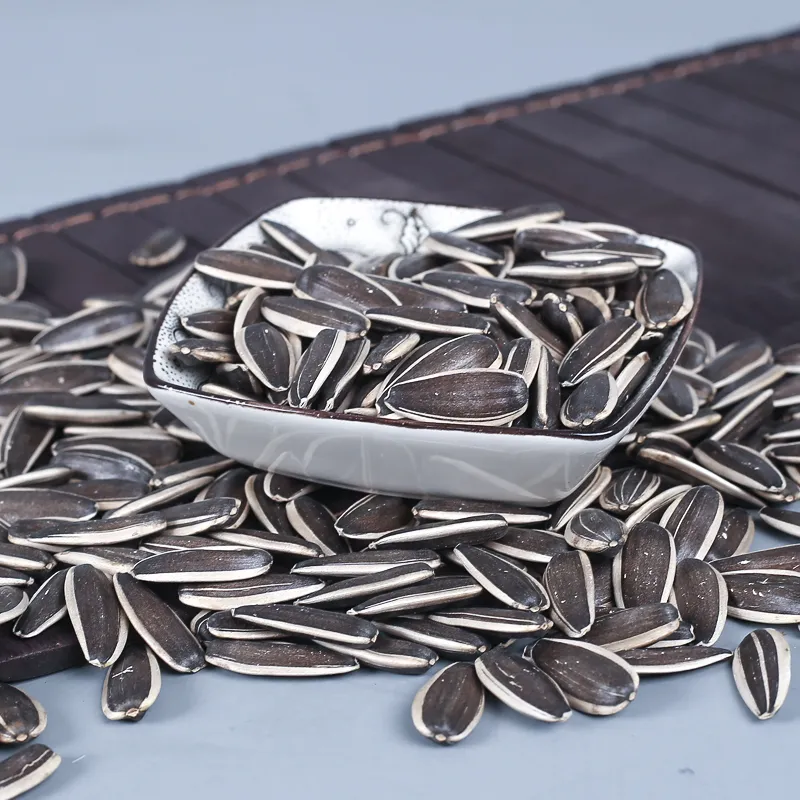
Sunflower seed flavors represent a complex application of food science and chemical engineering, falling within the broader category of snack food seasoning and flavor encapsulation technologies. Positioned within the agricultural processing and snack food manufacturing supply chain, their core performance characteristics revolve around adhesion, flavor release kinetics, shelf-life stability, and regulatory compliance. These flavors aren't simply added post-roasting; modern formulations increasingly require pre-treatment and specialized application techniques to ensure uniform coating and sustained flavor intensity. The industry faces challenges related to maintaining consistent flavor profiles across batches, preventing flavor migration during storage, and meeting evolving consumer demands for natural and clean-label ingredients. Effective flavor systems must also withstand the rigors of processing – namely, the abrasive forces experienced during tumbling and packaging. This guide will delve into the material science, manufacturing processes, performance engineering, potential failure modes, and industry standards governing sunflower seed flavors.
Material Science & Manufacturing
The creation of sunflower seed flavors involves a diverse array of raw materials. Core components include flavoring compounds (natural or artificial), carriers (maltodextrin, modified starch, gum arabic), binders (vegetable oil, hydrogenated vegetable oil), colorants (annatto, turmeric, caramel color), and anti-caking agents (silicon dioxide). Maltodextrin, a polysaccharide derived from starch, serves as a common carrier due to its neutral flavor profile and ability to absorb and retain flavor oils. Gum Arabic, a natural gum from the acacia tree, provides excellent binding properties and contributes to flavor adhesion. The selection of vegetable oils significantly impacts flavor release; oils with lower viscosity facilitate faster flavor diffusion.
Manufacturing processes typically involve several stages. Initially, flavor concentrates are blended with carrier materials in high-shear mixers to ensure homogenous dispersion. This mixture undergoes spray drying or drum drying to create a powdered flavor base. Spray drying, utilizing hot air to evaporate solvent (typically water), results in fine, uniform particles. Drum drying involves applying the slurry onto a heated rotating drum, yielding larger, flake-like particles. The choice of drying method impacts particle size distribution and flowability. Post-drying, the flavor base is often blended with vegetable oil and sprayed onto sunflower seeds during a tumbling process. Precise control of spray nozzle size, airflow, and tumbling speed is crucial for achieving consistent coating thickness. Further processing may include curing to enhance adhesion and flavor retention. Parameter control focuses on moisture content (crucial for spray drying efficiency), particle size (influencing adhesion and dustiness), oil content (affecting flavor release), and coating uniformity (impacts consumer experience).
Performance & Engineering
The performance of sunflower seed flavors is dictated by several key engineering considerations. Adhesion strength, measured using tensile testing, is paramount. The flavor coating must withstand mechanical stress during handling and packaging without significant flaking. Flavor release kinetics, governed by diffusion rates within the coating and oil matrix, determine the initial flavor impact and duration of taste. This is often modeled using Fick's laws of diffusion. Environmental resistance, specifically humidity and temperature stability, is critical for maintaining shelf life. High humidity can lead to caking and flavor loss, while temperature fluctuations can accelerate oxidation of flavor oils.
Compliance requirements center around food safety regulations and labeling standards. Regulations such as those set by the FDA (US Food and Drug Administration) and EFSA (European Food Safety Authority) dictate permissible flavoring compounds, colorants, and levels of contaminants. Specifically, the levels of heavy metals and microbial contamination must adhere to strict limits. Furthermore, allergen labeling is crucial to ensure consumer safety. Functional implementation involves optimizing the coating process to achieve the desired flavor intensity and uniformity. This necessitates careful selection of equipment (tumblers, spray nozzles) and process parameters (temperature, airflow, tumbling speed) based on the specific flavor formulation and seed variety. Force analysis examines the shear forces generated during tumbling, informing the selection of binders and coating thicknesses to prevent delamination.
Technical Specifications
| Parameter | Typical Value (Spicy BBQ Flavor) | Testing Method | Acceptance Criteria |
|---|---|---|---|
| Flavor Adhesion Strength (N/cm) | 0.8 - 1.2 | ASTM D3359 (Modified Peel Test) | ≥ 0.7 N/cm after 24 hours storage |
| Moisture Content (%) | 3.0 - 5.0 | AOAC Official Method 925.10 | ≤ 6.0% |
| Oil Content (%) | 15 - 25 | Soxhlet Extraction (AOAC 930.09) | 18 – 28% |
| Particle Size (D50, µm) | 50 – 100 | Laser Diffraction (ISO 13320) | D50 between 40 – 120 µm |
| Flavor Release Rate (mg/sec) | 2.5 – 3.5 (Initial Burst) | Gas Chromatography-Mass Spectrometry (GC-MS) | Initial burst rate within specified range |
| Shelf Life (Flavor Retention, %) | ≥ 80% after 6 months | Sensory Evaluation & GC-MS | Flavor intensity remains ≥ 80% of initial value |
Failure Mode & Maintenance
Sunflower seed flavor coatings are susceptible to several failure modes. Delamination, the separation of the flavor coating from the seed surface, is a common issue caused by insufficient adhesion, high humidity, or mechanical stress. Oxidation of flavor oils leads to rancidity and off-flavors, accelerated by exposure to oxygen and heat. Caking, resulting from moisture absorption, creates a sticky texture and reduces flowability. Flavor migration, the diffusion of flavor compounds into the seed itself, can alter the flavor profile and reduce coating effectiveness. Dusting, caused by abrasion during handling, results in flavor loss and a messy consumer experience.
Preventive maintenance and mitigation strategies include optimizing coating formulations with stronger binders, utilizing moisture-resistant packaging materials, controlling storage conditions (temperature and humidity), and implementing quality control measures to monitor adhesion strength and moisture content. Regular inspection of coating equipment (spray nozzles, tumblers) is essential to identify and address wear or damage. Antioxidant additives can be incorporated into the flavor formulation to slow down oxidation. In the event of delamination or significant flavor loss, re-coating may be necessary, ensuring thorough cleaning of the seeds prior to application. Careful calibration of spraying equipment ensures uniform distribution and optimal adhesion.
Industry FAQ
Q: What is the impact of seed surface oil content on flavor adhesion?
A: Higher seed surface oil content can hinder flavor adhesion as it creates a hydrophobic barrier. This necessitates the use of stronger binding agents or pre-treatment of the seeds to improve surface wettability. Techniques like alkaline washing can increase surface polarity and enhance adhesion.
Q: How do different drying methods (spray vs. drum) affect flavor retention?
A: Spray drying generally results in better flavor retention due to the rapid evaporation of solvent and smaller particle size, which minimizes oxidation. Drum drying can expose flavor compounds to higher temperatures for longer durations, potentially leading to flavor degradation. However, drum drying is often more cost-effective for large-scale production.
Q: What are the key considerations for selecting a carrier material?
A: Carrier material selection depends on the flavor profile, desired release rate, and regulatory requirements. Maltodextrin is widely used due to its neutral flavor and good solubility, but modified starches and gum arabic offer unique properties. Consider factors like hygroscopicity, particle size, and compatibility with other ingredients.
Q: How can we minimize flavor migration into the seed?
A: Minimizing flavor migration requires creating a barrier within the coating. This can be achieved by using a higher concentration of binder, applying multiple coating layers, or incorporating an impermeable film-forming agent. Controlling the water activity of both the seed and the coating is also crucial.
Q: What is the role of anti-caking agents in sunflower seed flavors?
A: Anti-caking agents, such as silicon dioxide, prevent the flavor powder from clumping together during storage, ensuring consistent flowability and dispensability. They work by reducing interparticle cohesion and improving powder handling characteristics.
Conclusion
Sunflower seed flavor technology represents a sophisticated intersection of food chemistry, material science, and process engineering. Achieving optimal flavor performance requires meticulous control over raw material selection, manufacturing processes, and storage conditions. The performance metrics—adhesion, flavor release, and shelf life—are intricately linked to the physical and chemical properties of the coating formulation and its interaction with the seed surface.
Future advancements will likely focus on developing sustainable and natural flavor encapsulation systems, improving flavor stability under challenging environmental conditions, and enhancing the precision of flavor delivery. The industry is also increasingly driven by consumer demand for clean-label ingredients and reduced sodium content, necessitating innovative solutions that maintain flavor intensity while meeting these evolving requirements. A deep understanding of the underlying scientific principles and adherence to stringent quality control standards are essential for success in this dynamic market.
