
Introduction
The roasting of shelled sunflower seeds is a critical unit operation within the broader snack food processing industry. Sunflower seeds ( Helianthus annuus) are a globally consumed product, valued for their nutritional content – notably high levels of vitamin E, magnesium, and healthy fats – and palatability. Roasting is employed not merely to enhance flavor and texture, but also to reduce moisture content to a level conducive to extended shelf life and to deactivate enzymes responsible for rancidity. This process involves precise control of temperature, time, and atmospheric conditions. The industrial-scale operation differs significantly from small-batch, home roasting due to the need for consistent product quality, large throughput, and adherence to food safety regulations. Achieving optimal roasting necessitates a deep understanding of seed composition, heat transfer mechanisms, and potential degradation pathways. This guide provides a comprehensive technical overview of the process, encompassing material science, engineering considerations, failure modes, and industry standards.
Material Science & Manufacturing
Sunflower seeds consist primarily of three components: the kernel (cotyledon), the hull (pericarp), and the embryo. The kernel constitutes the edible portion, containing approximately 40-50% oil, 20-30% protein, 15-25% carbohydrates, and 5-10% moisture. The oil is primarily linoleic acid (a polyunsaturated omega-6 fatty acid) and oleic acid (a monounsaturated omega-9 fatty acid). The hull provides physical protection and contributes to fiber content, though it’s removed during shelling. Manufacturing begins with seed selection, cleaning, dehulling, and shelling. Shelling efficiency impacts the subsequent roasting process – damaged kernels are more susceptible to oil migration and oxidation. Roasting itself typically occurs in continuous or batch roasters. Continuous roasters, such as multi-stage rotary drum roasters or fluid bed roasters, are favored for large-scale production due to their efficiency. Batch roasters, like tray roasters or stirred-pot roasters, offer greater control but lower throughput. Heat transfer occurs through conduction, convection, and radiation. Critical parameters include roasting temperature (typically 120-180°C), roasting time (15-60 minutes, depending on seed size and desired roast level), and air velocity (to remove moisture). Controlling these parameters is crucial for achieving the desired degree of Maillard reaction (responsible for flavor development) without causing scorching or lipid oxidation. Moisture content post-roast is a key specification, generally maintained below 3% to inhibit microbial growth and enzymatic activity. Inert gas atmospheres (nitrogen) are increasingly used to minimize oxidation during roasting.
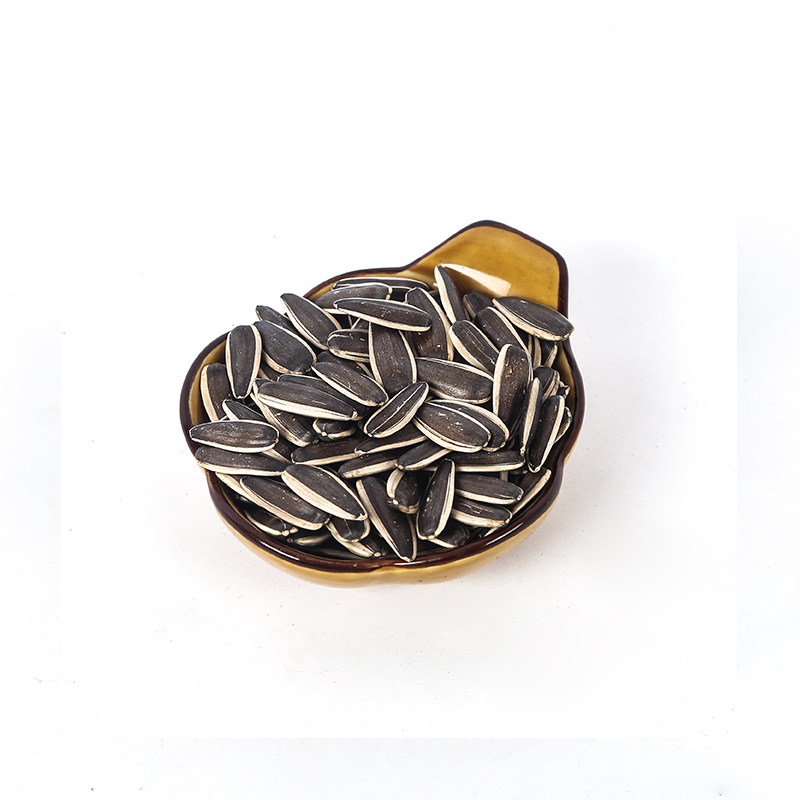
Performance & Engineering
The performance of the roasting process is dictated by the efficient transfer of thermal energy to the sunflower seeds. Heat transfer rate is influenced by seed size, shape, and density, as well as the roaster design and operating parameters. Engineering considerations include ensuring uniform temperature distribution within the roaster to prevent localized overheating and scorching. Airflow management is critical for moisture removal; insufficient airflow leads to “steaming” of the seeds, hindering Maillard reaction development and potentially promoting bacterial growth. Furthermore, proper ventilation is essential to exhaust volatile compounds generated during roasting, including aldehydes and ketones, which contribute to aroma but can also be undesirable at high concentrations. From a force analysis perspective, the mechanical stress on the seeds within the roaster must be minimized to prevent breakage and maintain kernel integrity. This is particularly important in continuous roasters where seeds are subjected to tumbling and abrasion. Environmental resistance, specifically resistance to oxidation, is a major performance criterion. Lipid oxidation leads to rancidity, impacting flavor and shelf life. Packaging materials with low oxygen transmission rates (OTR) are therefore crucial post-roast. Compliance requirements are governed by food safety regulations (e.g., FDA in the US, EFSA in Europe) regarding permissible levels of acrylamide (formed during high-temperature roasting) and other process contaminants. Roaster design must also adhere to sanitary standards (e.g., 3-A Sanitary Standards) to facilitate cleaning and prevent microbial contamination.
Technical Specifications
| Parameter | Unit | Typical Range | Criticality |
|---|---|---|---|
| Initial Seed Moisture Content | % (wet basis) | 8-12% | High |
| Roasting Temperature | °C | 140-170°C | High |
| Roasting Time | Minutes | 20-40 | Medium |
| Airflow Velocity | m/s | 2-5 | Medium |
| Final Seed Moisture Content | % (wet basis) | <3% | High |
| Oil Content (Kernel) | % (dry basis) | 40-50% | Informative |
Failure Mode & Maintenance
Several failure modes can occur during sunflower seed roasting. Scorching results from excessively high temperatures or uneven heat distribution, leading to burnt flavor and reduced product quality. Rancidity, caused by lipid oxidation, manifests as off-flavors and reduced shelf life. This is exacerbated by prolonged exposure to oxygen, light, and high temperatures. Cracking and breakage of kernels can occur due to excessive mechanical stress within the roaster, impacting appearance and processing efficiency. Uneven roasting leads to a heterogeneous product with varying moisture content and flavor profiles. Maillard reaction failure, manifesting as a bland, under-roasted flavor, is common with insufficient temperatures or roasting times. Maintenance procedures are crucial for preventing these failures. Regular cleaning of the roaster is essential to remove seed debris and prevent buildup that can impede airflow and heat transfer. Calibration of temperature sensors and control systems is vital for maintaining accurate roasting parameters. Inspection of moving parts (e.g., roaster drums, belts) for wear and tear is necessary to prevent mechanical failures. Periodic analysis of roasted seeds for moisture content, oil oxidation levels (Peroxide Value - PV), and acrylamide content should be conducted to ensure product quality and compliance. Preventive maintenance schedules, incorporating lubrication and component replacement, will extend the lifespan of the roasting equipment.
Industry FAQ
Q: What is the impact of initial seed moisture content on the roasting process?
A: Initial seed moisture content is a critical parameter. Seeds with higher moisture content require longer roasting times and lower temperatures to prevent scorching. Conversely, seeds that are too dry may roast unevenly and become brittle. Maintaining consistent initial moisture content (typically 8-12%) is vital for achieving uniform roast quality.
Q: How can lipid oxidation be minimized during roasting and storage?
A: Minimizing lipid oxidation involves several strategies. Using lower roasting temperatures and shorter roasting times reduces the exposure of oils to oxygen. Employing an inert gas atmosphere (nitrogen) during roasting further limits oxidation. Packaging the roasted seeds in oxygen-impermeable materials (e.g., metallized films) and storing them in a cool, dark environment are essential for extending shelf life.
Q: What are the implications of acrylamide formation during roasting?
A: Acrylamide is a process contaminant formed during the Maillard reaction at high temperatures. Regulations set limits on permissible acrylamide levels in food products. To minimize acrylamide formation, optimizing roasting parameters – specifically, lowering roasting temperature and time – is crucial. Seed variety and pre-treatment methods can also influence acrylamide formation.
Q: What is the role of airflow in the roasting process?
A: Airflow plays a vital role in moisture removal and heat transfer. Sufficient airflow prevents the buildup of steam, allowing for efficient heat transfer and promoting the Maillard reaction. Airflow also carries away volatile compounds, contributing to aroma development. Uniform airflow distribution is critical for ensuring even roasting.
Q: What type of roaster is best suited for large-scale sunflower seed production?
A: For large-scale production, continuous roasters, such as multi-stage rotary drum roasters or fluid bed roasters, are generally preferred due to their high throughput and consistent product quality. These roasters allow for continuous operation and precise control of roasting parameters. However, the initial capital investment is typically higher than for batch roasters.
Conclusion
The roasting of shelled sunflower seeds is a complex process requiring precise control of material properties, manufacturing parameters, and engineering considerations. Understanding the interplay between seed composition, heat transfer mechanisms, and potential degradation pathways is essential for achieving optimal product quality, shelf life, and food safety. Successful roasting operations necessitate not only advanced equipment but also rigorous monitoring, maintenance, and adherence to industry standards.
Future advancements in roasting technology may focus on optimizing energy efficiency, reducing acrylamide formation, and enhancing flavor development through innovative roasting profiles and atmospheric control. Implementing real-time monitoring systems with advanced sensors and data analytics will enable predictive maintenance and improved process control. Continued research into seed genetics and pre-treatment methods will further refine the roasting process, leading to enhanced product characteristics and sustainability.
