Introduction
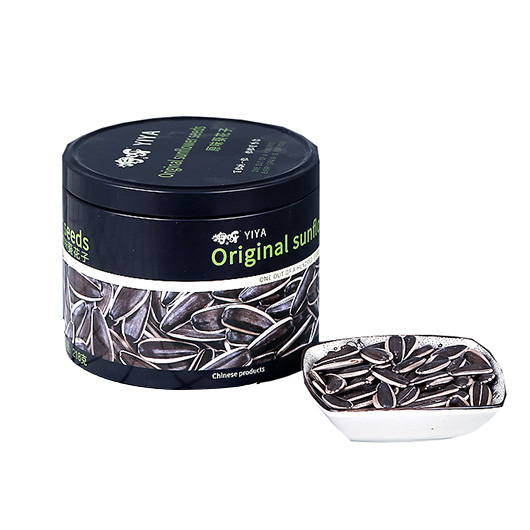
Roasted sunflower seeds ( Helianthus annuus ) represent a significant processed food commodity, positioned within the agricultural and snack food industries. This technical guide details the science and engineering principles governing their production, quality control, and preservation. Sunflower seeds, inherently possessing a high oil content and protein profile, undergo transformations during roasting impacting their nutritional value, texture, and shelf-life. Core performance characteristics include moisture content, oil stability, color, and the absence of detrimental compounds formed during thermal processing. The industry faces increasing demand for consistent product quality, reduced acrylamide formation, and optimized packaging to maintain freshness. This guide provides an in-depth exploration of these challenges and technical solutions.
Material Science & Manufacturing
The primary raw material, sunflower seed kernels, are composed of approximately 40-50% oil, 20-25% protein, 15-20% carbohydrates, and 5-10% moisture. The oil is rich in linoleic acid (a polyunsaturated fatty acid) and oleic acid. Kernel hardness, determined by the cultivar and growing conditions, influences roasting uniformity. Manufacturing begins with dehulling and cleaning to remove foreign matter. The critical process is roasting, typically conducted in rotary or fluid bed roasters. Precise temperature control (140-180°C) and residence time (20-40 minutes) are essential. Maillard reaction kinetics and lipid oxidation rates are heavily influenced by these parameters. Salt application and flavor coatings follow roasting. Drying post-roasting reduces moisture content to <1.5% to inhibit microbial growth and lipid peroxidation. Packaging material selection is crucial for maintaining low moisture and oxygen permeability. Parameters monitored during manufacturing include kernel moisture, oil free fatty acid (FFA) content, peroxide value (PV) - indicators of oil rancidity - and color measurements (using CIE Lab color space). Consistent raw material quality (kernel size, oil content) is paramount for process control.
Performance & Engineering
The mechanical integrity of the roasted kernel is a key performance indicator. Shelling force – the energy required to fracture the kernel – impacts processing efficiency and yield. During roasting, thermal stress develops within the kernel due to differential expansion and contraction. Finite element analysis (FEA) can be employed to model this stress distribution and optimize roasting profiles to minimize cracking and breakage. The oil’s oxidative stability is critical for shelf life. Antioxidants (e.g., tocopherols, ascorbic acid) are often added to mitigate lipid oxidation. The rate of oxidation is determined by the Arrhenius equation, and is accelerated by higher temperatures, oxygen exposure, and the presence of metal ions. Barrier properties of packaging materials (oxygen transmission rate - OTR, water vapor transmission rate – WVTR) directly impact shelf life. Furthermore, acrylamide formation, a byproduct of the Maillard reaction at high temperatures, is a significant safety concern. Process optimization, including lower roasting temperatures and control of reducing sugars, is vital to minimize acrylamide levels. Regulatory compliance with food safety standards (e.g., FDA, EFSA) requires regular monitoring of acrylamide content.
Technical Specifications
| Parameter | Unit | Typical Range | Test Method |
|---|---|---|---|
| Moisture Content | % | 1.0 – 1.5 | AOAC 925.10 |
| Oil Content | % | 45 – 55 | Soxhlet Extraction (AOAC 920.39) |
| FFA (Free Fatty Acid) | % as oleic acid | <0.2 | Titration (AOCS Cd 3-63) |
| Peroxide Value | meq O2/kg | <5 | Titration (AOCS Cd 8-53) |
| Acrylamide Content | µg/kg | <100 (regulatory limit varies) | GC-MS (Gas Chromatography-Mass Spectrometry) |
| Kernel Hardness | N | 20 – 50 | Compression Testing |
Failure Mode & Maintenance
Common failure modes include rancidity (due to lipid oxidation), kernel cracking during handling, and development of off-flavors. Rancidity is accelerated by exposure to oxygen, light, and elevated temperatures. Mitigation involves antioxidant addition and packaging in oxygen-barrier materials. Kernel cracking can be minimized through optimized roasting profiles (reducing thermal stress) and careful handling during processing and packaging. Off-flavors can arise from excessive roasting (acrylamide formation, burnt sugar notes) or from microbial contamination (particularly if moisture content is not adequately controlled). Maintenance of roasting equipment (temperature sensors, airflow regulators) is critical for process stability. Regular cleaning of processing lines prevents cross-contamination and microbial growth. Storage conditions are vital; maintaining low temperature (<25°C) and humidity (<60%) extends shelf life. Periodic quality control testing (moisture, oil content, peroxide value) is essential to detect early signs of degradation. Packaging integrity should be checked regularly for seal defects and permeation.
Industry FAQ
Q: What is the optimal roasting temperature range to balance flavor development and acrylamide minimization?
A: The optimal range is generally between 160-170°C. Lower temperatures (below 160°C) may result in under-roasted seeds with less desirable flavor profiles. Higher temperatures (above 170°C) significantly increase acrylamide formation. Precise temperature control and short residence times are crucial. Utilizing roasting curves that prioritize initial rapid heating followed by a controlled hold time can also aid in minimizing acrylamide.
Q: How does kernel size variability impact roasting uniformity?
A: Kernel size variability is a significant challenge. Larger kernels require longer roasting times to achieve the same internal temperature as smaller kernels, leading to uneven roasting. Pre-grading kernels based on size can improve uniformity. Alternatively, fluid bed roasters, which provide more uniform airflow, can mitigate the effects of size variability.
Q: What types of packaging materials provide the best barrier properties for roasted sunflower seeds?
A: Multi-layer films incorporating aluminum foil or metallized polyester offer excellent oxygen and moisture barrier properties. High-density polyethylene (HDPE) or polypropylene (PP) with ethylene vinyl alcohol (EVOH) layers are also effective. Vacuum packaging or modified atmosphere packaging (MAP) – using nitrogen flushing – further enhances preservation by reducing oxygen exposure.
Q: What are the key indicators of lipid oxidation, and how are they measured?
A: Key indicators include peroxide value (PV), p-anisidine value (AnV), and fatty acid composition analysis. PV measures the initial products of oxidation, while AnV assesses secondary oxidation products. GC-MS can identify specific oxidized fatty acids. Regularly monitoring these parameters is essential for assessing oil stability and shelf life.
Q: What role do antioxidants play in extending the shelf life of roasted sunflower seeds?
A: Antioxidants inhibit lipid oxidation by scavenging free radicals and preventing chain reactions. Common antioxidants used include tocopherols (Vitamin E), BHA (butylated hydroxyanisole), BHT (butylated hydroxytoluene), and ascorbic acid (Vitamin C). The effectiveness of antioxidants depends on their concentration, the type of oil, and the processing conditions. Natural antioxidants, like tocopherols, are increasingly preferred by consumers.
Conclusion
The production of high-quality roasted sunflower seeds hinges on a complex interplay of material science, process engineering, and quality control. Precise control of roasting parameters, careful selection of packaging materials, and regular monitoring of key quality indicators (moisture content, oil stability, acrylamide levels) are essential for delivering a safe, flavorful, and shelf-stable product. Understanding the underlying chemical and physical transformations during roasting allows for process optimization and the minimization of undesirable byproducts.
Future advancements in this sector will likely focus on developing novel roasting technologies that minimize acrylamide formation, enhancing antioxidant delivery systems, and utilizing biodegradable packaging materials. Further research into the genetic variability of sunflower seeds, and its impact on oil composition and roasting behavior, can also contribute to improving product quality and yield. Continuous improvement in process control and adherence to stringent food safety regulations will remain paramount.
