Introduction
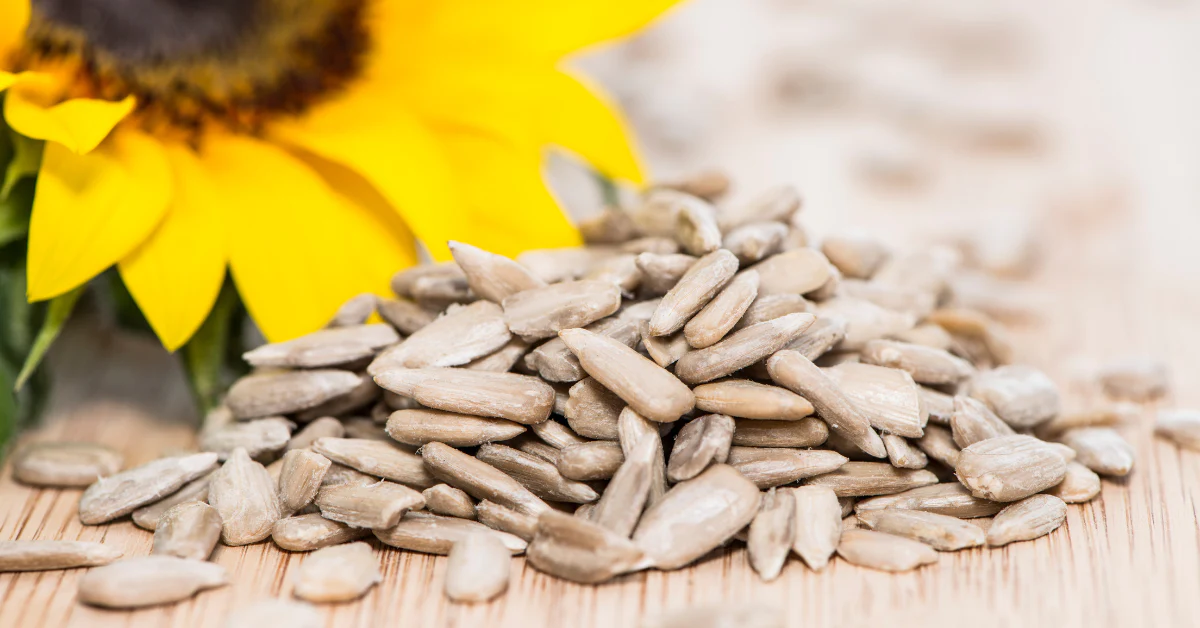
Organic raw sunflower seeds ( Helianthus annuus) represent a critical component within the human and animal nutrition supply chains, and increasingly, within industrial applications leveraging their oil content. Positioned as a pre-processed agricultural commodity, their value lies in their high oil yield, protein content, and nutritional profile. This technical guide will delineate the material science underpinning sunflower seed quality, the manufacturing processes impacting its performance characteristics, potential failure modes during storage and processing, and relevant industry standards. The core performance metrics center around oil content, protein content, moisture content, fatty acid profile, and the presence of contaminants. A primary industry pain point revolves around maintaining consistent quality across harvests, mitigating aflatoxin contamination, and optimizing oil extraction efficiency while minimizing seed damage. This guide addresses these challenges through a detailed examination of the factors influencing sunflower seed suitability for diverse applications.
Material Science & Manufacturing
Sunflower seeds are comprised of a pericarp (hull), kernel (cotyledon), and embryo. The kernel constitutes the primary source of oil and protein. The pericarp, largely cellulose and lignin, provides physical protection. The kernel’s oil composition is predominantly linoleic acid (around 60-75%), oleic acid (10-30%), and palmitic acid (around 5-10%). Protein content typically ranges from 20-25%, consisting of globulins, albumins, and glutelins. Manufacturing begins with cultivation, where soil composition, irrigation, and fertilizer use significantly impact seed quality. Harvesting methods – mechanical versus manual – influence seed damage and impurity levels. Post-harvest processing involves cleaning (removal of debris), drying (to a moisture content of approximately 9-10% to prevent fungal growth), dehulling (removal of the pericarp, either before or after oil extraction), and grading (based on size and quality). Oil extraction is achieved via mechanical pressing (expelling) or solvent extraction (typically hexane). Expelling yields a lower oil recovery rate but produces a higher quality oil, while solvent extraction is more efficient but requires stringent solvent removal protocols. Parameter control during drying is crucial; temperatures exceeding 45°C can denature proteins and degrade oil quality. Dehulling efficiency is paramount to minimize kernel damage and maximize oil yield. Hexane residue levels must adhere to strict regulatory limits.

Performance & Engineering
The performance of sunflower seeds is intimately linked to their physical and chemical properties. Force analysis during mechanical processing (dehulling, cracking) necessitates understanding seed shell strength and kernel fracture resistance. Environmental resistance pertains to the seed's ability to withstand temperature fluctuations and humidity variations during storage. High humidity promotes fungal growth (leading to aflatoxin production), while temperature cycling can induce stress cracking. Compliance requirements are stringent, particularly concerning pesticide residues (organic certification demands residue levels below detectable limits) and heavy metal content (lead, cadmium, mercury). Functional implementation spans food processing (direct consumption, oil extraction, flour production), animal feed (as a protein and energy source), and emerging applications in biofuel production. The oil's viscosity and oxidative stability are critical parameters for biofuel applications. The seed’s compressive strength is a key engineering property considered during oil extraction processes; optimizing this allows for minimizing seed damage while maximizing oil yield. Particle size distribution post-dehulling also plays a significant role in extraction efficiency.
Technical Specifications
| Parameter | Unit | Typical Value (Organic, Raw) | Test Method |
|---|---|---|---|
| Oil Content (Dry Basis) | % | 42-50 | AOAC 983.23 |
| Protein Content (Dry Basis) | % | 20-25 | Kjeldahl Method (AOAC 978.05) |
| Moisture Content | % | 9-10 | AOAC 925.10 |
| Linoleic Acid Content | % of Total Fatty Acids | 55-70 | Gas Chromatography (AOCS Cd 14-90) |
| Aflatoxin B1 | ppb | <2 | HPLC (AOCS 995.09) |
| Kernel Damage (Broken Kernels/Foreign Matter) | % | <3 | Visual Inspection (ICMS 7-97) |
Failure Mode & Maintenance
Sunflower seeds are susceptible to several failure modes. Aflatoxin contamination, caused by Aspergillus flavus and Aspergillus parasiticus fungi, is a primary concern, especially under warm, humid conditions. This manifests as visual discoloration and toxin production. Lipid oxidation, leading to rancidity, occurs due to exposure to oxygen, light, and heat. This results in off-flavors and reduced nutritional value. Insect infestation (e.g., storage beetles) causes physical damage and contamination. Mechanical damage during harvesting, dehulling, or transport leads to fractured kernels and reduced oil yield. Moisture absorption during storage promotes fungal growth and lipid hydrolysis. Maintenance strategies include proper drying techniques, hermetic storage (reducing oxygen exposure), regular monitoring for aflatoxin levels, and pest control measures (fumigation, controlled atmosphere storage). Maintaining consistent temperature and humidity during storage is crucial. Implementing a robust quality control program, including regular seed testing and traceability systems, is essential to prevent and mitigate these failures.
Industry FAQ
Q: What are the critical factors influencing the aflatoxin risk in raw sunflower seeds?
A: Aflatoxin production is heavily influenced by moisture content, temperature, and the presence of Aspergillus spores. Pre-harvest drought stress can increase susceptibility. Proper drying to below 9% moisture, coupled with storage in a cool, dry environment and the use of antifungal treatments (where permissible by organic standards), are crucial for mitigation. Regular testing for aflatoxin levels is also paramount.
Q: How does dehulling impact the oil yield and quality of sunflower seeds?
A: Efficient dehulling maximizes oil yield by removing the low-oil-content pericarp. However, aggressive dehulling can damage the kernel, reducing oil quality (increasing free fatty acids) and leading to higher impurity levels. Optimizing dehulling parameters (roller gap, feed rate) is critical. Pre-dehulling versus post-dehulling oil extraction impacts oil quality – pre-dehulling may yield slightly lower quality due to increased kernel abrasion.
Q: What are the key differences between mechanical pressing and solvent extraction in terms of oil quality?
A: Mechanical pressing (expelling) yields a higher quality oil with a more natural flavor profile because it doesn't involve chemical solvents. However, it has a lower oil recovery rate. Solvent extraction (hexane) is more efficient but requires rigorous solvent removal, and trace amounts of solvent may remain. The refining process required post-extraction also impacts oil quality.
Q: How do different storage conditions affect the fatty acid profile of raw sunflower seeds?
A: Prolonged storage at elevated temperatures can lead to oxidation of unsaturated fatty acids (linoleic, oleic), reducing their nutritional value and generating undesirable flavors. Controlled atmosphere storage (reducing oxygen) and low-temperature storage minimize these effects. The rate of oxidation is also influenced by the presence of antioxidants in the seeds.
Q: What regulatory limits are typically applied to heavy metal content in organic sunflower seeds?
A: Regulatory limits for heavy metals (lead, cadmium, mercury, arsenic) vary by region. Typically, limits are set in parts per billion (ppb) and are based on guidelines established by organizations like the FDA (USA), EFSA (Europe), and national regulatory bodies. Organic certification requires adherence to these limits, with stringent testing protocols.
Conclusion
Organic raw sunflower seeds are a complex agricultural commodity where quality is dictated by a confluence of genetic factors, agronomic practices, processing methodologies, and storage conditions. Understanding the material science underpinning their composition – the oil and protein profiles, the influence of fatty acid composition, and susceptibility to degradation – is paramount for ensuring consistent product quality. The ability to effectively mitigate failure modes, particularly aflatoxin contamination and lipid oxidation, through optimized processing and storage protocols is critical for maintaining market value and consumer safety.
Future developments will likely focus on breeding sunflower varieties with enhanced aflatoxin resistance and improved oil stability. Innovations in dehulling technology aiming to minimize kernel damage and maximize oil yield will also be crucial. Furthermore, advancements in non-destructive quality assessment methods will enable more efficient and accurate monitoring of seed quality throughout the supply chain, improving overall efficiency and reducing waste. Adherence to international standards and continuous process optimization will be key to ensuring the long-term sustainability and profitability of the sunflower seed industry.
