Introduction
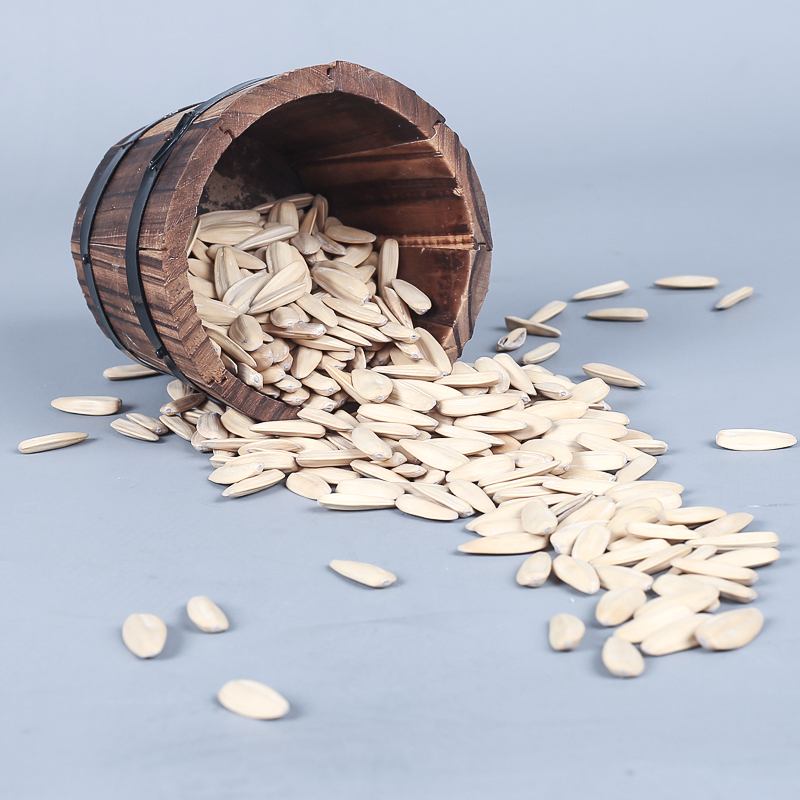
Milky flavor sunflower seeds represent a significant segment within the processed seed market, falling under the broader category of snack foods. Technically, these seeds are the kernel of Helianthus annuus, subjected to a series of processing steps including dehulling, roasting, flavoring, and coating. Their position in the food supply chain is as a consumer-ready packaged snack, bridging agricultural production with retail distribution. Core performance characteristics center on palatability (flavor profile, texture), safety (microbial load, absence of foreign matter), and shelf stability (retention of flavor and texture over time). The production of milky flavored sunflower seeds necessitates rigorous quality control to meet consumer expectations for taste, food safety, and consistent product characteristics. Key challenges in the industry include maintaining the delicate balance between the sunflower seed's inherent oil content and the flavor coating’s adherence and stability, preventing rancidity, and ensuring a consistent sensory experience.
Material Science & Manufacturing
The primary raw material, sunflower seeds, exhibits a complex chemical composition. Approximately 40-50% is oil, predominantly linoleic acid (a polyunsaturated fatty acid), oleic acid (a monounsaturated fatty acid), and palmitic acid (a saturated fatty acid). The kernel also contains around 20-25% protein, 15-20% carbohydrates (primarily cellulose and hemicellulose in the hull, and starch within the kernel), and vital micronutrients like Vitamin E and magnesium. The hull is composed of cellulose, lignin, and hemicellulose, providing structural integrity. The ‘milky’ flavoring is typically achieved through a combination of sugar (sucrose, dextrose), whey powder (providing the milk solids-not-fat component), vegetable oil (often hydrogenated for stability), and flavoring agents (artificial or natural vanilla, butterscotch). Manufacturing begins with cleaning and grading of the raw seeds, followed by dehulling. Dehulling efficiency is critical, influencing the final product yield and requiring precise control of impact force and abrasion. Roasting follows, typically at temperatures between 120-150°C, influencing both flavor development (Maillard reaction) and moisture content. The flavoring process often involves tumbling the roasted seeds with a molten coating mixture. Precise temperature control of the coating is crucial; too low, and adhesion is poor; too high, and the seeds can scorch or the coating degrades. Parameters such as coating viscosity, seed temperature, and tumbling speed are rigorously monitored.
Performance & Engineering
Performance metrics for milky flavor sunflower seeds extend beyond sensory qualities to include structural integrity and stability during handling and transportation. The seed coat, even after dehulling, exhibits a certain degree of brittleness. Force analysis during packaging and shipping requires consideration of compressive strength to prevent kernel breakage. Environmental resistance is paramount. High humidity can lead to coating softening and tackiness, impacting palatability and potentially promoting microbial growth. Exposure to oxygen causes lipid oxidation, leading to rancidity and off-flavors. Packaging materials must therefore provide adequate moisture and oxygen barriers. Compliance requirements include adherence to food safety standards such as those set by the FDA (Food and Drug Administration) in the United States or equivalent regulatory bodies in other regions. These standards dictate permissible levels of contaminants (heavy metals, pesticides), microbial limits, and labeling requirements. Furthermore, the coating formulation must meet regulations regarding food additives and allergens (e.g., labeling requirements for dairy ingredients). The stability of the coating’s adhesion is a critical engineering challenge. Adhesion strength is influenced by the surface energy of the seed and the coating’s wettability. Formulation adjustments, including the addition of adhesion promoters, may be necessary to optimize this parameter.
Technical Specifications
| Parameter | Unit | Specification | Test Method |
|---|---|---|---|
| Moisture Content | % | ≤ 8.0 | Oven Drying (AOAC) |
| Oil Content | % | 45 – 55 | Soxhlet Extraction (AOAC) |
| Peroxide Value (Oil) | meq O2/kg | ≤ 10 | Titration (AOCS) |
| Coating Weight Gain | % | 8 – 12 | Weight Difference |
| Particle Size Distribution (Coating) | µm | Mean: 50-100 | Laser Diffraction |
| Total Plate Count | CFU/g | ≤ 1000 | Microbiological Analysis |
Failure Mode & Maintenance
Failure modes in milky flavor sunflower seeds can be categorized as sensory defects, physical damage, and microbiological contamination. Sensory defects commonly include rancidity (oxidative degradation of lipids, resulting in off-flavors), coating delamination (loss of adhesion between the coating and the seed), and flavor loss (migration of volatile flavor compounds). Rancidity is accelerated by exposure to oxygen, light, and elevated temperatures. Coating delamination can result from insufficient coating adhesion, mechanical stress during handling, or high humidity. Physical damage manifests as kernel breakage or hull fragments in the final product. These are often a consequence of excessive force during processing or transportation. Microbiological contamination, including molds and bacteria, poses a significant safety risk. Preventative maintenance strategies involve rigorous quality control throughout the production process. This includes sourcing high-quality raw materials, maintaining precise control of roasting and coating parameters, implementing effective sanitation procedures, and utilizing appropriate packaging materials. Storage conditions are critical. Seeds should be stored in a cool, dry, and dark environment to minimize oxidation and moisture absorption. Regular monitoring of peroxide value and microbial load is recommended to detect early signs of degradation or contamination. Packaging integrity checks are also crucial to ensure adequate barrier properties are maintained.
Industry FAQ
Q: What is the primary factor contributing to coating delamination?
A: The primary factor contributing to coating delamination is typically insufficient adhesion between the coating matrix and the sunflower seed surface. This can stem from inadequate surface preparation of the seeds (residual oil or dust), improper coating viscosity, or insufficient drying time after coating application. Surface energy mismatch between the seed and coating also plays a critical role.
Q: How does the oil content of the sunflower seeds affect shelf life?
A: Higher oil content increases the susceptibility to oxidative rancidity, directly impacting shelf life. The unsaturated fatty acids within the oil readily react with oxygen, leading to the formation of undesirable off-flavors and aromas. Utilizing antioxidants in the coating formulation and employing oxygen-barrier packaging can mitigate this effect.
Q: What are the key considerations when selecting packaging materials?
A: Key considerations include moisture barrier properties (to prevent coating softening and stickiness), oxygen barrier properties (to inhibit lipid oxidation), light barrier properties (to protect against photo-oxidation), and mechanical strength (to withstand handling and transportation stresses). Materials like metallized films or multi-layer laminates are often employed.
Q: What analytical methods are used to assess seed quality before processing?
A: Common analytical methods include moisture content determination (oven drying), oil content analysis (Soxhlet extraction), peroxide value measurement (titration), and assessment of foreign matter and seed damage (visual inspection and sieving). Mycotoxin analysis may also be performed depending on the sourcing region.
Q: How can we minimize kernel breakage during the manufacturing process?
A: Minimizing kernel breakage requires careful optimization of each processing step. Controlled dehulling pressure, gentle roasting conditions, and avoidance of excessive mechanical stress during coating and packaging are crucial. Vibration control in conveying systems can also reduce damage.
Conclusion
Milky flavor sunflower seeds production is a complex process demanding precise control of material science principles, manufacturing parameters, and quality assurance protocols. The interplay between the seed’s inherent properties – oil content, protein structure – and the coating’s composition, adhesion characteristics, and barrier properties dictates the final product’s sensory appeal, shelf life, and safety. Optimizing these factors requires a thorough understanding of lipid oxidation, moisture migration, and mechanical stress tolerance.
Future trends in this sector will likely focus on enhanced coating technologies, utilizing encapsulation techniques to improve flavor retention and stability. Sustainable sourcing of sunflower seeds and environmentally friendly packaging materials will also gain increasing importance. Furthermore, advanced analytical techniques, such as near-infrared spectroscopy, may be employed for real-time monitoring of seed quality and coating uniformity, enabling even greater process control and product consistency.
