
Introduction
High quality toasted sunflower seeds represent a significant value-added product within the broader edible seed industry. Positioned downstream from agricultural production and primary processing (de-hulling and drying), toasting introduces critical chemical and physical changes impacting flavor, texture, and shelf-life. This guide provides a comprehensive technical overview of the process, encompassing raw material characteristics, manufacturing parameters, quality control metrics, potential failure modes, and relevant industry standards. The primary consumer base spans both direct consumption snack markets and industrial applications, including confectionery inclusions and baked goods. Achieving consistent high quality hinges on precise control of lipid oxidation, acrylamide formation, and maintenance of seed integrity. Understanding these core factors is paramount for manufacturers aiming to meet stringent food safety regulations and consumer expectations.
Material Science & Manufacturing
The foundational material, sunflower seeds ( Helianthus annuus ), exhibits inherent variability in composition based on cultivar, growing conditions, and harvesting practices. Key components include lipids (40-50% by weight, primarily linoleic acid), proteins (20-25%), carbohydrates (15-20%), and moisture content (typically 8-12% pre-toasting). The lipid profile is critical; high linoleic acid content renders the seeds susceptible to oxidative rancidity. Manufacturing commences with seed cleaning and grading to remove foreign matter and broken kernels. Toasting is typically achieved via dry roasting, using heated air or contact with heated surfaces (rotary drums, fluid bed roasters). The toasting process involves complex heat and mass transfer phenomena. Critical parameters include temperature (140-180°C), roasting time (15-30 minutes), and airflow. Maillard reactions occur between reducing sugars and amino acids, contributing to the characteristic toasted flavor and brown color. Control of water activity (aw) during and post-toasting is crucial to inhibit microbial growth and lipid oxidation. Seasoning, often involving salt and other flavorings, is applied post-toasting, typically through tumbling or spray application. Packaging utilizes materials with low oxygen transmission rates (OTR) to extend shelf life. Seed coat integrity is maintained to prevent lipid leakage and off-flavor development. Kernel density variations impact heat penetration during toasting, demanding precise process control.
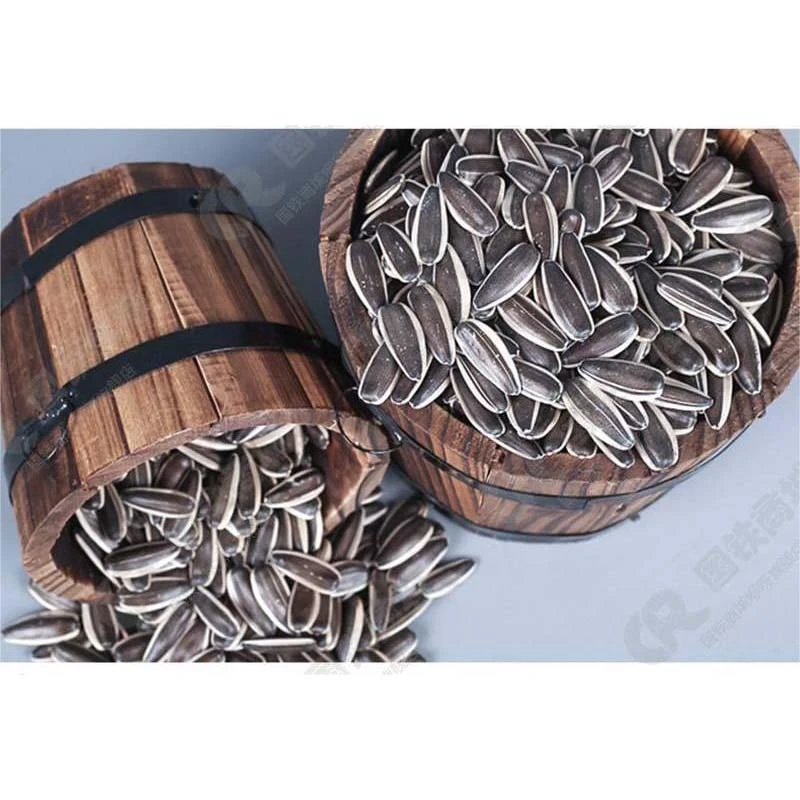
Performance & Engineering
The performance of toasted sunflower seeds is evaluated based on several key engineering parameters. Firstly, shear force analysis determines the textural characteristics – ideal seeds exhibit a crisp, brittle fracture. This is directly correlated to moisture content and roasting intensity. Secondly, colorimetry (Lab values) quantifies the degree of browning, indicating Maillard reaction progress. Darker colors are generally associated with more intense flavor but can also indicate excessive heat exposure leading to acrylamide formation. Oil content analysis, using Soxhlet extraction, ensures compliance with product specifications and monitors lipid migration. Water activity (aw) measurement, using a hygrometer, is vital for shelf-life prediction and microbial stability. Bulk density and flowability are important for packaging and automated handling systems. Particle size distribution, determined by sieving, influences sensory perception and uniformity of seasoning application. Furthermore, packaging materials are engineered to provide a barrier against oxygen, moisture, and light, impacting long-term product stability. Finite element analysis can be utilized to model heat transfer within the seed during roasting, optimizing process parameters for uniform toasting.
Technical Specifications
| Parameter | Unit | Specification | Test Method |
|---|---|---|---|
| Moisture Content | % w/w | ≤ 3.0 | AOAC 925.10 |
| Oil Content | % w/w | 45-55 | Soxhlet Extraction (AOAC 920.39) |
| Water Activity (aw) | - | ≤ 0.65 | Hygrometer (e.g., Novasina) |
| Peroxide Value (PV) | meq O2/kg | ≤ 5.0 | AOCS Cd 8-53 |
| Acrylamide Content | µg/kg | ≤ 100 | GC-MS (AOCS Ch 6.8) |
| Kernel Integrity (Broken Kernels) | % w/w | ≤ 5.0 | Visual Inspection/Sieving |
Failure Mode & Maintenance
Toasted sunflower seeds are susceptible to several failure modes. Rancidity, caused by lipid oxidation, results in off-flavors and odors. This is accelerated by high temperatures, oxygen exposure, and high linoleic acid content. Acrylamide formation, a byproduct of the Maillard reaction, is a food safety concern. It's influenced by roasting temperature, moisture content, and amino acid content. Kernel cracking and breakage can occur during handling, roasting, or packaging, reducing aesthetic appeal and increasing surface area for oxidation. Microbial contamination, though less common due to the low water activity, can occur if packaging is compromised. Hygroscopic nature of the seeds can lead to moisture absorption, causing clumping and reduced crispness. Maintenance protocols include regular cleaning and sanitization of roasting and packaging equipment. Temperature monitoring and control systems are critical to prevent overheating and acrylamide formation. Proper storage conditions – cool, dry, and dark – are essential to minimize oxidation and maintain product quality. Periodic testing for peroxide value and acrylamide content is recommended to ensure compliance with safety standards. Packaging integrity checks are also vital.
Industry FAQ
Q: What is the optimal roasting temperature to balance flavor development and acrylamide minimization?
A: The optimal roasting temperature typically falls within the 160-170°C range. Lower temperatures may not achieve sufficient Maillard reaction for desirable flavor, while higher temperatures significantly increase acrylamide formation. Precise control and optimization based on seed composition are crucial. Reducing roasting time at a higher temperature can sometimes offer a compromise, but requires careful monitoring.
Q: How does seed variety affect the roasting process and final product quality?
A: Seed variety significantly impacts lipid profile, protein content, and carbohydrate composition. High-oleic sunflower seeds exhibit greater oxidative stability and are preferable for toasting as they generate less rancidity. Varieties with lower reducing sugar content may exhibit reduced acrylamide formation potential. Kernel size and shape also influence heat penetration and uniformity of roasting.
Q: What packaging materials provide the best barrier properties for maintaining freshness and preventing rancidity?
A: Multi-layer films incorporating aluminum foil or metallized polyethylene terephthalate (PET) provide excellent barriers against oxygen and moisture. Low-density polyethylene (LDPE) or polypropylene (PP) layers are often used for sealing. Modified atmosphere packaging (MAP) with nitrogen flushing can further reduce oxygen levels within the package, extending shelf life.
Q: How can peroxide value be used to assess the quality and shelf life of toasted sunflower seeds?
A: Peroxide value (PV) is an indicator of primary lipid oxidation. Higher PV values signify greater oxidation and a shorter remaining shelf life. Regular PV monitoring during storage can help predict when the product will become rancid. A PV exceeding 5 meq O2/kg typically indicates significant oxidation and potential off-flavors.
Q: What are the critical control points (CCPs) in the toasting process from a food safety perspective?
A: The critical control points include: 1) Raw material sourcing and inspection; 2) Roasting temperature and time control; 3) Moisture content control (pre- and post-roasting); 4) Packaging integrity; and 5) Storage conditions. Regular monitoring and verification of these CCPs are essential to ensure food safety and compliance with regulatory requirements.
Conclusion
The production of high-quality toasted sunflower seeds is a complex process demanding stringent control over raw material characteristics, roasting parameters, and packaging conditions. Understanding the underlying material science, including lipid oxidation pathways and Maillard reaction kinetics, is crucial for optimizing flavor development while minimizing undesirable byproducts like acrylamide. Consistent adherence to established quality control standards and rigorous monitoring of critical parameters, such as moisture content, peroxide value, and water activity, are paramount for ensuring product safety and extending shelf life.
Future advancements in toasting technology will likely focus on optimizing heat transfer efficiency, developing novel packaging materials with enhanced barrier properties, and implementing real-time monitoring systems for continuous quality assessment. The integration of predictive modeling and data analytics can further enhance process control and reduce waste. Continued research into seed genetics to improve oxidative stability and reduce acrylamide formation potential also represents a promising avenue for improving product quality and consumer acceptance.
