Introduction
High quality sunflower seeds intended for ‘Whole30’ compliant diets represent a specific segment within the broader sunflower seed industry, demanding stringent criteria beyond standard agricultural grading. These seeds are not simply agricultural commodities; they are functional food components subject to detailed scrutiny regarding origin, processing, and contaminant levels. This guide details the technical specifications, manufacturing processes, performance characteristics, potential failure modes, and maintenance of quality for sunflower seeds destined for Whole30 approval. The industry chain begins with specialized sunflower cultivars optimized for kernel size, oil content, and hull characteristics, proceeding through careful harvesting, drying, dehulling (if applicable – Whole30 favors seeds in their natural state, including the hull), sorting, and packaging. Core performance centers on nutritional density – specifically protein and healthy fat content – absence of prohibited additives, and maintaining seed integrity throughout the supply chain. Failure to meet these criteria results in non-compliance, impacting brand reputation and consumer trust.
Material Science & Manufacturing
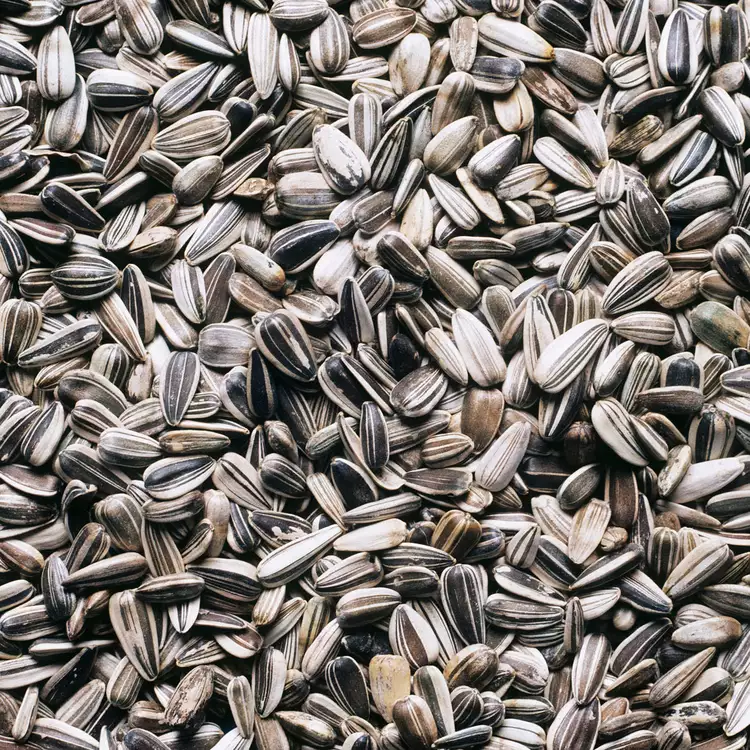
Sunflower seeds ( Helianthus annuus) comprise three primary components: the kernel (cotyledon, approximately 58-65% of seed weight), the hull (pericarp, approximately 20-30%), and undeveloped embryo (approximately 3-5%). The kernel is rich in linoleic acid (an omega-6 fatty acid, approximately 60-70% of kernel oil), oleic acid (omega-9, 10-30%), palmitic acid, and stearic acid. Protein content typically ranges between 18-25%, with notable amino acid profiles. The hull consists primarily of cellulose, hemicellulose, and lignin, providing structural integrity. Manufacturing begins with cultivar selection, prioritizing varieties exhibiting high kernel-to-hull ratio and low levels of naturally occurring toxins like cadmium. Harvesting occurs when seed moisture content reaches 18-20%. Drying, typically using forced-air systems, reduces moisture content to 8-9% to prevent mold growth and enzymatic degradation. Dehulling, if performed, employs mechanical abrasion or impact methods; however, Whole30 specifications generally favor unhulled seeds to preserve nutritional integrity. Critical parameters during drying include temperature (maintained below 60°C to prevent oil oxidation) and airflow rate. Sorting utilizes optical and gravimetric methods to remove foreign material, broken seeds, and discolored kernels. Packaging employs barrier materials (e.g., multi-layer films with aluminum or EVOH layers) to minimize oxygen and moisture ingress, extending shelf life. Chemical compatibility of packaging materials with sunflower seed oils is paramount to prevent leaching and rancidity.
Performance & Engineering
Performance evaluation focuses on several key areas. Firstly, oil stability, measured via the Rancimat method (AOCS Cd 12-92), is critical. Whole30 compliant seeds must exhibit low peroxide values (< 5 meq O2/kg) and maintain acceptable flavor profiles throughout the stated shelf life. Secondly, moisture content, determined using a Karl Fischer titrator, must remain below 9% to inhibit microbial growth. Thirdly, physical integrity – specifically, kernel soundness – is assessed via visual inspection and mechanical sieving. Broken or damaged kernels are indicative of poor handling or inadequate drying. Environmental resistance concerns center around temperature fluctuations and humidity. Sunflower seeds are susceptible to lipid oxidation at elevated temperatures, leading to off-flavors and reduced nutritional value. Humidity promotes mold growth and seed deterioration. Whole30 compliance necessitates rigorous adherence to Good Manufacturing Practices (GMP) and Hazard Analysis and Critical Control Points (HACCP) principles to minimize contamination from heavy metals (cadmium, lead), pesticides, and mycotoxins (aflatoxins, ochratoxin A). Force analysis, while not directly applicable to the seed itself, applies to packaging integrity; burst strength and puncture resistance of packaging materials must withstand handling and transportation stresses.
Technical Specifications
| Parameter | Unit | Specification (Whole30 Compliant) | Test Method |
|---|---|---|---|
| Oil Content | % (dry weight basis) | 48-58 | AOCS Official Method Ak 3-93 |
| Protein Content | % (dry weight basis) | 18-25 | Kjeldahl Method (AOCS Official Method Ba 3-93) |
| Moisture Content | % | ≤ 9.0 | Karl Fischer Titration (AOCS Official Method Ca 14-90) |
| Peroxide Value | meq O2/kg | ≤ 5.0 | AOCS Cd 8-53 |
| Cadmium Content | mg/kg | ≤ 0.1 | ICP-MS (Inductively Coupled Plasma Mass Spectrometry) |
| Aflatoxin B1 | µg/kg | ≤ 2.0 | ELISA (Enzyme-Linked Immunosorbent Assay) |
Failure Mode & Maintenance
Common failure modes for sunflower seeds include lipid oxidation (rancidity), leading to off-flavors and reduced nutritional value; microbial contamination (mold growth), resulting in mycotoxin production and rendering the seeds unusable; physical damage (cracked or broken kernels), reducing visual appeal and increasing susceptibility to oxidation; and insect infestation, causing significant product loss. Failure analysis involves identifying the root cause of these failures, which may include inadequate drying, improper storage conditions (high temperature, humidity), or insufficient packaging barrier properties. Maintenance strategies center on preventative measures. These include optimizing drying protocols, implementing robust pest control programs, utilizing high-barrier packaging materials, and maintaining strict temperature and humidity control during storage (ideally < 15°C and < 60% relative humidity). Regular quality control testing (oil stability, moisture content, mycotoxin levels) is essential for early detection of potential issues. Packaging should be inspected for integrity (seal strength, puncture resistance) prior to shipment. Implementing a FIFO (First-In, First-Out) inventory management system minimizes the risk of prolonged storage and subsequent deterioration.
Industry FAQ
Q: What is the acceptable level of free fatty acids (FFA) in Whole30 compliant sunflower seeds?
A: While not explicitly defined by Whole30, industry best practice and quality standards generally target FFA levels below 1.0% (expressed as oleic acid) to ensure optimal flavor and minimize potential off-flavors. Higher FFA levels indicate lipid hydrolysis and degradation.
Q: How does the hull-on vs. hull-off impact Whole30 compliance and shelf life?
A: Whole30 generally favors hull-on seeds, as the hull contains fiber and antioxidants. However, hull-off seeds may exhibit slightly better oil stability due to reduced surface area exposed to oxygen. Regardless, appropriate packaging is crucial for both types to maintain shelf life.
Q: What are the key considerations for packaging material selection to ensure Whole30 compliance?
A: Packaging materials must be food-grade, free of BPA and other prohibited substances, and provide an effective barrier against oxygen, moisture, and light. Multi-layer films incorporating aluminum or EVOH are commonly used. Material compatibility with sunflower seed oil is essential to prevent leaching.
Q: How often should sunflower seeds be tested for mycotoxins during storage?
A: Mycotoxin testing should be conducted at a minimum of every six months, but more frequent testing (e.g., every three months) is recommended for long-term storage or in regions with high humidity. Testing should be performed by a certified laboratory.
Q: Can sunflower seeds be treated with any coatings or preservatives to extend shelf life while maintaining Whole30 compliance?
A: Whole30 strictly prohibits the use of artificial preservatives, coatings, or additives. Any processing aids must be naturally derived and compliant with Whole30 guidelines. Therefore, extending shelf life relies on optimized drying, packaging, and storage conditions, rather than chemical treatments.
Conclusion
Maintaining Whole30 compliance for sunflower seeds requires a holistic approach encompassing cultivar selection, meticulous processing, and stringent quality control. The technical parameters outlined in this guide – oil content, protein levels, moisture content, peroxide value, and contaminant limits – are critical benchmarks for ensuring product suitability. Addressing potential failure modes, such as lipid oxidation and microbial contamination, through preventative maintenance strategies is paramount.
Ultimately, the production of high-quality, Whole30 compliant sunflower seeds is a complex undertaking demanding a deep understanding of both agricultural science and food safety principles. Continuous monitoring, adherence to best practices, and a commitment to transparency are essential for establishing trust with consumers and maintaining a competitive position in this specialized market segment.
