Introduction
Sunflower seeds ( Helianthus annuus) and pumpkin seeds (Cucurbita pepo, C. maxima, C. moschata) represent significant sources of edible oil, protein, and micronutrients within the agricultural and food processing industries. While both are commonly consumed as snacks and ingredients, their compositional differences dictate distinct processing requirements, applications, and nutritional profiles. Sunflower seeds are primarily utilized for oil extraction and confectionery applications, while pumpkin seeds find use in snack foods, nutraceuticals, and increasingly, as a sustainable protein source. This guide provides a comprehensive technical analysis comparing high-quality sunflower seeds and pumpkin seeds, examining their material science, manufacturing processes, performance characteristics, failure modes, and relevant industry standards. The core pain point for processors lies in optimizing extraction efficiency, maintaining seed integrity during processing, and ensuring consistent product quality for diverse end-use applications. Contamination control, rancidity prevention, and achieving specific oil profiles are paramount concerns driving advancements in seed handling and processing technologies.
Material Science & Manufacturing
Sunflower seeds comprise a hull (pericarp) approximately 30-40% of the seed weight, an oil-rich kernel (cotyledon), and a seed coat. The hull is composed primarily of cellulose and lignin, providing structural rigidity. Kernel composition is roughly 50-60% oil (primarily linoleic acid, oleic acid, and palmitic acid), 20-30% protein, and 10-15% carbohydrates. Pumpkin seeds, conversely, possess a softer hull (approximately 20-25% of seed weight) and a kernel with a higher protein content (30-50%) and lower oil content (40-50%). The oil profile in pumpkin seeds is characterized by a greater proportion of unsaturated fatty acids, including linoleic and oleic acids, as well as stearidonic acid. Manufacturing processes for sunflower seeds involve dehulling, kernel drying (typically to 8-10% moisture content), oil extraction (mechanical pressing or solvent extraction using hexane), and refining. Pumpkin seeds undergo similar dehulling and drying stages, often followed by roasting or salting for direct consumption. Key parameter control during drying is critical to prevent cracking and maintain oil quality. Temperature control during oil extraction minimizes thermal degradation of the oil. Seed grading based on size and density is essential for consistent processing. Modern techniques involve optical sorting to remove discolored or damaged seeds. The hulls, as a byproduct, are increasingly investigated for use in biofuel production or as animal feed, demanding careful impurity profiling and subsequent process optimization.
Performance & Engineering
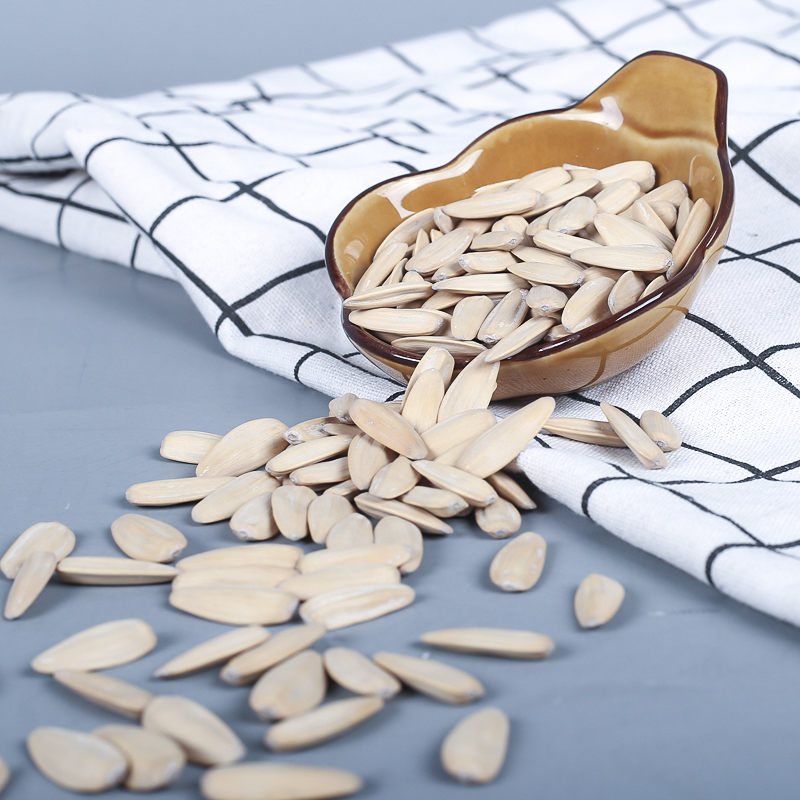
The performance of both seed types is largely dictated by their mechanical strength and resistance to environmental factors. Hull strength impacts dehulling efficiency; harder hulls require greater force, increasing kernel breakage. Kernel density influences sedimentation rates during oil extraction and separation processes. Environmental resistance relates primarily to moisture absorption and susceptibility to rancidity. Sunflower oil, rich in unsaturated fatty acids, is prone to oxidation, necessitating the addition of antioxidants during processing and packaging. Pumpkin seeds exhibit a lower rate of oxidation due to the presence of tocopherols and other natural antioxidants. Force analysis during dehulling reveals that optimal crack propagation occurs at specific impact angles and velocities. Finite Element Analysis (FEA) is used to optimize hulling machine design and minimize kernel damage. Compliance requirements include adherence to food safety standards (HACCP, GMP), pesticide residue limits (established by regulatory bodies like the FDA and EFSA), and labeling regulations. Furthermore, traceability is increasingly important, driven by consumer demand for transparency and supply chain integrity. The geometric properties of the seeds – shape, size distribution, and surface texture – also influence fluidization behavior during drying and roasting processes, requiring careful control of airflow and temperature gradients.
Technical Specifications
| Parameter | Sunflower Seeds (High Quality) | Pumpkin Seeds (High Quality) | Unit |
|---|---|---|---|
| Oil Content (Dry Basis) | 42-58 | 40-50 | % |
| Protein Content (Dry Basis) | 18-26 | 30-50 | % |
| Moisture Content (Optimal for Processing) | 8-10 | 9-11 | % |
| Hull Percentage (Weight) | 30-40 | 20-25 | % |
| Kernel Hardness (Shore D) | 60-70 | 50-60 | |
| Acid Value (Maximum Allowable) | 0.5 | 0.4 | mg KOH/g |
Failure Mode & Maintenance
Common failure modes in sunflower seed processing include kernel cracking during dehulling, hull fragments contaminating the kernel stream, and oil rancidity during storage. These failures are often attributed to improper machine settings, inadequate drying, or exposure to oxygen and elevated temperatures. Pumpkin seeds are susceptible to hull scorching during roasting, resulting in off-flavors. Mechanical damage during dehulling can also reduce the market value of the kernels. Fatigue cracking in processing equipment (dehullers, conveyors) is a concern, necessitating regular inspection and preventative maintenance. Rancidity, in both seed types, is a primary cause of product degradation, initiated by lipid peroxidation. Preventative maintenance strategies include regular cleaning of processing equipment to remove seed debris, lubrication of moving parts to reduce friction, and calibration of sensors and control systems. Proper storage conditions – low temperature (below 15°C), low humidity, and inert gas packaging – are crucial for minimizing oxidation and extending shelf life. Regular monitoring of acid value and peroxide value provides an indication of oil quality and potential rancidity development. Damage assessment using microscopic examination can identify the root cause of kernel cracking or hull damage, guiding process optimization.
Industry FAQ
Q: What is the impact of seed moisture content on oil extraction efficiency?
A: Optimal moisture content (8-10% for sunflower, 9-11% for pumpkin) is crucial. Too high a moisture content increases energy requirements for drying and promotes microbial growth. Too low a moisture content can lead to kernel brittleness and increased fines generation during extraction, reducing oil yield and increasing processing costs.
Q: How do different hulling methods affect kernel damage rates?
A: Impact hullers generally result in higher kernel damage rates compared to centrifugal hullers. Controlled impact force and optimized huller speed are essential for minimizing damage. Optical sorting systems are often employed downstream to remove broken kernels.
Q: What are the key differences in oil refining processes for sunflower and pumpkin seed oils?
A: Pumpkin seed oil often requires more extensive degumming and deodorization due to its higher phospholipid content and potential for off-flavors. Sunflower oil refining focuses primarily on removing free fatty acids and color compounds.
Q: What are the implications of pesticide residue levels on export compliance?
A: Stringent pesticide residue limits are enforced by importing countries (e.g., EU, US). Comprehensive pesticide testing and adherence to Good Agricultural Practices (GAP) are essential for ensuring compliance and avoiding shipment rejection.
Q: How can rancidity be effectively prevented during long-term storage of seeds and oils?
A: Minimizing oxygen exposure (vacuum packaging, nitrogen flushing), maintaining low storage temperatures, adding antioxidants (e.g., tocopherols, ascorbyl palmitate), and utilizing UV-absorbing packaging materials are key strategies for preventing rancidity.
Conclusion
Sunflower seeds and pumpkin seeds represent distinct agricultural commodities with unique material properties and processing requirements. Sunflower seeds are primarily valued for oil extraction, demanding optimization of pressing or solvent extraction techniques and careful control of oxidation. Pumpkin seeds, with their higher protein content, are increasingly relevant in the nutraceutical and plant-based protein markets, necessitating efficient dehulling and roasting processes while preserving nutritional integrity. Understanding the specific failure modes associated with each seed type – kernel cracking, hull damage, rancidity – is critical for implementing effective preventative maintenance strategies and ensuring product quality.
Future advancements in seed processing will likely focus on sustainable practices, including minimizing waste generation, utilizing byproduct streams (hulls) for value-added applications, and developing energy-efficient extraction technologies. Precision agriculture techniques, including seed variety selection and optimized harvesting practices, will play a crucial role in enhancing seed quality and yield. Continuous monitoring of critical process parameters and the implementation of data-driven control systems will be essential for maintaining consistent product quality and meeting evolving consumer demands.
