Introduction
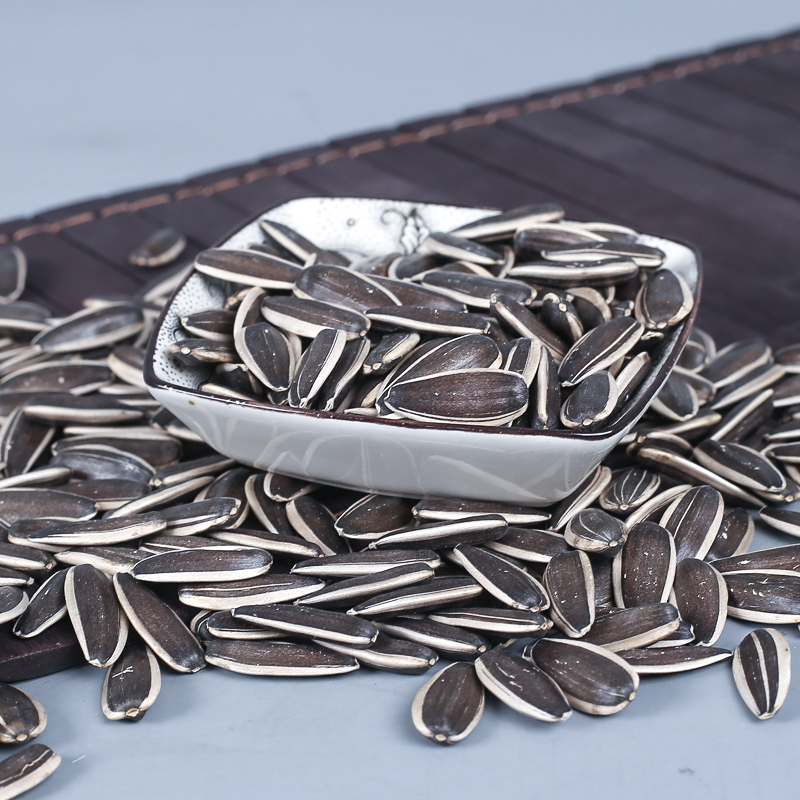
High quality sunflower seeds baking represents a specialized segment within the broader food processing industry, demanding precise control of seed characteristics, thermal processing parameters, and quality assurance protocols. Sunflower seeds, Helianthus annuus, are valued for their nutritional profile – high in linoleic acid, vitamin E, and protein – making baked sunflower seeds a popular snack food. This guide details the critical aspects of optimizing the baking process for superior seed quality, addressing concerns from raw material selection to final product stability. The baking process transforms raw seeds, typically possessing high moisture content and a distinct green hue, into a consistently browned, brittle, and palatable product. Industry challenges center around achieving uniform baking, minimizing acrylamide formation, and maintaining seed integrity during processing, directly impacting shelf life and consumer acceptance. This comprehensive overview will address these challenges from a materials science, engineering, and quality control perspective.
Material Science & Manufacturing
Sunflower seeds destined for baking are primarily composed of a shell (hull) approximately 30-40% by weight, and a kernel (meat) representing the remaining 60-70%. Kernel composition includes approximately 20-40% oil (primarily linoleic acid), 20-30% protein, 15-20% carbohydrates, and various micronutrients. The shell consists largely of cellulose, hemicellulose, and lignin, providing structural integrity. Raw seed moisture content typically ranges from 8-12% and is a critical parameter influencing baking uniformity. Manufacturing begins with seed cleaning to remove foreign matter (straw, stems, stones). Subsequent drying, typically utilizing fluidized bed dryers, reduces moisture content to 6-8% for optimal baking. Pre-treatment processes can include salting, seasoning, or coating with flavor enhancers. Baking itself is predominantly a convective heat transfer process, employing temperatures ranging from 150-180°C for 20-40 minutes, depending on seed size, moisture content, and desired crispness. Precise temperature control is vital to prevent scorching and ensure consistent kernel expansion. Post-baking cooling is essential to halt the baking process and minimize moisture reabsorption. Key parameter control involves monitoring oven air temperature, seed bed temperature, and seed moisture content throughout the entire cycle. Seed variety significantly impacts oil content and shell thickness, influencing baking characteristics; oil content dictates heat transfer efficiency, while shell thickness affects brittleness and breakage during processing.
Performance & Engineering
The baking process induces significant physical and chemical changes within the sunflower seed. Thermal energy causes water evaporation, leading to kernel expansion and increased porosity. The oil undergoes oxidation reactions, contributing to flavor development but also potentially leading to rancidity if uncontrolled. Maillard reactions, between reducing sugars and amino acids, are responsible for the characteristic browned color and contribute to the overall flavor profile. From an engineering perspective, heat transfer analysis is crucial for optimizing oven design and baking parameters. Convective heat transfer coefficients vary with air velocity and temperature, influencing the rate of moisture removal and kernel heating. The seeds' thermal conductivity is relatively low, necessitating uniform air circulation to prevent temperature gradients. Furthermore, the seeds experience mechanical stresses during baking due to differential expansion and contraction of the kernel and shell. These stresses can lead to shell cracking and kernel fragmentation, impacting product quality. Compliance requirements, particularly regarding food safety, mandate strict adherence to Hazard Analysis and Critical Control Points (HACCP) principles. Monitoring baking temperatures, moisture content, and oil oxidation levels are critical control points. Packaging materials must provide a barrier against oxygen and moisture to maintain product freshness and prevent rancidity. The design of the baking oven must ensure efficient energy utilization and minimize emissions.
Technical Specifications
| Seed Variety | Kernel Moisture Content (Initial) | Baking Temperature (°C) | Baking Time (minutes) | Final Kernel Moisture Content (%) | Oil Content (%) |
|---|---|---|---|---|---|
| Black Oil Sunflower | 8.5 - 9.5 | 160 - 170 | 25 - 35 | 2.5 - 3.5 | 45 - 55 |
| Striped Sunflower | 7.0 - 8.0 | 170 - 180 | 30 - 40 | 2.0 - 3.0 | 40 - 50 |
| Confectionery Sunflower | 6.5 - 7.5 | 150 - 160 | 20 - 30 | 1.5 - 2.5 | 35 - 45 |
| High Oleic Sunflower | 8.0 - 9.0 | 165 - 175 | 28 - 38 | 3.0 - 4.0 | 60 - 70 |
| NuSun Sunflower | 7.5 - 8.5 | 175 - 185 | 32 - 42 | 2.2 - 3.2 | 42 - 52 |
| Russian Mammoth Sunflower | 9.0 - 10.0 | 155 - 165 | 22 - 32 | 3.5 - 4.5 | 50 - 60 |
Failure Mode & Maintenance
Failure modes in baked sunflower seeds typically manifest as suboptimal texture (too soft, too hard), undesirable color (scorched, unevenly browned), rancidity, and shell fragmentation. Rancidity is a primary failure mode, arising from lipid oxidation during baking and subsequent storage. This is exacerbated by exposure to oxygen, light, and elevated temperatures. Shell cracking is often caused by rapid temperature changes or excessive mechanical handling. Kernel fragmentation results from uneven moisture distribution or excessive baking time. Acrylamide formation, a potential health hazard, occurs during high-temperature baking, particularly in seeds with high asparagine content and reducing sugar levels. Maintenance of baking equipment involves regular cleaning of ovens and dryers to prevent buildup of seed debris and oil residues. Temperature sensors should be calibrated frequently to ensure accurate temperature control. Air filters should be replaced regularly to maintain optimal air flow. Preventive maintenance schedules should include inspection of conveyor belts, motors, and heating elements. Seed storage conditions are critical for preventing rancidity; seeds should be stored in cool, dry, and dark environments, ideally under nitrogen atmosphere. Proper quality control procedures, including regular sensory evaluation and chemical analysis (e.g., peroxide value for rancidity assessment), are essential for identifying and addressing potential failure modes.
Industry FAQ
Q: What is the optimal moisture content for sunflower seeds prior to baking, and how is it accurately measured?
A: The optimal moisture content prior to baking typically falls within the range of 6-8%. Moisture content significantly impacts baking uniformity and final product texture. Accurate measurement requires a calibrated moisture analyzer utilizing the oven-drying method (e.g., AOAC 925.10) or near-infrared (NIR) spectroscopy. NIR provides rapid, non-destructive measurements but requires initial calibration against reference oven-drying data.
Q: How can acrylamide formation be minimized during the baking process?
A: Acrylamide formation can be minimized by controlling baking temperature and time, reducing the concentration of reducing sugars (e.g., glucose, fructose) through seed variety selection, and optimizing moisture content. Lowering baking temperature and time, while ensuring adequate baking, is a primary strategy. Employing anti-oxidants can also help reduce acrylamide precursors.
Q: What are the key indicators of rancidity in baked sunflower seeds, and how are they measured?
A: Key indicators of rancidity include off-flavors (stale, cardboard-like), increased peroxide value, and elevated levels of free fatty acids. Peroxide value (PV) is measured using iodometric titration (e.g., AOCS Cd 8-53) and quantifies the amount of hydroperoxides formed during lipid oxidation. Free fatty acid content is determined by titration with a standard base (e.g., AOCS Cd 3-63).
Q: What packaging materials are most effective at preserving the quality and extending the shelf life of baked sunflower seeds?
A: Multi-layer films incorporating a metallized layer (e.g., aluminum foil) and a polyethylene (PE) or polypropylene (PP) inner layer are most effective. These materials provide excellent barriers against oxygen, moisture, and light. Modified atmosphere packaging (MAP) utilizing nitrogen flushing can further enhance shelf life by displacing oxygen. Vacuum packaging is also effective but can lead to seed compression.
Q: How does seed variety influence the baking process and the final product characteristics?
A: Seed variety significantly impacts oil content, shell thickness, kernel size, and reducing sugar levels. High-oleic varieties exhibit improved oxidative stability and longer shelf life. Thicker shells require longer baking times but can offer better protection against breakage. Higher reducing sugar levels increase the risk of acrylamide formation. Kernel size influences heat transfer rates and baking uniformity.
Conclusion
Optimizing the baking of high quality sunflower seeds requires a deep understanding of the interplay between material science, thermal engineering, and quality control. Controlling parameters such as initial seed moisture content, baking temperature, and time are paramount to achieving consistent product quality and minimizing undesirable outcomes like rancidity and acrylamide formation. Selection of appropriate seed varieties, tailored to the desired baking profile and shelf life, is also a critical consideration.
Future advancements in sunflower seed baking may involve exploring novel baking technologies such as microwave-assisted baking or infrared heating to improve energy efficiency and enhance product quality. Further research into the mechanisms of acrylamide formation and the development of effective mitigation strategies will continue to be a priority. Ultimately, a holistic approach encompassing raw material selection, process optimization, and rigorous quality control is essential for delivering a consistently superior product to consumers.
