Introduction
High-quality sunflower seeds, specifically those exhibiting a “crunchy bite” characteristic, represent a significant segment within the global snack food industry. Their position in the value chain extends from agricultural production through post-harvest processing, quality control, packaging, and distribution to retail consumers. The defining performance characteristics include kernel size, oil content, protein content, moisture content, and the critical textural property of “crunchiness,” directly correlated with seed coat integrity and internal structure. This technical guide provides a comprehensive overview of the science and engineering principles underpinning the production of consistently crunchy, high-quality sunflower seeds, addressing industry pain points related to yield optimization, quality assurance, and shelf-life stability. Maintaining desired texture throughout the supply chain, particularly avoiding softening due to moisture gain or lipid oxidation, is paramount. This guide delves into the key factors influencing these properties, detailing manufacturing protocols and analytical methods for precise control and consistent product delivery.
Material Science & Manufacturing
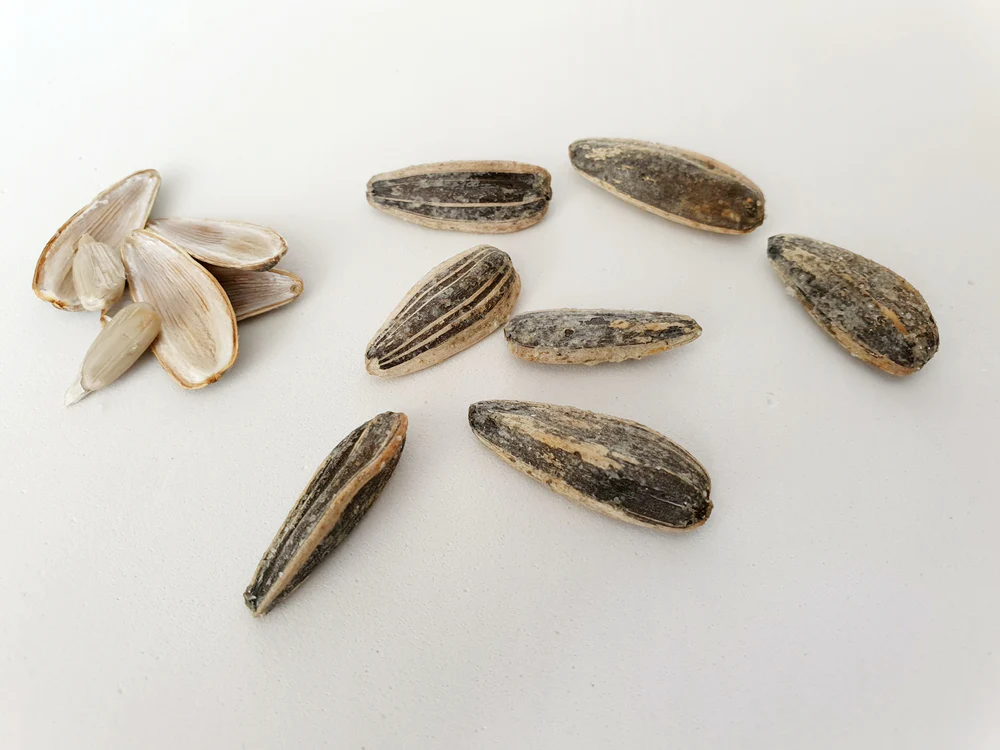
Sunflower seeds ( Helianthus annuus) are comprised of three primary components: the seed coat (pericarp), the kernel (cotyledons), and the embryo. The seed coat, typically 0.1-0.3 mm thick, consists primarily of lignocellulose, providing structural integrity and acting as a barrier against moisture and oxygen. Kernel composition is dominated by lipids (40-50% by weight), primarily linoleic acid, oleic acid, and palmitic acid. Protein content ranges from 18-25%, with significant amounts of globulins and albumins. Moisture content at harvest is typically 8-12%, which must be reduced to 6-8% for safe storage and optimized crunchiness.
Manufacturing begins with harvesting, typically mechanically performed. Post-harvest processing involves cleaning to remove debris, drying to the specified moisture content using forced-air dryers (temperature control is critical to prevent protein denaturation and lipid oxidation – typically <60°C), dehulling (removing the seed coat), sizing (separating seeds by diameter), and finally, roasting. Roasting is the crucial step for developing the “crunchy bite.” This is achieved through convective heat transfer, typically at temperatures between 150-180°C for 15-30 minutes. Critical parameters include roasting temperature, time, and seed bed depth. Under-roasting results in a soft, undesirable texture, while over-roasting leads to rancidity due to lipid oxidation and potential acrylamide formation. Dehulling process impacts the ultimate crunchiness. Fully dehulled seeds are generally more brittle. Controlled partial dehulling retains some seed coat material which contributes to the desired texture. Parameter control during drying is essential; rapid drying leads to stress cracks in the kernel, negatively affecting texture and increasing susceptibility to oxidation.
Performance & Engineering
The “crunchy bite” is fundamentally a material property governed by fracture mechanics. The force required to fracture a seed kernel is directly proportional to its hardness and inversely proportional to its brittleness. Hardness is influenced by lipid content and protein structure, while brittleness is heavily dependent on seed coat integrity and the presence of micro-cracks induced during roasting.
Environmental resistance is a key performance consideration. Sunflower seeds are susceptible to moisture absorption, leading to softening and increased susceptibility to fungal growth. Packaging materials with low Oxygen Transmission Rate (OTR) and Water Vapor Transmission Rate (WVTR) are essential to maintain product quality. Lipid oxidation is another significant degradation pathway, accelerated by exposure to oxygen, light, and elevated temperatures. Antioxidant packaging films or the inclusion of natural antioxidants (e.g., Vitamin E) can mitigate this process. Compliance requirements include adherence to food safety standards (HACCP), regulations concerning mycotoxin levels (aflatoxins), and labeling requirements regarding nutritional content and allergen information. Force analysis of kernel fracture during compression testing provides a quantitative measure of crunchiness. Seed geometry influences stress distribution during compression, requiring statistically significant sample sizes for reliable data.
Technical Specifications
| Parameter | Unit | Specification (High Quality - Crunchy Bite) | Test Method |
|---|---|---|---|
| Moisture Content | % | 6.0 - 8.0 | Oven Drying (AOAC) |
| Oil Content | % | 42 - 52 | Soxhlet Extraction (AOCS) |
| Protein Content | % | 18 - 25 | Kjeldahl Method (AOCS) |
| Kernel Size (Diameter) | mm | 10-14 | Sieve Analysis |
| Crunchiness (Fracture Force) | N | 5-12 | Compression Testing (Instron) |
| Peroxide Value (Lipid Oxidation) | meq O2/kg | <5 | AOCS Cd 8-53 |
Failure Mode & Maintenance
Common failure modes include softening due to moisture reabsorption, rancidity caused by lipid oxidation, and kernel cracking during handling or processing. Softening is mitigated by impermeable packaging and proper storage conditions (cool, dry environment). Rancidity is addressed through antioxidant packaging and controlled atmospheric storage (nitrogen flushing). Kernel cracking can be minimized by optimizing roasting parameters to avoid excessive internal stresses and employing gentle handling procedures throughout the supply chain. Delamination, where the kernel separates from the seed coat fragments, indicates insufficient roasting or excessive moisture content. Degradation of proteins and lipids over extended storage periods leads to off-flavors and reduced nutritional value.
Maintenance of quality requires regular monitoring of moisture content, oil oxidation levels (peroxide value, acid value), and sensory evaluation (taste, texture). Preventive maintenance on roasting equipment ensures consistent temperature control and airflow. Effective pest control is crucial to prevent contamination and quality degradation. Shelf-life studies are essential to determine optimal storage conditions and establish expiration dates. Regular calibration of analytical instruments (moisture analyzers, gas chromatographs) guarantees accurate and reliable results.
Industry FAQ
Q: What is the optimal moisture content for maximizing crunchiness and extending shelf life?
A: The optimal moisture content range is 6.0-8.0%. Below 6.0%, the seeds can become excessively brittle and prone to cracking. Above 8.0%, moisture absorption leads to softening and increases the risk of fungal growth and lipid hydrolysis, accelerating rancidity.
Q: How does the dehulling process affect the final texture of the sunflower seeds?
A: Complete dehulling results in a more brittle seed, as the seed coat provides some structural support. Controlled partial dehulling, leaving some seed coat fragments, generally yields the desired “crunchy bite” texture. The level of dehulling must be carefully controlled to balance texture and minimize seed coat bitterness.
Q: What are the key considerations for packaging to prevent rancidity?
A: Packaging materials should have low OTR (Oxygen Transmission Rate) and WVTR (Water Vapor Transmission Rate). Utilizing a nitrogen-flushed atmosphere within the package further reduces oxygen exposure. Antioxidant packaging films or the inclusion of Vitamin E can also effectively inhibit lipid oxidation.
Q: How can we accurately measure the "crunchiness" of sunflower seeds?
A: Crunchiness is quantified using compression testing. A single sunflower seed is placed between two parallel plates, and the force required to fracture it is measured. The resulting fracture force (expressed in Newtons) correlates with perceived crunchiness, with higher values generally indicating a more brittle and crunchy texture.
Q: What are the critical control points during roasting to ensure consistent product quality?
A: Critical control points during roasting include temperature, roasting time, and seed bed depth. Maintaining a consistent temperature between 150-180°C and monitoring seed bed depth to ensure uniform heat distribution are essential. Frequent monitoring of moisture content and color development during roasting is also crucial.
Conclusion
The production of consistently crunchy, high-quality sunflower seeds hinges on a nuanced understanding of material science, precise control of manufacturing parameters, and robust quality assurance procedures. Optimizing moisture content, lipid oxidation prevention, and roasting conditions are paramount. Employing analytical techniques like compression testing and peroxide value determination provides quantitative data for process control and product evaluation.
Future advancements in sunflower seed processing will likely focus on novel dehulling techniques to optimize seed coat retention, the development of advanced packaging materials with enhanced barrier properties, and the application of predictive modeling to optimize roasting parameters based on seed characteristics. Continued research into the relationship between kernel microstructure and textural properties will further refine the art and science of producing the perfect “crunchy bite.”
