Introduction
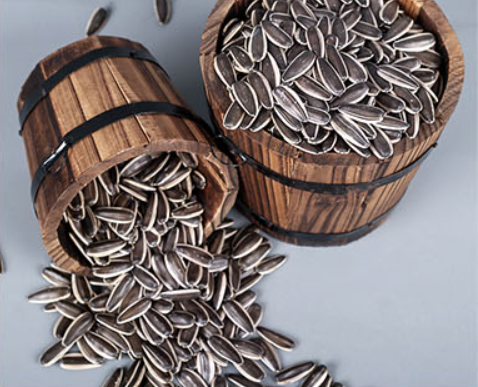
Sunflower seed snacks represent a significant segment within the broader snack food industry, distinguished by their nutritional profile and sensory attributes. These snacks, typically comprising roasted or seasoned sunflower seeds, often combined with other ingredients such as seasonings, coatings, or mixed with other nuts and seeds, occupy a niche defined by consumer demand for healthier, protein-rich alternatives to traditional confectionery and processed snacks. The technical positioning within the food chain involves agricultural sourcing of sunflower seeds ( Helianthus annuus), post-harvest processing (cleaning, dehulling, grading), thermal processing (roasting, drying), flavoring application, and finally, packaging for distribution and retail sale. Core performance characteristics hinge upon seed quality (oil content, protein content, kernel size), roasting uniformity, flavor adhesion, and maintenance of desirable textural properties - crucial to consumer acceptance. A significant pain point for manufacturers is ensuring consistent kernel integrity during processing to minimize fractured seeds and dust generation, alongside controlling acrylamide formation during roasting. Another challenge is maintaining flavor stability over the product's shelf life and complying with stringent food safety regulations.
Material Science & Manufacturing
The foundational material, the sunflower seed kernel, is composed primarily of lipids (40-50% oil content, predominantly linoleic acid), proteins (20-25%, including albumin and globulin fractions), carbohydrates (15-20%), and fiber. Moisture content is a critical parameter, typically maintained between 8-10% pre-roasting to optimize texture and prevent microbial growth. Raw sunflower seeds possess a natural protective hull which is removed via mechanical dehulling processes. This process generates fines (broken seed fragments and hull debris) which require separation. The roasting process, usually conducted in batch or continuous roasters utilizing hot air or oil immersion, is pivotal. Key parameters include roasting temperature (140-180°C), duration (20-40 minutes), and airflow rate. Precise temperature control is vital to develop desired flavor compounds (pyrazines, aldehydes) while minimizing acrylamide formation—a byproduct of the Maillard reaction between reducing sugars and amino acids. Flavor application often employs a tumbling action with liquid or dry seasoning blends. Coating application, when utilized (e.g., salt, spices, sugar glazes), necessitates careful control of adhesion and uniformity to ensure consistent flavor distribution. Packaging materials are predominantly polymeric films (BOPP, PET, PE) selected for their barrier properties (oxygen, moisture) and mechanical strength. Material compatibility with the oily seed content is paramount to prevent leaching or degradation.

Performance & Engineering
The structural integrity of the roasted sunflower seed is governed by its cellular matrix and lipid content. Roasting induces cell wall disruption, resulting in the characteristic crispy texture. The application of external forces (compression, impact during handling) leads to fracture and breakage. Force analysis during packaging and transportation must consider these factors to minimize fines generation. Environmental resistance, specifically to humidity, is crucial. Sunflower seeds are hygroscopic, readily absorbing moisture from the atmosphere, leading to a loss of crispness and potential microbial spoilage. Therefore, packaging must provide an effective moisture barrier. Shelf life is also affected by oxidation of the unsaturated fatty acids present in the seed oil. Antioxidants (e.g., Vitamin E, BHA/BHT) are frequently incorporated into formulations to retard oxidation. Compliance requirements include adherence to food safety standards (HACCP, GMP), labeling regulations (nutritional information, allergen declarations), and permissible levels of contaminants (aflatoxins, heavy metals). The roasting process is engineered to meet specific sensory targets – color, aroma, and flavor – while adhering to food safety limits. Heat transfer modeling and computational fluid dynamics (CFD) are used to optimize roaster design and operating parameters for uniform roasting.
Technical Specifications
| Parameter | Specification | Test Method | Acceptance Criteria |
|---|---|---|---|
| Moisture Content | 8.0 - 10.0% | AOAC 925.10 | Target 9.0% +/- 1.0% |
| Oil Content | 48.0 - 52.0% | AOAC 920.39 | Target 50% +/- 2.0% |
| Kernel Size (Diameter) | 10.0 - 14.0 mm | Sieve Analysis | Minimum 90% within range |
| Fracture Rate | < 5.0% | Visual Inspection | Maximum 5% fractured kernels |
| Peroxide Value (Oil) | < 5.0 meq O2/kg | AOCS Cd 8-53 | Target < 3.0 meq O2/kg |
| Acrylamide Content | < 100 ppb | GC-MS | Maximum 100 ppb (regulatory limit) |
Failure Mode & Maintenance
Sunflower seed snacks are susceptible to several failure modes. Rancidity, due to lipid oxidation, is a primary concern, leading to off-flavors and reduced shelf life. Mitigation involves antioxidant addition, nitrogen flushing during packaging, and storage in cool, dark environments. Loss of Crispness, caused by moisture absorption, results in a stale texture. Maintaining a high barrier packaging material is essential. Kernel Fracturing, originating from mechanical stress during processing or handling, increases fines generation and diminishes product appeal. Optimizing equipment settings and minimizing drop heights during transport are crucial. Flavor Degradation, particularly for volatile flavor compounds, occurs over time, leading to reduced sensory intensity. Utilizing flavor encapsulation techniques and employing airtight packaging can delay this. Microbial Spoilage, though less common due to roasting, can occur if moisture activity is sufficiently high. Ensuring proper drying and maintaining sanitary conditions are paramount. For maintenance, regular cleaning of roasting and seasoning equipment is vital to prevent build-up of oil and seasoning residues. Periodic inspection of packaging seals for integrity is necessary. Monitoring of storage conditions (temperature, humidity) is crucial for maintaining product quality and extending shelf life. Analysis of returned product for defects provides valuable feedback for process improvements.
Industry FAQ
Q: What is the optimal roasting profile to minimize acrylamide formation while maximizing flavor development?
A: The optimal roasting profile involves a multi-stage process. Initially, a relatively low temperature (120-140°C) for the first 10-15 minutes to remove surface moisture, followed by a higher temperature (160-180°C) for the core roasting phase. Precise control of roasting time and airflow is critical. The use of asparaginase enzyme during pre-treatment can also significantly reduce acrylamide precursors. Regular monitoring of acrylamide levels using GC-MS is essential for validation.
Q: How do different packaging materials affect the shelf life of sunflower seed snacks?
A: Packaging materials significantly impact shelf life. BOPP/PE laminates offer good moisture barrier properties and are commonly used. PET/PE laminates provide superior oxygen barrier, crucial for preventing rancidity. Metallized films (e.g., BOPP-MET-PE) offer the highest barrier protection but are more expensive. Permeability to oxygen and water vapor must be carefully considered. Modified atmosphere packaging (MAP) with nitrogen flushing can further extend shelf life.
Q: What are the key considerations when selecting a seasoning blend for sunflower seeds?
A: Seasoning blend selection must consider several factors: flavor profile, adhesion to the seed surface, solubility in oil, and stability over time. Dry blends are preferred for maintaining crispness, but may require a coating agent to enhance adhesion. The blend should be compatible with the oil content of the seed and not promote rancidity. Particle size distribution of the seasoning is also important for uniform coverage.
Q: What are the common causes of seed fracturing during the roasting process?
A: Seed fracturing is often caused by excessive heating rates, uneven temperature distribution within the roaster, and physical impact during handling. Rapid heating induces thermal stress within the seed, leading to cracking. Optimizing airflow and ensuring uniform heat transfer are crucial. Gentle handling during loading and unloading of the roaster is also important.
Q: How can the oil content of sunflower seeds be accurately determined for quality control purposes?
A: The oil content is accurately determined using solvent extraction methods, specifically the Soxhlet extraction method as outlined in AOAC 920.39. This method involves extracting the oil from a representative sample of seeds using a suitable solvent (e.g., hexane), followed by evaporation of the solvent and weighing the remaining oil residue. Alternative methods, such as NMR (Nuclear Magnetic Resonance) spectroscopy, offer faster analysis but may require calibration against the Soxhlet method.
Conclusion
The production of high-quality sunflower seed snacks necessitates a comprehensive understanding of material science, thermal processing, and packaging technologies. Maintaining kernel integrity throughout the manufacturing process, from dehulling to roasting and seasoning, is paramount to ensure desirable texture and minimize waste. Precise control of roasting parameters is essential for maximizing flavor development while mitigating the formation of undesirable compounds like acrylamide. Effective packaging solutions, providing robust barriers against moisture and oxygen, are critical for preserving product quality and extending shelf life.
Future advancements in sunflower seed snack technology will likely focus on novel roasting techniques (e.g., microwave-assisted roasting) to enhance energy efficiency and improve flavor control. The development of more sustainable packaging materials, offering comparable barrier properties to conventional plastics, is also a key area of innovation. Furthermore, research into natural antioxidants and flavor encapsulation technologies will contribute to extending shelf life and enhancing sensory attributes. Continuous monitoring of processing parameters and adherence to stringent quality control standards are crucial for maintaining product consistency and meeting evolving consumer demands.
