Introduction
High quality saltless sunflower seeds represent a significant segment within the broader snack food industry, increasingly driven by health-conscious consumer demand. Positioned between commodity sunflower seeds and specialized, flavored varieties, these seeds focus on maximizing natural flavor and nutritional profile while minimizing processing additives. Their technical position within the agricultural supply chain involves careful selection of hybrid varieties, optimized cultivation techniques, precise harvesting protocols, and sophisticated processing methods to ensure both kernel integrity and palatable taste. Core performance characteristics are defined by kernel size consistency, oil content, protein content, moisture levels, and absence of hull fragments, all impacting both consumer acceptability and processing efficiency for further applications like sunflower oil extraction or confectionery inclusion.
Material Science & Manufacturing
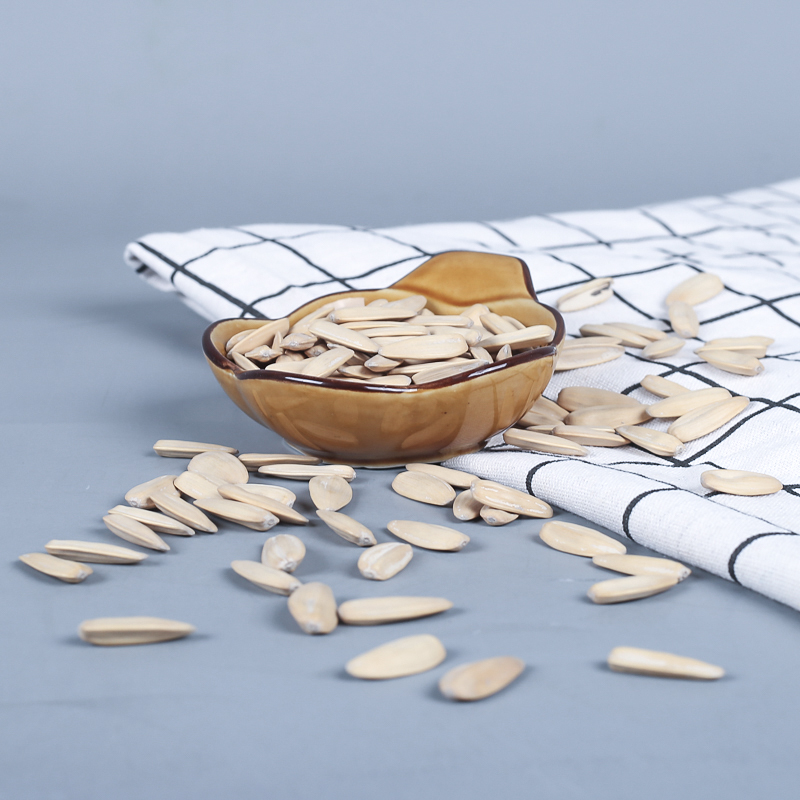
The foundational material science of high quality saltless sunflower seeds centers around the Helianthus annuus species, specifically hybrid cultivars bred for high oil yield and large kernel size. Kernel composition comprises approximately 42-58% oil (primarily linoleic acid, with varying levels of oleic acid depending on the hybrid), 20-25% protein, 15-20% carbohydrate (primarily cellulose in the hull), and 5-10% moisture. Hull material consists of lignin and cellulose, providing structural support and protection. Manufacturing begins with careful selection of mature seed heads. Harvesting utilizes combine harvesters equipped with specialized heads to minimize seed damage. Post-harvest processing involves cleaning (removing debris, stems, and leaves), de-hulling (removing the protective outer shell), sizing (grading seeds by diameter), and drying. Drying is critical – typically utilizing fluid bed dryers maintaining temperatures below 45°C to prevent protein denaturation and oil rancidity. Precise control of moisture content (typically 7-9%) is paramount for extended shelf life. Further processing may include optical sorting to remove discolored or damaged kernels and coating with natural protective agents like sunflower wax to maintain shell integrity and prevent moisture absorption. The chemical compatibility of materials used in processing equipment (stainless steel 304/316 is standard) must be considered to prevent iron contamination impacting oil quality and taste.
Performance & Engineering
Performance engineering of sunflower seeds focuses on maintaining structural integrity throughout the supply chain. Force analysis during processing – particularly de-hulling and conveying – is crucial to minimize kernel breakage. Hull strength varies with moisture content; excessively dry hulls are brittle, while overly moist hulls are prone to tearing. Environmental resistance primarily concerns moisture permeation. Packaging materials (typically multi-layer films comprising polyethylene, polypropylene, and aluminum foil) are engineered for low oxygen transmission rate (OTR) and low water vapor transmission rate (WVTR) to prevent oxidative degradation of oils and moisture uptake, leading to rancidity and mold growth. Compliance requirements include adherence to food safety standards like HACCP (Hazard Analysis and Critical Control Points), and regulations governing aflatoxin levels (a naturally occurring mycotoxin). Functional implementation, focusing on snacking, demands acceptable texture (crunchiness) and flavor profile. Kernel density impacts shelling efficiency and perceived “fullness” in the mouth. Packaging design impacts ease of opening and portion control. Shelf life studies are critical, typically conducted under accelerated aging conditions (elevated temperature and humidity) to predict product stability over time.
Technical Specifications
| Parameter | Unit | Specification | Test Method |
|---|---|---|---|
| Kernel Size (Average Diameter) | mm | 16-20 | Sieve Analysis (ASTM E11) |
| Oil Content (Dry Basis) | % | >48% | Soxhlet Extraction (AOAC 920.39) |
| Protein Content (Dry Basis) | % | >20% | Kjeldahl Method (AOAC 978.05) |
| Moisture Content | % | 7-9 | Oven Drying Method (AOAC 925.10) |
| Hull Damage (Broken Kernels) | % | <2% | Visual Inspection |
| Free Fatty Acid (FFA) Value | mg KOH/g | <0.5 | Titration (AOCS Cd 3-63) |
Failure Mode & Maintenance
Failure modes in high quality saltless sunflower seeds primarily relate to degradation of oil quality and kernel integrity. Oxidative rancidity, induced by exposure to oxygen and light, is a common failure mechanism, leading to off-flavors and reduced nutritional value. This is accelerated by elevated temperatures. Moisture absorption can promote mold growth (e.g., Aspergillus species), leading to aflatoxin contamination, a serious health hazard. Physical damage during processing or handling (cracking, chipping) reduces consumer appeal. Fatigue cracking in the hull can occur due to repeated stress during handling and transportation. Maintenance of quality relies on several factors. Proper storage in cool, dry, and dark conditions is essential. Packaging must provide an effective barrier against oxygen, moisture, and light. Regular monitoring of FFA values and aflatoxin levels is crucial. Implementation of a robust first-in, first-out (FIFO) inventory management system minimizes storage time. Preventative maintenance of processing equipment (dryers, de-hullers, sorters) ensures optimal operation and minimizes physical damage to kernels. Temperature and humidity control during storage and transport are paramount to preventing degradation.
Industry FAQ
Q: What is the significance of oleic acid content in sunflower seeds and how does it impact shelf life?
A: High oleic sunflower seeds, containing >70% oleic acid, exhibit significantly improved oxidative stability compared to linoleic-dominant varieties. Oleic acid is a monounsaturated fatty acid, making it less susceptible to oxidation. This translates to a longer shelf life, reduced rancidity development, and better retention of nutritional value, even under less-than-ideal storage conditions.
Q: What are the acceptable limits for aflatoxin contamination, and how is it monitored?
A: Regulatory limits for total aflatoxins vary by country, but typically range from 2-10 parts per billion (ppb). The European Union sets a limit of 2 ppb. Monitoring involves regular sampling and analysis using techniques like ELISA (Enzyme-Linked Immunosorbent Assay) or HPLC (High-Performance Liquid Chromatography). Stringent quality control measures throughout the supply chain, from cultivation to processing, are essential to minimize aflatoxin risk.
Q: How does the de-hulling process affect the final product quality?
A: The de-hulling process is critical. Aggressive de-hulling can cause kernel damage (cracking, chipping), reducing visual appeal and potentially increasing susceptibility to oxidation. Insufficient de-hulling leaves excessive hull fragments, impacting texture and taste. Optimizing de-hulling parameters (impact force, rotor speed, clearance) and employing gentle handling techniques are crucial for maximizing quality.
Q: What packaging materials are best suited for maintaining the quality of saltless sunflower seeds during long-term storage?
A: Multi-layer flexible packaging incorporating a metalized layer (typically aluminum foil) offers the best barrier properties against oxygen, moisture, and light. The internal layers are usually polyethylene or polypropylene to provide sealing and structural integrity. Vacuum packaging or modified atmosphere packaging (MAP) with nitrogen flushing further enhances shelf life by reducing oxygen levels within the package.
Q: How important is consistent kernel size, and what impact does it have on processing?
A: Consistent kernel size is vitally important for processing efficiency and product uniformity. Uniformity improves shelling efficiency, reduces damage during conveying and handling, and ensures consistent roasting/drying times if further processing is employed. Size grading during manufacturing ensures a consistent product for the consumer and optimizes downstream operations.
Conclusion
The production of high quality saltless sunflower seeds is a complex interplay of agricultural science, material science, and process engineering. Maintaining optimal kernel integrity, preventing oxidative degradation, and ensuring compliance with stringent food safety standards are paramount. Precise control over harvesting, drying, de-hulling, and packaging are critical determinants of product quality and shelf life.
Future advancements will likely focus on breeding sunflower hybrids with improved oil profiles (higher oleic acid), enhanced resistance to disease, and optimized hull characteristics for easier de-hulling. Improved packaging technologies, incorporating active barrier films or oxygen scavengers, will further extend shelf life and minimize the need for synthetic preservatives. Continuous monitoring and optimization of processing parameters, driven by data analytics and automation, will contribute to improved efficiency and consistent product quality.
