Introduction
High quality salted melon seeds represent a significant segment of the global snack food industry, positioned as a traditional and culturally relevant product, particularly within Asian markets. These seeds, derived from specifically cultivated Cucumis melo varieties, undergo a complex processing regimen involving drying, salting, and often roasting, to achieve desired textural and flavor profiles. Their technical position in the food chain centers on post-harvest processing and value addition. Core performance characteristics encompass seed size, kernel fullness, salt adhesion, moisture content, oil content, and the absence of undesirable flavors or contaminants. Maintaining a consistent, high-quality product presents challenges relating to raw material sourcing, precise control of processing parameters, and ensuring adherence to stringent food safety regulations. The increasing demand for healthy snack options necessitates a detailed understanding of the nutritional composition and potential health benefits of these seeds, alongside the implementation of robust quality control measures.
Material Science & Manufacturing
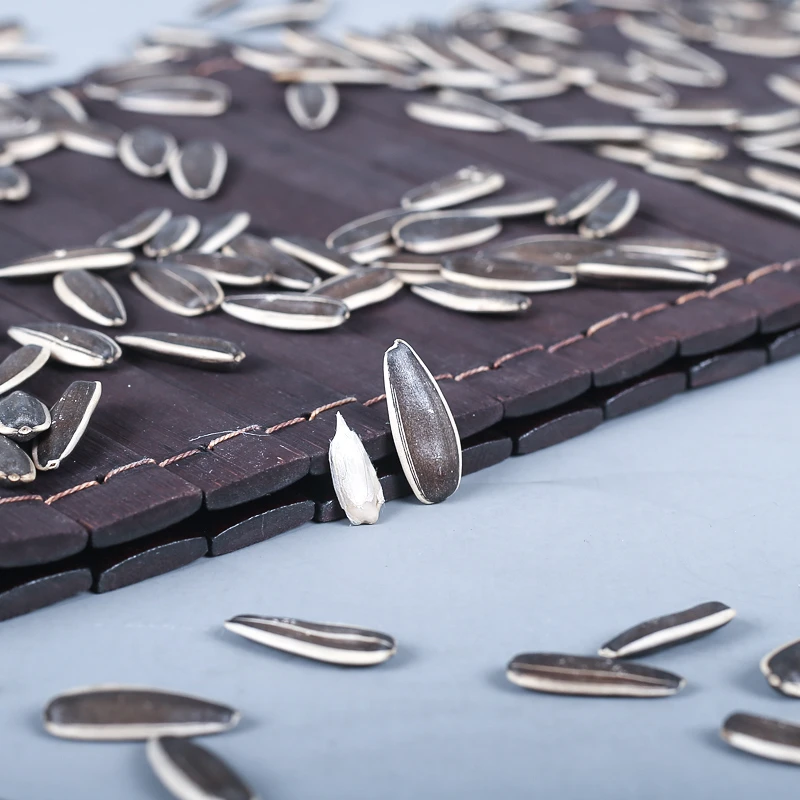
The primary raw material is the seed of Cucumis melo (melon). Kernel composition consists of approximately 45-55% oil (primarily linoleic acid, an omega-6 fatty acid), 20-25% protein, 10-15% carbohydrates, and 5-10% moisture. The seed coat, composed of cellulose and lignin, provides a protective barrier. Salt, typically sodium chloride (NaCl), is the key flavoring agent. Manufacturing commences with harvesting mature melon seeds, followed by washing to remove residual pulp. Drying is critical, usually employing hot air drying at temperatures between 60-80°C to reduce moisture content to 8-12% – minimizing microbial growth and maximizing shelf life. Salting involves immersion in a brine solution or dry salt application, requiring precise control of salt concentration (typically 1.5-2.5%) and duration to achieve optimal flavor without excessive sodium levels. Roasting, often following salting, enhances flavor and crispness. Roasting temperatures range from 120-150°C for a specified duration, carefully monitored to prevent scorching or oil rancidity. Quality control at each stage is paramount, including monitoring seed size and uniformity, salt content, moisture content, and the detection of foreign materials. Packaging utilizes materials with low oxygen transmission rates (OTR) and moisture vapor transmission rates (WVTR) to preserve freshness and prevent oxidative degradation.
Performance & Engineering
Key performance characteristics are directly related to the seed’s structural integrity and chemical composition. Force analysis during shelling reveals that the seed coat requires an average force of 5-8 N to fracture, influencing the ease of consumption. The oil content dictates the seed's caloric value and textural properties. Environmental resistance is a concern; high humidity can lead to moisture absorption, promoting microbial growth and affecting crispness. Temperature fluctuations can induce oil oxidation, resulting in rancidity. Compliance requirements are governed by food safety regulations (see footer). Salt adhesion is influenced by seed surface topography and brine solution viscosity. A uniform salt coating is desirable for consistent flavor delivery. Shelf life stability depends on packaging permeability and storage conditions. Oxygen exposure initiates lipid peroxidation, leading to off-flavors. Maintaining a water activity (Aw) below 0.7 is crucial for preventing microbial proliferation. Packaging engineering focuses on minimizing OTR and WVTR to protect against these degradation pathways. Furthermore, the selection of packaging materials must consider potential interactions with the oil content of the seeds, avoiding leaching of harmful compounds.
Technical Specifications
| Parameter | Unit | Specification | Test Method |
|---|---|---|---|
| Moisture Content | % | 8.0 – 12.0 | Oven Drying (GB 5005.3-2016) |
| Salt Content (NaCl) | % | 1.5 – 2.5 | Argentometric Titration (GB/T 8806.1-2008) |
| Oil Content | % | 45 – 55 | Soxhlet Extraction (GB/T 5005-2008) |
| Kernel Fullness | % | ≥ 85 | Visual Inspection/Weight Ratio |
| Peroxide Value (PV) | meq O2/kg | ≤ 5.0 | Potentiometric Titration (GB/T 38630-2010) |
| Foreign Matter | % | ≤ 0.1 | Visual Inspection |
Failure Mode & Maintenance
Common failure modes include rancidity due to lipid oxidation, leading to off-flavors and decreased palatability. This is accelerated by exposure to oxygen, light, and elevated temperatures. Seed coat cracking during processing or handling can result in kernel damage and moisture absorption. Excessive salt content can lead to hygroscopicity, attracting moisture and compromising crispness. Microbial contamination (e.g., molds, bacteria) can occur due to inadequate drying or poor hygiene. Delamination of the seed coat from the kernel can occur during processing, reducing visual appeal. Maintenance strategies focus on proper storage conditions – cool, dry, and dark environments. Packaging must provide adequate barrier protection. Regular monitoring of peroxide value (PV) and moisture content is essential. Implementing a robust Hazard Analysis and Critical Control Points (HACCP) plan is critical for preventing microbial contamination. First-in, first-out (FIFO) inventory management minimizes storage duration. Preventative maintenance of drying and roasting equipment ensures consistent processing parameters and reduces the risk of product defects. Careful handling during packaging prevents mechanical damage.
Industry FAQ
Q: What is the optimal salt type and size for maximizing adhesion and flavor distribution?
A: Fine-grained sodium chloride (NaCl) with a particle size of 100-200 µm generally exhibits superior adhesion due to its increased surface area. The use of vacuum salting can further enhance adhesion by creating microscopic pores on the seed surface. The salt’s purity is also crucial; trace impurities can contribute to off-flavors.
Q: How does the melon variety impact the final oil profile and shelf life of the salted seeds?
A: Different melon varieties exhibit variations in their fatty acid composition. Varieties rich in oleic acid (a monounsaturated fatty acid) tend to be more oxidation-stable and offer a longer shelf life compared to those with a higher linoleic acid (omega-6) content. Cultivar selection is therefore a key factor in product quality.
Q: What packaging materials offer the best barrier properties for preserving freshness and preventing rancidity?
A: Multi-layer films incorporating aluminum foil or metallized polyester (PET) provide excellent barrier properties against oxygen, light, and moisture. High-density polyethylene (HDPE) or polypropylene (PP) are commonly used as inner layers for food contact. The OTR and WVTR values of the packaging material should be below 0.5 cm3/m2/day and 5 g/m2/day, respectively.
Q: What are the critical control points in the manufacturing process to minimize acrylamide formation during roasting?
A: Acrylamide formation is influenced by roasting temperature and moisture content. Maintaining roasting temperatures below 140°C and ensuring adequate initial moisture content (8-12%) can minimize acrylamide levels. Careful control of roasting time and frequent monitoring are also essential. Selecting melon varieties with lower levels of reducing sugars can further reduce acrylamide potential.
Q: What analytical methods are used to ensure compliance with heavy metal regulations (e.g., lead, cadmium)?
A: Inductively Coupled Plasma Mass Spectrometry (ICP-MS) is the preferred analytical method for determining heavy metal concentrations in salted melon seeds. Samples are typically digested using acid digestion techniques before analysis. Compliance is assessed against regulatory limits established by organizations like the FDA and EFSA.
Conclusion
The production of high-quality salted melon seeds is a complex process demanding precise control over material science, manufacturing parameters, and quality assurance procedures. Achieving optimal flavor, texture, and shelf life relies on careful selection of melon varieties, rigorous control of drying and roasting conditions, and the implementation of appropriate packaging solutions. Understanding the potential failure modes, such as rancidity and microbial contamination, is crucial for developing effective preventative measures and maintaining product integrity.
Future advancements in this industry will likely focus on optimizing roasting technologies to minimize acrylamide formation, exploring novel packaging materials with enhanced barrier properties, and developing sustainable sourcing practices for melon seeds. Continued investment in analytical techniques for monitoring key quality parameters and ensuring compliance with evolving food safety regulations will be essential for maintaining consumer trust and driving long-term growth in this competitive market.
