Introduction
High quality roast sunflower seeds in shell represent a significant segment within the broader snack food industry, functioning as a bridge between agricultural production and consumer packaged goods. These seeds, Helianthus annuus, are not merely a confectionary item; they are a concentrated source of nutrients and dietary fiber, commanding a substantial market share in both regional and international snack food economies. The processing of sunflower seeds – from harvest to roasting and packaging – involves a complex interplay of agricultural science, food technology, and quality control. Core performance indicators for these seeds include kernel size, oil content, moisture content, shell integrity, roasting uniformity, and flavor profile, all impacting consumer acceptability and shelf life. The increasing demand for healthy snack alternatives, coupled with a growing awareness of the nutritional benefits of sunflower seeds, continues to drive innovation and quality improvements within this sector. Achieving consistent quality, minimizing defects, and optimizing the roasting process are paramount concerns for manufacturers seeking to maintain competitiveness.
Material Science & Manufacturing
The foundation of high quality roast sunflower seeds lies in the raw material: the sunflower seed itself. The chemical composition is dominated by lipids (40-50% oil content, primarily linoleic acid), proteins (20-25%), carbohydrates (15-20%), and fiber (approximately 10%). The shell, or pericarp, is comprised primarily of cellulose, lignin, and hemicellulose, providing structural integrity and protection. Seed varieties differ significantly in oil content, protein profiles, and shell thickness, directly impacting processing parameters. Manufacturing begins with harvesting mature seeds, typically employing combine harvesters equipped with seed saving attachments. Post-harvest, seeds undergo cleaning to remove debris, foreign matter, and underdeveloped seeds. De-hulling, while common for certain product types, is avoided for “in-shell” seeds. The critical step is drying, reducing moisture content from approximately 30% to 8-10% to inhibit mold growth and enzymatic activity. This is typically achieved via forced-air drying systems, where temperature and airflow are meticulously controlled to prevent cracking or damage to the seeds. Roasting is the defining process, transforming raw seeds into the desired flavor and texture. This is typically conducted in rotary or fluid-bed roasters using dry heat, ranging from 120-180°C. Roasting parameters – temperature, time, and airflow – directly influence Maillard reaction products (responsible for flavor development), oil oxidation, and moisture content. Precise control of these parameters is crucial to avoid rancidity or uneven roasting. Finally, seeds may be seasoned with salt or other flavorings before packaging in moisture-barrier films to extend shelf life. Parameter control relies heavily on real-time monitoring of seed temperature and moisture content throughout the roasting process.
Performance & Engineering
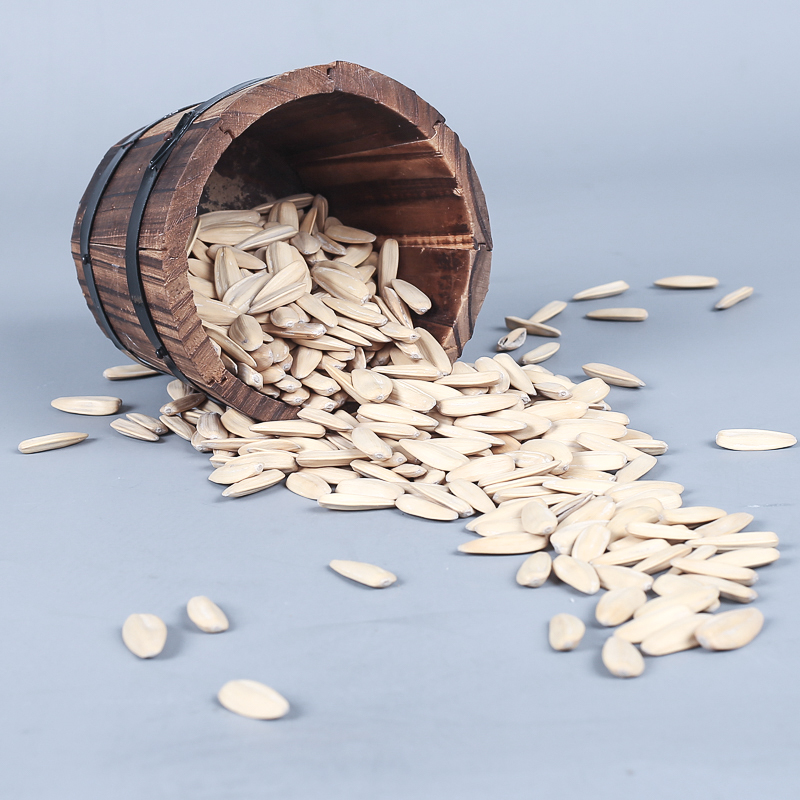
The performance of roasted sunflower seeds is multifaceted, extending beyond mere palatability. Shell strength is a critical engineering parameter; sufficient strength is needed to withstand handling and transportation without fracturing, yet the shell must be brittle enough to allow for relatively easy cracking by the consumer. This is governed by the cellulose fiber orientation and density within the pericarp. Force analysis during cracking reveals the energy required to initiate and propagate fractures. Environmental resistance is equally important. Exposure to humidity can lead to softening of the shell and increased susceptibility to mold growth. Oxygen exposure initiates lipid oxidation, resulting in rancidity. Consequently, packaging materials with low Oxygen Transmission Rates (OTR) and Water Vapor Transmission Rates (WVTR) are crucial. Compliance requirements include adherence to food safety regulations stipulated by governing bodies such as the FDA (USA) and EFSA (Europe). These regulations address permissible levels of contaminants (heavy metals, pesticides), microbial limits, and packaging material safety. The roasting process itself necessitates careful engineering to ensure even heat distribution and minimize the formation of acrylamide, a potential carcinogen. The design of the roaster, airflow patterns, and temperature control systems are all integral to achieving optimal product quality and safety. Furthermore, maintaining consistent seed size and shape during processing contributes to uniform roasting and improved packaging efficiency. The thermal conductivity of the seed, influenced by its oil content and moisture level, plays a significant role in heat transfer during roasting.
Technical Specifications
| Parameter | Unit | Specification (High Quality) | Testing Method |
|---|---|---|---|
| Moisture Content | % | 8.0 - 10.0 | Oven Drying (AOAC) |
| Oil Content | % | 48.0 - 55.0 | Soxhlet Extraction (AOCS) |
| Kernel Size (Diameter) | mm | 10.0 - 16.0 | Sieve Analysis |
| Shell Strength (Cracking Force) | N | 50 - 120 | Instron Universal Testing Machine |
| Peroxide Value (Indicator of Rancidity) | meq O2/kg | < 5.0 | Titration (AOCS) |
| Acrylamide Content | µg/kg | < 100 | GC-MS |
Failure Mode & Maintenance
Failure modes in roasted sunflower seeds can be categorized into several key areas. Rancidity, caused by lipid oxidation, is a primary concern, manifesting as an off-flavor and odor. This is accelerated by exposure to oxygen, light, and elevated temperatures. Shell cracking during handling or processing leads to kernel damage and increased susceptibility to moisture absorption and microbial growth. Moisture uptake can promote mold growth, particularly Aspergillus flavus, leading to aflatoxin contamination – a serious food safety hazard. Uneven roasting results in a heterogeneous product, with some seeds undercooked and others burnt, impacting flavor and texture. Delamination of the kernel from the shell can occur due to excessive drying or mechanical stress. Maintenance to prevent these failures centers around strict process control. Maintaining optimal drying temperatures and airflow is crucial. Implementing robust packaging solutions with high barrier properties is essential to minimize oxygen and moisture ingress. Regular cleaning and maintenance of roasting equipment prevents buildup of residue and ensures uniform heat distribution. Implementing a Hazard Analysis and Critical Control Points (HACCP) plan to monitor critical control points throughout the process is paramount. Storage conditions – cool, dry, and dark – are vital for extending shelf life and preserving product quality. Periodic quality checks, including peroxide value analysis and aflatoxin testing, are necessary to identify and address potential issues proactively.
Industry FAQ
Q: What is the optimal moisture content range for roasted sunflower seeds, and how does it impact shelf life?
A: The optimal moisture content range is 8.0 – 10.0%. Lower moisture content reduces water activity, inhibiting microbial growth and enzymatic reactions that contribute to rancidity. However, excessively low moisture content can lead to brittleness and shell cracking. Maintaining this range significantly extends shelf life by minimizing degradation processes.
Q: How do different roasting temperatures affect the flavor profile and acrylamide formation?
A: Lower roasting temperatures (120-140°C) generally result in a milder, nuttier flavor, while higher temperatures (160-180°C) produce a more intense, roasted flavor. However, higher temperatures also increase the risk of acrylamide formation, a potential carcinogen. Balancing flavor development with acrylamide mitigation requires careful temperature control and potentially the use of acrylamide-reducing additives.
Q: What packaging materials are best suited for extending the shelf life of roasted sunflower seeds?
A: Packaging materials with low OTR and WVTR are crucial. Multi-layer films incorporating aluminum foil or metallized polyester provide excellent barrier properties. Modified Atmosphere Packaging (MAP), using nitrogen flushing to displace oxygen, further enhances shelf life by inhibiting oxidation.
Q: What are the key indicators of rancidity in sunflower seeds, and how are they measured?
A: The primary indicator of rancidity is an off-flavor and odor. Scientifically, rancidity is assessed by measuring peroxide value (PV) and free fatty acid content. PV indicates the initial stages of oxidation, while free fatty acids represent the advanced stages. These are measured using standard chemical titration methods (AOCS).
Q: How does shell thickness influence the overall quality and consumer acceptance of in-shell sunflower seeds?
A: Shell thickness impacts both processing and consumer experience. Thicker shells provide greater protection during handling and transportation, reducing kernel damage. However, excessively thick shells can be difficult for consumers to crack. An optimal shell thickness strikes a balance between protection and ease of access. It also affects the ratio of edible portion to waste, influencing perceived value.
Conclusion
The production of high quality roast sunflower seeds in shell is a complex process demanding meticulous attention to detail at every stage, from raw material sourcing to packaging and storage. Achieving consistent product quality hinges on a thorough understanding of the material science governing seed composition and the engineering principles governing roasting and preservation. Optimizing process parameters – moisture content, roasting temperature, and packaging integrity – are critical for maximizing shelf life, minimizing defects, and ensuring compliance with stringent food safety regulations.
Looking forward, innovation in sunflower seed breeding to develop varieties with improved oil content, shell strength, and flavor profiles will continue to drive industry advancements. Further refinement of roasting technologies to minimize acrylamide formation and optimize energy efficiency will be essential. The adoption of advanced monitoring systems and data analytics will enable more precise process control and predictive quality management, ultimately leading to superior product quality and increased consumer satisfaction.
