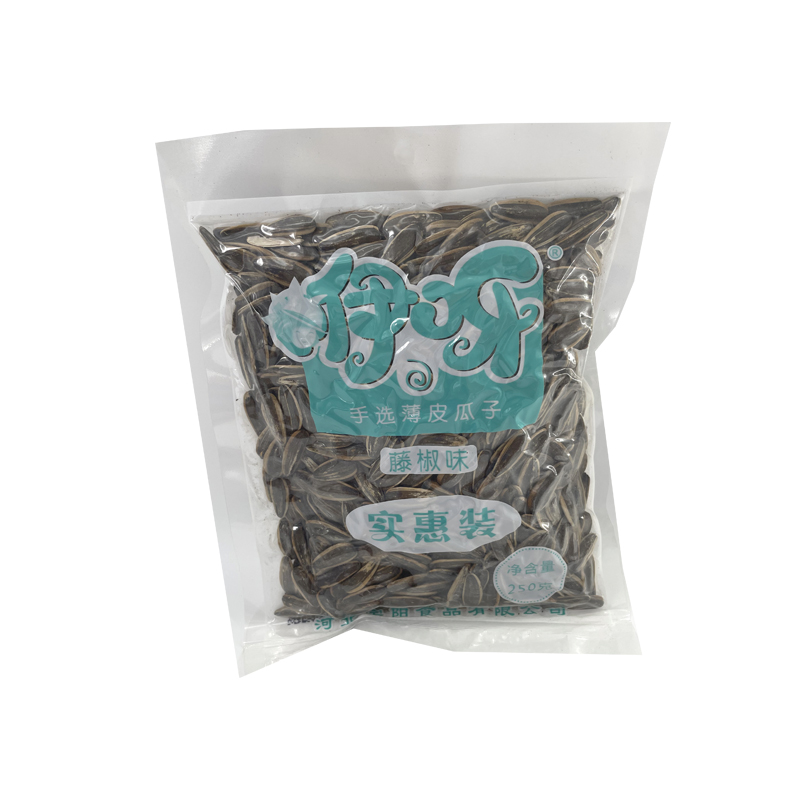
Introduction
Raw sunflower kernels, Helianthus annuus, represent a significant commodity within the global food and oilseed industry. Positioned as a crucial intermediate product, their quality directly impacts the efficacy of downstream processing – specifically the production of sunflower oil, confectionary products, and animal feed. This guide details the critical characteristics of high-quality raw sunflower kernels, examining their composition, manufacturing protocols, performance metrics relevant to processing efficiency, and potential failure modes impacting yield and quality. The industry faces key challenges regarding kernel uniformity, oil content consistency, and minimizing the presence of foreign materials, all of which affect profitability and consumer acceptance. Understanding these factors is paramount for procurement managers, processing engineers, and quality control personnel.
Material Science & Manufacturing
Sunflower kernels are comprised primarily of lipid (40-55%), protein (18-25%), carbohydrates (10-15%), and fiber (6-12%), with moisture content typically ranging from 8-12%. The lipid fraction is predominantly unsaturated fatty acids – linoleic (omega-6) and oleic (omega-9) – influencing oil quality and stability. Kernel development is influenced by genetic factors, environmental conditions during growth (temperature, rainfall, sunlight), and harvesting practices.
Manufacturing begins with field harvesting, ideally at full maturity indicated by a dry husk and dark kernel color. Pre-cleaning removes debris, stalks, and leaves. The critical stage is dehulling, a mechanical process that separates the kernel from the outer hull. Dehulling efficiency is paramount; incomplete hull removal leads to increased fiber content in subsequent processing and lower oil yields. Modern dehulling utilizes impact and friction principles, often employing adjustable gap settings and rubber rollers to minimize kernel damage. Following dehulling, kernels undergo size grading (screening) to separate them based on dimensions, a critical control parameter. Damage assessment, utilizing visual inspection and dye tests (tetrazolium chloride), identifies cracked, chipped, or insect-damaged kernels, which negatively impact oil quality and shelf life. Finally, kernels are dried to a target moisture content of approximately 7-8% to prevent fungal growth and enzymatic activity during storage. Control of drying temperature (typically below 45°C) is crucial to avoid protein denaturation and lipid oxidation.

Performance & Engineering
Performance assessment of raw sunflower kernels centers around oil yield potential and the efficiency of subsequent oil extraction processes. Kernel density and hardness are correlated with oil content; denser, harder kernels generally exhibit higher oil yields. Compressive strength testing provides quantitative data on kernel integrity. Moisture content directly influences the efficiency of flaking, a critical step in oil extraction where kernels are rolled into thin flakes to increase surface area for solvent penetration. Excessive moisture hinders flaking, while insufficient moisture leads to flake breakage.
Environmental resistance during storage is a significant engineering consideration. Kernels are susceptible to oxidation, primarily due to unsaturated fatty acids, leading to rancidity and reduced oil quality. Controlled atmosphere storage (nitrogen flushing) and the addition of antioxidants (vitamin E) can mitigate oxidation. Insect infestation is another major concern. Proper storage conditions – low temperature (<15°C) and low humidity (<65% RH) – are critical for preventing insect proliferation. Furthermore, the geometric properties of the kernels impact pneumatic conveying systems used in processing facilities. Uniform kernel size and shape minimize blockages and ensure consistent flow rates.
Technical Specifications
| Parameter | Unit | Specification (High Quality) | Testing Method |
|---|---|---|---|
| Oil Content (Dry Basis) | % | ≥ 48% | Soxhlet Extraction (AOCS Official Method) |
| Moisture Content | % | ≤ 8% | Oven Drying (AOCS Official Method) |
| Foreign Matter | % | ≤ 1% | Visual Inspection & Screening |
| Damaged Kernels (Cracked/Chipped) | % | ≤ 3% | Visual Inspection & Dye Test (Tetrazolium) |
| Kernel Size (Diameter) | mm | 16-20 | Sieve Analysis |
| Acid Value | mg KOH/g | ≤ 1.0 | Titration (AOCS Official Method) |
Failure Mode & Maintenance
Failure modes in raw sunflower kernels primarily manifest as quality degradation, affecting downstream processing. Rancidity arises from lipid oxidation, indicated by increased acid value and off-flavors. This is exacerbated by improper storage (high temperature, humidity, light exposure). Insect damage leads to kernel weight loss, reduced oil yield, and potential contamination with insect fragments or mycotoxins. Mechanical damage (cracking, chipping) during harvesting, dehulling, or handling increases surface area for oxidation and can generate dust, creating a fire hazard. Mold growth is promoted by high moisture content and poor ventilation, leading to mycotoxin production (e.g., aflatoxins) and rendering the kernels unusable.
Maintenance focuses on preventative measures. Regular cleaning and disinfection of storage facilities are crucial. Temperature and humidity monitoring with automated control systems is essential. Implementation of Integrated Pest Management (IPM) strategies minimizes insect infestation. Proper dehulling equipment maintenance, including regular adjustment of gap settings and roller surface inspection, reduces kernel damage. Quality control checks at each stage of the process – harvesting, dehulling, grading, drying, storage – are vital for identifying and addressing potential issues proactively. For instance, near-infrared spectroscopy (NIRS) can rapidly assess oil content and moisture levels, allowing for real-time adjustments to processing parameters.
Industry FAQ
Q: What is the acceptable level of free fatty acids (FFA) in high-quality raw sunflower kernels and what implications do higher levels have?
A: The acceptable FFA level is generally ≤ 1.0 mg KOH/g. Higher FFA levels indicate lipid hydrolysis, often due to enzymatic activity or improper storage. This results in reduced oil quality, increased refining costs, and a lower saponification value, impacting soap production if the oil is destined for that market.
Q: How does kernel moisture content impact the efficiency of oil extraction using hexane as a solvent?
A: Optimal moisture content for hexane extraction is between 7-8%. Excessive moisture hinders solvent penetration and reduces oil yield. Insufficient moisture causes kernel flaking to be less efficient and can generate excessive dust, posing a safety hazard.
Q: What are the most common mycotoxins found in contaminated sunflower kernels and what are the regulatory limits?
A: Aflatoxins are the most prevalent mycotoxins. Regulatory limits vary by country but are typically in the parts per billion (ppb) range, generally around 20 ppb for total aflatoxins in the EU and US.
Q: What is the significance of kernel size uniformity, and how is it controlled during processing?
A: Kernel size uniformity improves the efficiency of subsequent processing steps, such as flaking and dehulling. It also ensures consistent solvent penetration during oil extraction. Control is achieved through size grading using screens with defined aperture sizes after dehulling.
Q: How can we effectively mitigate the risk of insect infestation during long-term storage of raw sunflower kernels?
A: Effective mitigation involves maintaining low temperature (<15°C) and low humidity (<65% RH) within the storage facility. Regular monitoring for insect activity, combined with a proactive sanitation program, and controlled atmosphere storage (nitrogen flushing) are also crucial.
Conclusion
High-quality raw sunflower kernels are not simply a commodity; they are a critical foundation for a complex value chain. Maintaining stringent quality control throughout harvesting, processing, and storage is paramount to maximizing oil yield, ensuring product safety, and minimizing economic losses. The key characteristics – oil content, moisture content, foreign matter content, and damage levels – must be rigorously monitored using established analytical methods.
Future trends will likely focus on improved dehulling technologies to minimize kernel damage, advanced drying techniques to optimize moisture content without thermal degradation, and the implementation of predictive modeling based on kernel characteristics to optimize oil extraction parameters. Investing in these areas will enhance the competitiveness of sunflower kernel processing operations and contribute to a more sustainable and efficient oilseed industry.
