Introduction
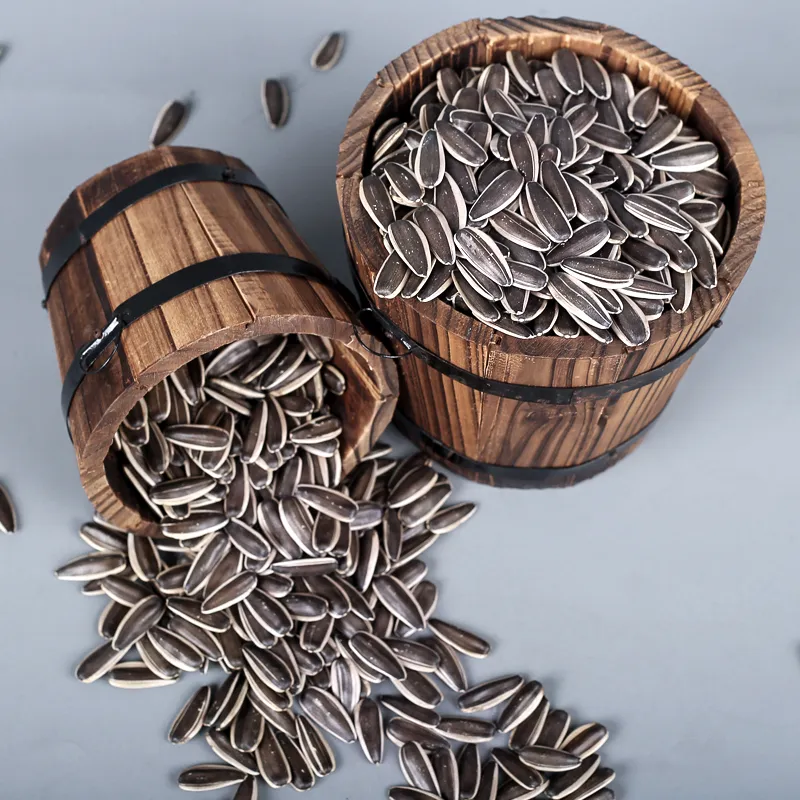
Striped sunflower seeds ( Helianthus annuus) represent a significant commodity within the global food and agricultural markets. Specifically, the ‘high quality cheap striped’ designation points to a segment optimized for cost-effectiveness without compromising fundamental nutritional and processing characteristics. These seeds occupy a crucial position in the snack food industry, avian feed formulations, and increasingly, as a source of vegetable oil. The industrial challenge lies in consistently delivering a product meeting defined quality parameters – kernel size, oil content, moisture levels, and freedom from defects – at a competitive price point. This guide provides a comprehensive technical overview of striped sunflower seed production, from genetic selection and agricultural practices through processing, quality control, potential failure modes, and relevant industry standards. Understanding the interplay of these factors is essential for procurement managers, food scientists, and agricultural engineers involved in the sunflower seed supply chain.
Material Science & Manufacturing
Sunflower seed kernels are primarily composed of lipid (40-50%), protein (18-25%), carbohydrates (15-20%), and fiber (6-8%). The striped pattern on the hull (pericarp) arises from pigment deposition during seed development, primarily anthocyanins. The composition directly influences oil extraction yield and the quality of the resulting oil. Manufacturing begins with seed selection, prioritizing varieties with high oil content (typically >40% by weight) and desirable kernel characteristics. Seed preparation involves cleaning to remove debris, and often dehulling, though the hull can be retained for specific applications (e.g., birdseed). Dehulling is typically achieved mechanically using abrasive surfaces, requiring precise control of pressure and abrasion speed to minimize kernel damage. Post-dehulling, seeds undergo drying to reduce moisture content to around 8-10% for optimal storage stability. Drying methods include forced-air drying and fluid-bed drying. Temperature control during drying is critical to prevent protein denaturation and lipid oxidation. Quality control at this stage involves assessing kernel size distribution, moisture content using near-infrared spectroscopy, and visual inspection for defects like chipped kernels, discolored seeds, and foreign material. Finally, seeds are graded and packaged for distribution. Key parameter control during manufacturing includes maintaining consistent dehulling pressure, drying temperature, and airflow rates. Seed variety significantly impacts hull adhesion and resistance to cracking.

Performance & Engineering
The performance of striped sunflower seeds is dictated by their mechanical strength, resistance to oxidation, and storability. Kernel hardness, measured using compression testing, is a critical parameter. Higher hardness generally correlates with reduced breakage during handling and processing. However, excessive hardness can impede oil extraction. The force required to fracture a kernel is influenced by moisture content and lipid composition. Environmental resistance is primarily concerned with preventing rancidity caused by lipid oxidation. Oxidation rates are accelerated by exposure to oxygen, light, and elevated temperatures. Packaging materials with low oxygen permeability and UV protection are therefore essential. Sunflower oil contains a significant proportion of linoleic acid, a polyunsaturated fatty acid susceptible to oxidation. Antioxidants, such as tocopherols (Vitamin E), are naturally present in sunflower seeds and contribute to oxidative stability. Compliance requirements include adherence to food safety regulations regarding mycotoxin levels (aflatoxins) and pesticide residues. Testing for these contaminants is routinely performed using chromatographic techniques (HPLC, GC-MS). The hull provides some protection against moisture ingress but is not a complete barrier. Storage conditions – temperature, humidity, and ventilation – are crucial for maintaining seed quality. Proper ventilation prevents the buildup of moisture and reduces the risk of fungal growth.
Technical Specifications
| Parameter | Unit | Specification (Standard Grade) | Specification (Premium Grade) |
|---|---|---|---|
| Oil Content (Dry Basis) | % | ≥ 40.0 | ≥ 44.0 |
| Moisture Content | % | ≤ 10.0 | ≤ 8.5 |
| Kernel Size (Screen Size) | mm | 10/64 inch (passing through 10/64 inch sieve) | 12/64 inch (passing through 12/64 inch sieve) |
| Foreign Material | % | ≤ 1.0 | ≤ 0.5 |
| Broken Kernels & Hull Fragments | % | ≤ 5.0 | ≤ 3.0 |
| Aflatoxin Level | ppb | ≤ 20 | ≤ 5 |
Failure Mode & Maintenance
Sunflower seeds are susceptible to several failure modes during storage and processing. The most common is lipid oxidation, leading to rancidity and off-flavors. This is accelerated by high temperatures, exposure to oxygen, and the presence of metal ions. Prevention involves storing seeds in airtight containers under cool, dark conditions and using antioxidant packaging materials. Another failure mode is fungal contamination, particularly by Aspergillus species, which produce aflatoxins. Aflatoxin contamination can occur in the field during dry conditions or during improper storage. Regular monitoring for aflatoxin levels is crucial. Mechanical damage during dehulling and handling can lead to broken kernels, reducing their value. Optimizing dehulling parameters and implementing gentle handling procedures can minimize damage. Insect infestation is also a concern, particularly during long-term storage. Proper sanitation and the use of insecticidal treatments can prevent infestation. Maintenance of storage facilities involves regular cleaning, temperature and humidity control, and inspection for signs of pest activity. Seeds should be stored on pallets to allow for air circulation and prevent moisture buildup. Periodic aeration can help maintain uniform moisture content throughout the bulk storage. Failure to adhere to these maintenance practices can result in significant economic losses due to spoilage and contamination.
Industry FAQ
Q: What is the impact of varying harvest moisture content on the final oil yield and seed quality?
A: Harvesting at excessively high moisture levels (above 30%) significantly increases the risk of fungal growth and aflatoxin contamination during storage. It also requires more energy for drying, potentially leading to protein denaturation and reduced oil quality. Conversely, harvesting at excessively low moisture levels can result in increased kernel breakage during handling. The optimal harvest moisture content is typically between 20-25%, balancing storage risks with processing efficiency.
Q: How do different sunflower varieties compare in terms of hullability and oil content?
A: Different varieties exhibit significant variation in hullability. Confectionery varieties generally have looser hulls and are easier to dehull than oilseed varieties. Oil content also varies considerably. Modern hybrid varieties are typically bred for high oil content (>40%), while older open-pollinated varieties may have lower oil content. Hullability is influenced by genetic factors and environmental conditions, such as temperature and water stress during seed development.
Q: What are the key considerations for packaging materials to maximize shelf life?
A: Packaging materials should have low oxygen permeability to minimize lipid oxidation. UV protection is also important to prevent degradation of oil-soluble vitamins. Materials with good moisture barrier properties are necessary to prevent the seeds from absorbing moisture from the atmosphere. Examples include multi-layer films incorporating aluminum foil or metallized polyester. Vacuum packaging or modified atmosphere packaging (MAP) with nitrogen flushing can further extend shelf life.
Q: What analytical methods are used for routine quality control of sunflower seeds?
A: Routine quality control involves several analytical methods. Moisture content is measured using near-infrared spectroscopy. Oil content is determined by solvent extraction (e.g., hexane extraction) followed by gravimetric analysis. Kernel size distribution is assessed by sieving. Aflatoxin levels are quantified using HPLC or ELISA. Free fatty acid content is determined by titration. Visual inspection for defects is also a critical part of the quality control process.
Q: How does temperature affect the storage life of striped sunflower seeds, and what is the recommended storage temperature?
A: Storage life is inversely proportional to temperature. Higher temperatures accelerate lipid oxidation, insect development, and fungal growth. The recommended storage temperature is below 15°C (59°F), with optimal storage at 5-10°C (41-50°F). Maintaining a consistently low temperature is crucial for maximizing shelf life and preserving seed quality.
Conclusion
The production and quality control of high-quality cheap striped sunflower seeds demand a comprehensive understanding of material science, agricultural practices, and processing engineering. Optimizing each stage, from variety selection to storage conditions, is paramount for delivering a consistent, safe, and nutritious product. Effective control of moisture content, prevention of lipid oxidation, and rigorous monitoring for contaminants are key to minimizing failure modes and maximizing shelf life.
Future advancements will likely focus on developing sunflower varieties with enhanced oxidative stability and improved hullability, alongside innovative packaging technologies that provide superior barrier properties. Continued research into rapid, non-destructive quality assessment methods will also be essential for streamlining quality control processes and reducing waste. Ultimately, a technically informed approach to sunflower seed management is crucial for maintaining a competitive edge in the global snack food and agricultural markets.
