Introduction
High quality cantaloupe flavor sunflower seeds represent a specialized confectionary product within the broader sunflower seed industry. Positioned as a snack food, they occupy a niche between traditional salted sunflower seeds and more complex flavored nut and seed blends. Their technical position hinges on achieving consistent flavor encapsulation, maintaining seed integrity during processing, and ensuring a palatable texture. Core performance characteristics revolve around flavor release kinetics, shelf life stability, and freedom from defects like shell fragments or rancidity. These seeds are distinct from oil-type sunflower seeds (used for oil extraction) and confectionary-type sunflower seeds (typically plain or lightly salted), necessitating specific breeding, processing, and flavoring techniques to maximize consumer appeal and maintain product quality. The market demands a product that delivers a consistent and authentic cantaloupe flavor experience alongside the inherent nutritional benefits of sunflower seeds – a balance achieved through precise formulation and manufacturing control.
Material Science & Manufacturing
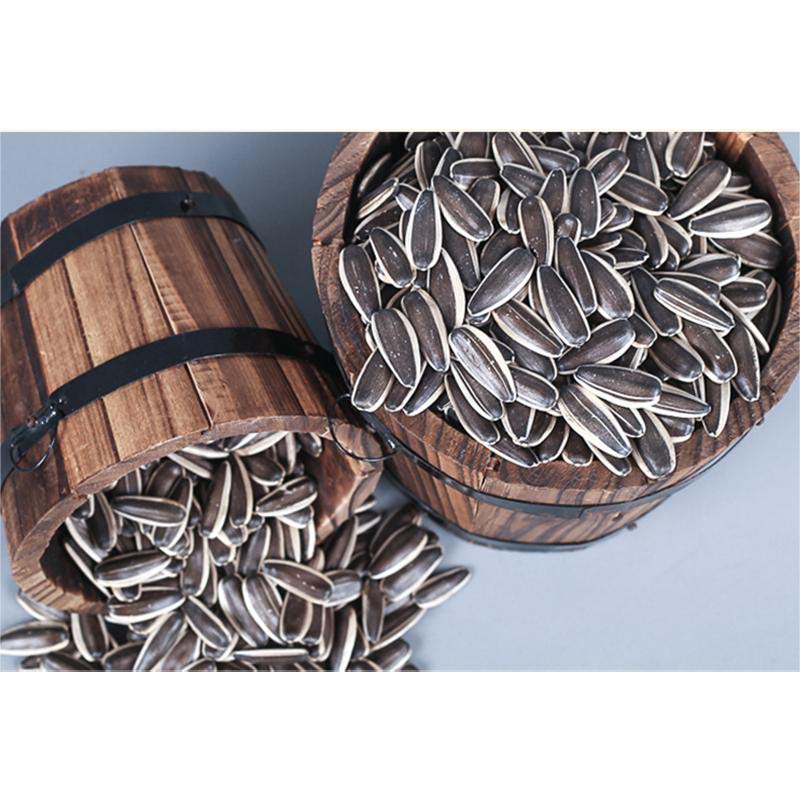
The foundation of high quality cantaloupe flavor sunflower seeds lies in the selection of confectionary-type sunflower seeds ( Helianthus annuus ) with a high kernel-to-hull ratio and low oil content to minimize rancidity. Hull material composition primarily consists of cellulose, hemicellulose, and lignin, impacting shelling efficiency and final product mouthfeel. Kernels are composed of approximately 50-60% oil (primarily linoleic acid), 20-25% protein, and 10-15% carbohydrates. Cantaloupe flavor is introduced via a complex formulation including maltodextrin as a carrier, citric acid for tartness, natural and artificial flavor compounds mimicking cantaloupe esters (e.g., methyl 2-methylbutyrate, ethyl 2-methylbutyrate), and colorants like beta-carotene.
Manufacturing begins with seed cleaning and grading to remove foreign matter and broken kernels. Shelling is typically performed mechanically, utilizing controlled impact forces to minimize kernel damage. After shelling, seeds undergo a debulking process to remove residual hull fragments. The flavoring process is critical. A tumbling method is common, where seeds are conveyed through a rotating drum while a precisely metered spray of the cantaloupe flavor slurry is applied. Spray nozzle atomization and drum speed are key parameters. Drying follows, using controlled temperature and airflow (typically 35-45°C) to remove solvent (if any is used in flavor production) and fix the flavoring. Over-drying leads to brittle seeds; under-drying results in flavor leaching. Final quality control includes visual inspection for defects, moisture content analysis (target: 6-8%), and flavor intensity assessment via sensory panels. Coating with a light oil film (e.g., sunflower oil) can improve gloss and prevent sticking.
Performance & Engineering
The performance of cantaloupe flavored sunflower seeds is significantly influenced by the mechanical integrity of the kernel and the adherence of the flavoring. Force analysis during shelling reveals that optimal impact force needs to balance hull fracture with kernel preservation. Kernel compression strength is a critical parameter, affecting texture and mouthfeel. Environmental resistance focuses primarily on moisture and oxygen permeability. The hull provides a partial barrier, but the flavoring itself is susceptible to oxidation and flavor degradation. Packaging materials (typically flexible films) must exhibit low OTR (Oxygen Transmission Rate) and WVTR (Water Vapor Transmission Rate) to maintain flavor stability and prevent seed spoilage. Compliance requirements include adherence to food safety regulations such as those set by the FDA (Food and Drug Administration) in the United States, and EFSA (European Food Safety Authority) in Europe, regarding permissible flavor additives, heavy metal content, and mycotoxin levels. Flavor release kinetics are engineered through the concentration of flavor compounds and the porosity of the coating. A slower, sustained release is generally preferred for a more enjoyable eating experience.
Technical Specifications
| Parameter | Unit | Specification | Test Method |
|---|---|---|---|
| Moisture Content | % | 6.0 – 8.0 | Oven Drying (AOAC 925.10) |
| Kernel-to-Hull Ratio | % | > 65% | Manual Sorting & Weighing |
| Oil Content (Kernel) | % | 45 – 55 | Soxhlet Extraction (AOAC 920.39) |
| Flavor Intensity (Cantaloupe) | Arbitrary Units | 80 – 120 | Sensory Panel Evaluation |
| Particle Size (Flavor Coating) | µm | < 100 | Laser Diffraction |
| Water Activity (Aw) | - | < 0.6 | Water Activity Meter |
Failure Mode & Maintenance
Failure modes in cantaloupe flavored sunflower seeds are multifaceted. Rancidity is a primary concern, caused by lipid oxidation resulting in off-flavors and odors. This is accelerated by high temperatures, light exposure, and oxygen presence. Flavor leaching occurs when the flavor coating degrades or becomes detached, reducing flavor intensity. Kernel cracking during processing or transportation results in undesirable texture. Husk Fragments remaining attached to the kernel contribute to a gritty mouthfeel and are considered a quality defect. Microbial contamination, though less common due to low water activity, is possible if moisture content exceeds the specified limit.
Maintenance and prevention strategies include using antioxidant packaging materials (e.g., metallized films), storing seeds in cool, dark, and dry conditions (temperature < 25°C, humidity < 60%), and implementing strict quality control procedures throughout the manufacturing process. Regular monitoring of moisture content and oil oxidation levels (using peroxide value analysis) is crucial. Preventative maintenance of shelling and flavoring equipment minimizes kernel damage. Packaging integrity checks are vital to prevent oxygen ingress. For consumer storage, recommending airtight containers and avoiding exposure to direct sunlight extend shelf life. Addressing consumer complaints quickly and investigating root causes can identify potential process improvements.
Industry FAQ
Q: What is the primary driver of flavor loss in these seeds over their shelf life?
A: The primary driver of flavor loss is the volatility of the cantaloupe flavor compounds and their susceptibility to oxidation. Even with a low water activity, residual oxygen permeating the packaging can lead to degradation of the flavor esters, resulting in a diminished cantaloupe aroma and taste. Maintaining a low OTR in the packaging material is critical.
Q: How does the sunflower seed variety influence the final flavor adhesion?
A: The sunflower seed variety impacts the kernel surface texture, which directly affects flavor adhesion. Varieties with a slightly rougher kernel surface provide a better mechanical key for the flavor coating, resulting in improved adhesion and reduced flavor leaching. Higher oil content varieties can also interfere with coating adhesion.
Q: What are the key considerations when selecting a carrier for the cantaloupe flavoring?
A: The carrier needs to be bland in taste, have good adhesion properties, and be compatible with the flavor compounds. Maltodextrin is commonly used due to its neutral flavor profile and ability to form a stable coating. It must also be readily soluble during the flavoring process to ensure uniform distribution. Consideration must be given to its hygroscopicity as well.
Q: What quality control tests are most effective for identifying rancidity?
A: The most effective tests for identifying rancidity include peroxide value (PV) analysis, which measures the primary oxidation products, and sensory evaluation by a trained panel to detect off-flavors and odors. Gas chromatography-mass spectrometry (GC-MS) can also be used to identify specific oxidation byproducts. Acid value measurement is also indicative of degradation.
Q: How does packaging material affect the product's shelf life and what are the best options?
A: Packaging material plays a crucial role in protecting the seeds from oxygen, moisture, and light, all of which contribute to degradation. Metallized polyester films or multi-layer laminates with a high barrier to oxygen and moisture are the best options. Vacuum sealing or nitrogen flushing can further extend shelf life by reducing oxygen levels within the package.
Conclusion
The production of high quality cantaloupe flavor sunflower seeds requires a meticulously controlled process, spanning seed selection, flavoring application, and packaging. The interplay between material science – the composition of the kernel and flavoring compounds – and engineering principles – optimizing impact forces during shelling and barrier properties of the packaging – dictates the final product’s quality and shelf life. Maintaining stringent quality control throughout the entire process, and understanding the potential failure modes, are essential for consistently delivering a desirable and stable snack product.
Future developments in this field may focus on microencapsulation techniques to further enhance flavor retention and stability, as well as the exploration of bio-based packaging materials to improve sustainability. Continuous monitoring of consumer preferences and sensory evaluations will drive innovation in flavor profiles, ensuring that cantaloupe flavored sunflower seeds remain a competitive offering in the increasingly diverse snack food market. A deeper understanding of the oxidation pathways of the flavor compounds will also enable the development of more effective antioxidant strategies.
