Introduction
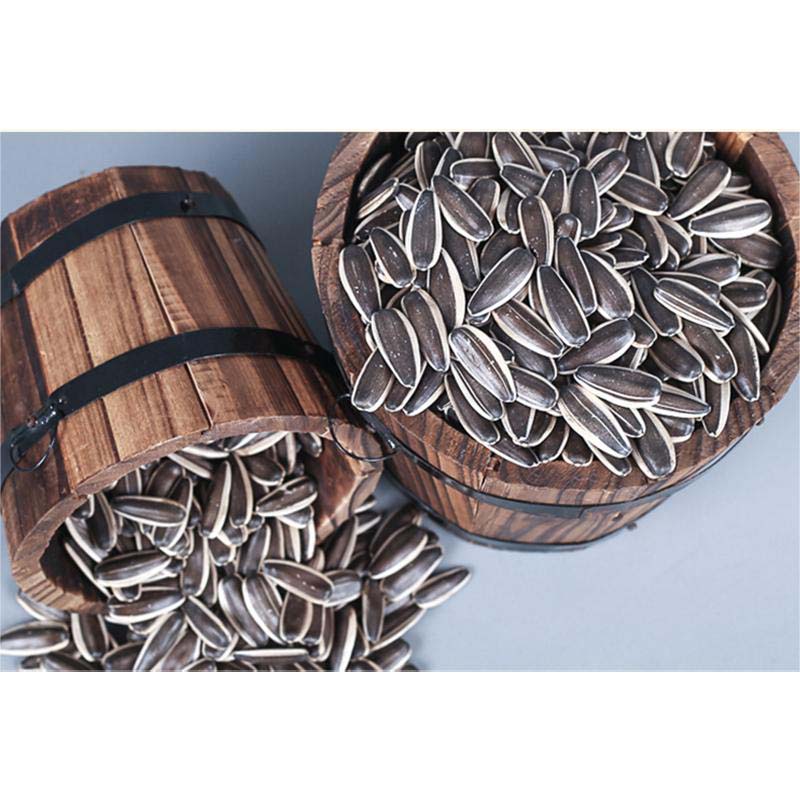
China wild sunflower seeds ( Helianthus annuus) represent a significant agricultural commodity, occupying a unique position within the global oilseed and snack food supply chains. Distinct from cultivated sunflower varieties bred for high oil content or large seed size, these seeds are sourced primarily from wild or feral populations, particularly prevalent across the vast landscapes of Northern and Eastern China. Their appeal lies not solely in their nutritional profile—high in unsaturated fatty acids, Vitamin E, and protein—but also in a specific textural characteristic and flavor profile favored in regional snack food traditions. This guide provides a comprehensive technical overview of these seeds, encompassing their botanical origins, processing methodologies, performance attributes relevant to industrial applications, potential failure modes, and relevant regulatory standards. The increasing demand for 'natural' and 'rustic' snack foods is driving a resurgence in their market value, necessitating a detailed understanding of their quality control and long-term preservation challenges.
Material Science & Manufacturing
The raw material, the Helianthus annuus seed, exhibits a complex composition. The pericarp (seed coat) comprises approximately 12-15% of the seed mass, primarily cellulose, hemicellulose, and lignin, providing structural integrity and acting as a barrier against moisture and pathogens. The kernel (cotyledon) constitutes 65-75% of the seed weight, containing approximately 40-55% oil, 20-25% protein, and 10-15% carbohydrates. The oil is rich in linoleic acid (typically 60-70%) and oleic acid (20-30%), influencing its oxidative stability and nutritional value. Manufacturing begins with harvesting, typically done manually or mechanically. Post-harvest processing involves cleaning to remove debris, drying to reduce moisture content to approximately 8-10% (critical for preventing mold growth and aflatoxin contamination – discussed in Failure Mode), dehulling (removing the pericarp, often utilizing abrasive dehullers), and grading based on size and visual quality. Roasting, a crucial step determining the final product characteristics, is often carried out using batch or continuous roasters at temperatures ranging from 120-180°C. Critical parameters during roasting include temperature control, duration (typically 15-30 minutes), and agitation to ensure uniform heating and prevent scorching. Seasoning, typically involving salt and other flavorings, follows roasting. The final stage is packaging, utilizing materials that offer barrier properties against oxygen and moisture to maintain product freshness.
Performance & Engineering
The performance of china wild sunflower seeds, particularly in snack food applications, is critically linked to several engineering properties. Hardness, measured via force-compression testing, directly impacts the shell-cracking experience, preferred by consumers. Kernel density (typically 0.95-1.05 g/cm³) influences settling rates during processing and filling operations. Moisture content, maintained within the 8-10% range, is crucial for textural integrity; excessive moisture leads to rancidity, while insufficient moisture results in brittleness and cracking. Environmental resistance is paramount for shelf-life stability. Exposure to oxygen promotes lipid oxidation, leading to off-flavors and reduced nutritional value. High temperatures accelerate oxidation rates, necessitating controlled storage conditions (typically below 25°C). Packaging materials must provide adequate barrier properties (oxygen transmission rate < 10 cm³/m²/day) to mitigate oxidation. Compliance requirements vary by target market but generally include adherence to maximum permissible levels of contaminants (heavy metals, pesticides), aflatoxins (typically < 4 ppb), and adherence to food safety standards such as HACCP and GMP. Force analysis during dehulling operations is important to optimize machinery settings to minimize kernel damage. Furthermore, the seeds' inherent oil content presents flammability concerns during roasting, requiring robust fire suppression systems and temperature monitoring.
Technical Specifications
| Parameter | Unit | Typical Value (China Wild) | Cultivated Sunflower Seed (Comparison) |
|---|---|---|---|
| Oil Content | % (Dry Weight Basis) | 42-48 | 50-58 |
| Kernel Hardness | N (Newtons) | 80-120 | 60-90 |
| Moisture Content (Post-Processing) | % | 8-10 | 8-10 |
| Linoleic Acid Content | % (of Total Fatty Acids) | 62-68 | 65-75 |
| Kernel Size (Average Diameter) | mm | 6-8 | 8-10 |
| Pericarp Thickness | mm | 0.2-0.4 | 0.1-0.3 |
Failure Mode & Maintenance
China wild sunflower seeds are susceptible to several failure modes. Lipid oxidation, triggered by exposure to oxygen, light, and elevated temperatures, leads to rancidity, off-flavors, and reduced nutritional value. Aflatoxin contamination, arising from Aspergillus mold growth during improper drying and storage, poses a serious health hazard. Mechanical damage during dehulling and roasting causes kernel breakage, reducing the aesthetic appeal and increasing susceptibility to oxidation. Moisture absorption during storage promotes microbial growth and accelerates deterioration. The pericarp can undergo cracking due to thermal shock during roasting or physical stress during handling. Preventative maintenance includes rigorous quality control of raw materials (monitoring for mold and insect infestation), optimized drying procedures to achieve target moisture content, controlled roasting parameters to minimize scorching, appropriate packaging materials with high barrier properties, and regular monitoring of storage conditions (temperature and humidity). Regular cleaning and sanitation of processing equipment are crucial to prevent microbial contamination. Implementing a robust traceability system allows for rapid identification and isolation of contaminated batches. Storage facilities should be inspected regularly for signs of pest activity and moisture ingress.
Industry FAQ
Q: What are the key differences in fatty acid profiles between China wild sunflower seeds and commercially cultivated varieties, and how do these impact shelf life?
A: China wild sunflower seeds generally exhibit a slightly lower oleic acid content and a correspondingly higher linoleic acid content compared to modern cultivated varieties. Linoleic acid is more susceptible to oxidation than oleic acid, resulting in a shorter shelf life if not adequately protected from oxygen. This necessitates more robust packaging solutions and potentially the addition of natural antioxidants to maintain product quality.
Q: How does the pericarp thickness affect the dehulling efficiency and the final product quality?
A: The pericarp of China wild sunflower seeds tends to be slightly thicker than that of cultivated varieties. Thicker pericarps can reduce dehulling efficiency, leading to increased kernel damage. Optimized dehulling machinery settings and pre-treatment methods (e.g., controlled moistening) are essential to minimize breakage. While the pericarp provides some antioxidant protection, its removal is often preferred for snack food applications due to textural preferences.
Q: What are the regulatory limits for aflatoxins in sunflower seeds in major export markets (e.g., EU, USA)?
A: The regulatory limits for total aflatoxins vary. The EU typically sets a maximum limit of 2 ppb for total aflatoxins in food, including sunflower seeds. The US FDA allows for a maximum level of 20 ppb, but often recommends levels significantly lower. Strict adherence to these regulations requires rigorous monitoring throughout the supply chain, from harvesting to processing and storage.
Q: What packaging materials are most effective in extending the shelf life of roasted and seasoned China wild sunflower seeds?
A: Multi-layer packaging films incorporating aluminum foil or metallized polyester layers provide the most effective barrier against oxygen, moisture, and light. The use of modified atmosphere packaging (MAP), typically involving nitrogen flushing to reduce oxygen levels, can further extend shelf life. Heat-sealable coatings are essential for maintaining package integrity.
Q: What quality control measures are crucial for ensuring the absence of foreign materials (e.g., stones, metal fragments) in the final product?
A: Implementing a multi-stage quality control process is critical. This includes initial cleaning and grading of raw materials, the use of metal detectors and x-ray scanners during processing, and visual inspection of the finished product. Regular calibration and maintenance of equipment are essential for accurate detection. A robust HACCP plan should identify and control potential hazards throughout the production process.
Conclusion
China wild sunflower seeds present a unique combination of nutritional value and distinctive flavor characteristics, driving their increasing popularity in specific market segments. However, their inherent susceptibility to oxidation and contamination necessitates stringent quality control throughout the entire production chain, from cultivation and harvesting to processing and packaging. Understanding the material science, manufacturing parameters, and potential failure modes outlined in this guide is paramount for ensuring product safety, maintaining consistent quality, and maximizing shelf life.
Future research should focus on developing improved dehulling technologies to minimize kernel damage, exploring natural antioxidant solutions to enhance oxidative stability, and optimizing packaging materials to provide superior barrier properties. Furthermore, establishing standardized grading criteria for China wild sunflower seeds would facilitate transparent trade and ensure consistent quality for consumers worldwide. The careful application of these technical insights will be key to unlocking the full potential of this valuable agricultural resource.
