Introduction
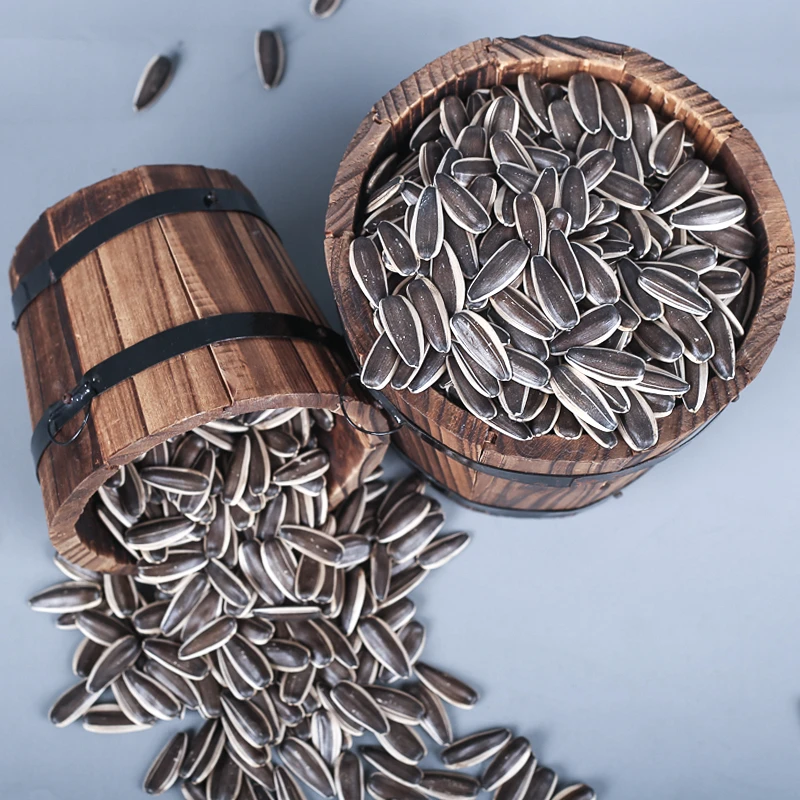
China sunflower seeds in bulk represent a significant commodity within the global agricultural and snack food industries. Positioned as a post-harvest processing product, their value chain extends from agricultural production to processing, packaging, and distribution. Sunflower seeds, Helianthus annuus, are categorized into oilseed and confectionary varieties; this guide focuses predominantly on the latter, those destined for direct human consumption. Core performance characteristics encompass kernel size, oil content (affecting flavor and texture), moisture content (influencing shelf life and susceptibility to fungal growth), and absence of foreign material. The Chinese sunflower seed industry has experienced substantial growth, becoming a major exporter, with a focus on consistent quality and competitive pricing. A primary challenge within the industry centers around achieving uniformity in seed size and quality across large-scale production, alongside mitigating aflatoxin contamination – a critical food safety concern. This technical guide will provide an in-depth analysis of the material science, manufacturing processes, performance characteristics, failure modes, and industry standards associated with bulk china sunflower seeds.
Material Science & Manufacturing
Sunflower seeds are biologically complex, composed primarily of an embryo, endosperm (providing stored energy as oil and protein), and a seed coat (protective outer layer). The kernel’s composition directly impacts its physical and chemical properties. Oil content typically ranges from 40-60%, consisting primarily of linoleic acid (a polyunsaturated omega-6 fatty acid) and oleic acid (a monounsaturated fatty acid). Protein content is approximately 20-25%, with carbohydrates comprising the remainder. The seed coat is rich in cellulose and lignin, contributing to its structural integrity. Manufacturing begins with harvesting, followed by drying to reduce moisture content to 8-10% – a critical parameter for preventing mold growth and preserving quality. Drying typically employs forced-air systems, with temperature and airflow meticulously controlled to avoid damaging the kernel. Post-drying, the seeds undergo cleaning, size grading (using screens and aspiration), and destoning to remove foreign materials. Shelling, if required (for in-shell seeds), is performed mechanically, demanding precise calibration to minimize kernel breakage. The final stage involves quality sorting, typically employing optical sorters to identify and remove defective seeds based on color, size, and shape. Parameter control during drying is paramount; exceeding 60°C can lead to protein denaturation and lipid oxidation, impacting flavor and nutritional value. Accurate size grading ensures uniformity, vital for consistent roasting profiles and consumer acceptance.
Performance & Engineering
The performance of china sunflower seeds in bulk is assessed across multiple engineering parameters, most notably relating to shell strength (for in-shell seeds), kernel hardness, and resistance to oxidation. Shell strength, measured in Newtons (N), influences processing efficiency during shelling and the integrity of the seeds during transport. Kernel hardness, correlated with oil content and protein structure, impacts texture and mouthfeel. The primary concern, however, is oxidative stability. Unsaturated fatty acids are susceptible to oxidation, leading to rancidity and the formation of undesirable off-flavors. This process is accelerated by exposure to oxygen, light, heat, and trace metals. Packaging plays a crucial role in mitigating oxidation; vacuum packaging or modified atmosphere packaging (MAP) using nitrogen gas are commonly employed. Compliance requirements include adherence to food safety standards like HACCP (Hazard Analysis and Critical Control Points) and regulations concerning aflatoxin levels (discussed further in Failure Mode & Maintenance). Roasting, a common processing step, involves controlled heating to develop flavor and texture. The Maillard reaction – a non-enzymatic browning reaction between reducing sugars and amino acids – contributes significantly to the characteristic roasted flavor. Precise temperature and time control are critical to avoid burning and maintain optimal sensory characteristics. Force analysis during shelling operations dictates machine design and operating parameters to minimize kernel damage and maximize yield.
Technical Specifications
| Parameter | Unit | Typical Value (Confectionary Variety) | Testing Method |
|---|---|---|---|
| Kernel Moisture Content | % | 8-10 | Oven Drying (GB/T 5005-2008) |
| Oil Content (Dry Basis) | % | 45-55 | Soxhlet Extraction (GB/T 5009-2008) |
| Protein Content (Dry Basis) | % | 18-24 | Kjeldahl Method (GB/T 5009-2008) |
| Kernel Size (Diameter) | mm | 8-12 | Sieve Analysis (GB/T 5006-2008) |
| Aflatoxin B1 | µg/kg | <2 | ELISA (GB 500-2010) |
| Peroxide Value (PV) | meq O2/kg | <5 | Titration Method (GB/T 38630-2010) |
Failure Mode & Maintenance
Sunflower seeds are susceptible to several failure modes throughout their lifecycle. A primary concern is aflatoxin contamination, caused by Aspergillus flavus and Aspergillus parasiticus fungi. This occurs during pre-harvest, harvest, or post-harvest stages, particularly in hot and humid climates. Strict adherence to agricultural practices, proper drying, and rigorous quality control are essential to minimize aflatoxin levels. Oxidative rancidity, as previously discussed, degrades flavor and nutritional value. Mechanical damage during processing (shelling, sorting) can lead to kernel breakage, reducing market value and increasing susceptibility to microbial spoilage. Insect infestation is another potential failure mode, requiring appropriate storage conditions and pest control measures. Maintenance of storage facilities is crucial. Proper ventilation, temperature control (below 15°C), and humidity control (below 65%) are necessary to prevent mold growth and insect activity. Regular cleaning and sanitation of storage areas are also essential. For bulk storage, monitoring oxygen levels and implementing inert gas blanketing can further extend shelf life. Preventative maintenance on processing equipment – including calibration of shelling machines and regular inspection of optical sorters – minimizes mechanical damage and ensures consistent product quality. Failure analysis of rejected batches should focus on identifying root causes (e.g., inadequate drying, mechanical damage, fungal contamination) to implement corrective actions.
Industry FAQ
Q: What is the acceptable level of foreign material in bulk sunflower seeds destined for the EU market?
A: The EU has strict regulations regarding foreign material. Generally, the acceptable level is less than 1% (w/w) for inorganic foreign material (e.g., stones, metal) and less than 0.5% (w/w) for organic foreign material (e.g., stems, leaves). These limits are often enforced through supplier audits and product testing based on EU Regulation No 178/2002.
Q: How is aflatoxin contamination monitored and controlled during production?
A: Aflatoxin monitoring is conducted throughout the entire production process, starting with field inspections for signs of fungal infection. Samples are regularly taken during drying, shelling, and sorting for laboratory analysis using methods like ELISA. Critical Control Points (CCPs) are established in the HACCP plan to minimize risk. Rejecting infected batches and implementing proper storage conditions are vital control measures.
Q: What are the key differences between oilseed and confectionary sunflower seed varieties, from a quality control perspective?
A: Oilseed varieties prioritize oil yield and are less stringent on kernel size and appearance. Confectionary varieties demand larger, more uniform kernels with a high oil content and desirable flavor profile. Quality control for confectionary seeds focuses heavily on size grading, kernel integrity (minimizing splits and chips), and sensory attributes (taste, texture).
Q: What packaging materials are recommended for long-term storage of bulk sunflower seeds to prevent rancidity?
A: Multi-layer packaging materials with high barrier properties against oxygen and light are recommended. Aluminum foil laminates or metallized polyester films are commonly used. Vacuum packaging or modified atmosphere packaging (MAP) with nitrogen gas flushing further enhances preservation by reducing oxygen levels.
Q: What role does moisture content play in the shelf life of sunflower seeds, and how is it accurately measured?
A: Moisture content is a critical factor influencing shelf life. Higher moisture content promotes fungal growth and accelerates oxidation. The recommended moisture content for long-term storage is 8-10%. Accurate measurement is typically performed using the oven drying method (GB/T 5005-2008), where seeds are dried at 105°C until a constant weight is achieved.
Conclusion
China sunflower seeds in bulk represent a complex agricultural product requiring stringent quality control measures throughout the entire supply chain. Maintaining optimal moisture content, minimizing aflatoxin contamination, and preventing oxidative rancidity are paramount to ensuring product safety and preserving its commercial value. Adherence to international standards, coupled with sophisticated processing techniques and rigorous testing protocols, are essential for meeting the demands of global markets.
Future advancements in sunflower seed processing will likely focus on improving sorting technologies (e.g., hyperspectral imaging) for more accurate quality assessment, developing novel packaging materials with enhanced barrier properties, and exploring innovative methods for aflatoxin mitigation. Continued research into the biochemical mechanisms of oxidation will also contribute to extending shelf life and maintaining optimal sensory attributes, solidifying China’s position as a leading exporter of high-quality sunflower seeds.
