Introduction
Sunflower seeds for planting, Helianthus annuus, represent a globally significant oilseed crop and a vital component of agricultural production. China is a leading producer and exporter of these seeds, catering to a broad range of agricultural needs, from commercial oil production to birdseed and confectionary applications. This technical guide focuses on the characteristics, manufacturing processes, performance parameters, and potential failure modes associated with bulk sunflower seeds intended for planting, providing a comprehensive overview for procurement managers, agronomists, and industry professionals. The core performance criteria revolve around germination rate, oil content, genetic purity, and physical characteristics affecting planting efficiency and seedling vigor. A key industry pain point is maintaining consistent seed quality across large-scale production, mitigating the risk of reduced yields due to low germination or genetic drift. The increasing demand for high-oleic sunflower varieties further complicates quality control and requires precise analytical techniques.
Material Science & Manufacturing
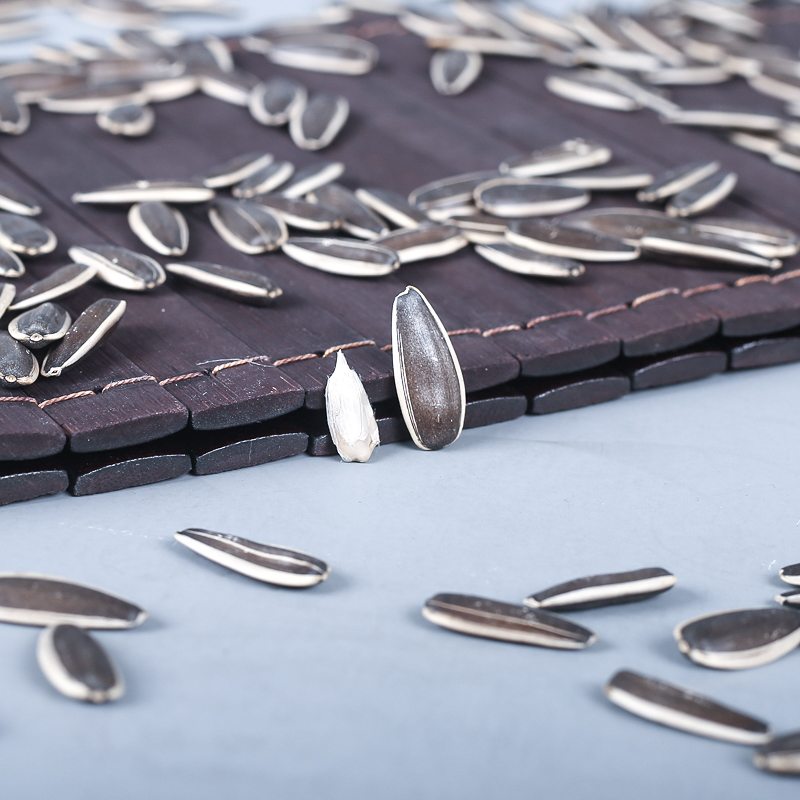
Sunflower seeds are comprised of three primary components: the seed coat (pericarp), the kernel (cotyledons), and the embryo. The seed coat, approximately 10-15% of the seed mass, provides physical protection and is composed primarily of cellulose, hemicellulose, and lignin. The kernel, constituting 65-75% of the seed, is rich in oil (40-55%), protein (18-25%), and carbohydrates. The embryo, accounting for the remaining portion, contains the genetic material necessary for germination. The oil composition is predominantly linoleic acid (omega-6), oleic acid (omega-9), and palmitic acid, with variations determined by the cultivar.
Manufacturing begins with hybrid seed development, involving controlled pollination to create seeds with specific traits (e.g., disease resistance, high oil content). Harvest occurs when the seed moisture content reaches approximately 18-20%. The seeds undergo cleaning to remove chaff, stems, and other debris, typically using a combination of screens, aspirators, and gravity separators. Drying is crucial, reducing moisture content to 8-10% for safe storage and preventing fungal growth. This is often achieved using forced-air dryers with carefully controlled temperature and airflow to minimize heat damage. Subsequent grading sorts seeds by size and density, removing immature or damaged seeds. Finally, the seeds are treated with fungicides and insecticides to protect against soilborne diseases and insect pests, adhering to stringent regulatory standards. Critical process parameters include drying temperature (must not exceed 60°C to avoid protein denaturation), seed moisture content (consistent monitoring throughout the process), and coating uniformity (ensuring even distribution of protective treatments).
Performance & Engineering
The performance of sunflower seeds is dictated by several key engineering principles. Germination rate, a crucial indicator of viability, is influenced by seed moisture content, temperature, oxygen availability, and light exposure. Force analysis relevant to planting equipment considers seed size, shape, and surface texture to ensure consistent singulation and metering. The mechanical strength of the seed coat is vital to withstand the stresses of planting and handling. Environmental resistance pertains to the seed's ability to tolerate temperature fluctuations, humidity variations, and exposure to UV radiation during storage and pre-planting. Compliance requirements include adherence to national and international seed certification standards, ensuring genetic purity and freedom from designated pests and diseases. The germination energy, measured as the percentage of seeds germinating within the first few days, indicates seed vigor and the potential for rapid seedling establishment. Seed dormancy, a natural physiological state preventing immediate germination, must be overcome through appropriate stratification or scarification techniques depending on the cultivar.
Seed pelleting, a common engineering practice, involves coating the seeds with inert materials (e.g., clay, polymers) to improve flowability, protect against pests and diseases, and enhance seedling emergence. The pelleting material’s density and porosity affect water uptake and aeration, impacting germination rate. Furthermore, the selection of appropriate seed treatment chemicals requires careful consideration of their compatibility with the seed coat and their environmental impact. The performance of sunflower seeds is intrinsically linked to the soil’s physical and chemical properties, including texture, structure, pH, and nutrient availability.
Technical Specifications
| Parameter | Unit | Standard Range | Testing Method |
|---|---|---|---|
| Germination Rate | % | ≥ 85 | ISTA Method |
| Oil Content | % (dry weight basis) | 40 – 55 | Soxhlet Extraction |
| Moisture Content | % | 8 – 10 | Oven Drying Method |
| Purity (Genetic) | % | ≥ 98 | ELISA or PCR |
| 1000-Seed Weight | g | 3 – 7 (cultivar dependent) | Analytical Balance |
| Seed Size (Diameter) | mm | 10 – 20 (cultivar dependent) | Sieve Analysis |
Failure Mode & Maintenance
Common failure modes for sunflower seeds include reduced germination due to fungal infection (e.g., Phomopsis helianthi, Sclerotinia sclerotiorum), mechanical damage during handling and planting, insect infestation, and physiological deterioration during storage. Fatigue cracking of the seed coat can occur due to repeated stress during processing and planting. Delamination, the separation of the seed coat from the kernel, reduces germination potential. Degradation of oil content during prolonged storage leads to reduced seedling vigor. Oxidation of lipids can result in rancidity and decreased nutritional value. Maintenance involves proper storage conditions – cool (5-10°C), dry (<60% relative humidity), and dark – to minimize fungal growth and lipid oxidation. Regular monitoring of seed moisture content and temperature is crucial. Implementing effective pest control measures protects against insect damage. Seed treatment with appropriate fungicides and insecticides provides preventative protection. Seed testing, including germination assays and purity analysis, should be conducted periodically to assess seed quality and viability. Rotating seed lots prevents the buildup of pathogens and extends storage life.
Industry FAQ
Q: What is the significance of the oil content percentage in sunflower seeds for my processing facility?
A: Oil content directly impacts the efficiency and yield of your oil extraction process. Higher oil content translates to a greater volume of oil produced per unit of seed, reducing processing costs and maximizing profitability. Variations in oil content also affect oil quality, specifically the ratio of linoleic to oleic acid, which influences the oil's stability and shelf life. We provide detailed oil content analysis reports with each batch to ensure consistency.
Q: How do you ensure the genetic purity of your sunflower seeds, particularly regarding hybrid varieties?
A: Genetic purity is paramount. Our hybrid seeds are produced under strict controlled pollination protocols in isolated fields. We employ rigorous seed testing using both ELISA and PCR analysis to verify the absence of off-types and confirm the genetic identity of each batch. We also maintain detailed pedigree records to trace the lineage of each hybrid line.
Q: What seed treatments are applied, and are they compliant with international regulations regarding pesticide residues?
A: Our seeds are typically treated with a combination of fungicides (e.g., thiabendazole, difenoconazole) and insecticides (e.g., imidacloprid, thiamethoxam) to protect against common soilborne diseases and pests. All seed treatments are applied in accordance with local regulations and are compliant with maximum residue limits (MRLs) established by organizations like the FAO and WHO. We provide Material Safety Data Sheets (MSDS) and Certificates of Analysis (CoA) for all seed treatments.
Q: What is the recommended storage life for bulk sunflower seeds, and what conditions are essential to maintain viability?
A: Under optimal storage conditions – cool (5-10°C), dry (<60% relative humidity), and dark – bulk sunflower seeds can maintain acceptable germination rates for up to 2-3 years. However, germination rate gradually declines over time. Regular monitoring of seed moisture content and temperature is critical. Avoid exposure to direct sunlight and fluctuating temperatures. Proper ventilation is also important to prevent the buildup of moisture and fungal growth.
Q: How do you address the risk of seed-borne diseases, and what quality control measures are in place?
A: We implement a multi-faceted approach to mitigate the risk of seed-borne diseases. This includes sourcing seeds from certified disease-free fields, thorough seed cleaning and disinfection procedures, and seed treatment with effective fungicides. We conduct regular laboratory testing for common seed-borne pathogens (e.g., Phomopsis helianthi, Sclerotinia sclerotiorum) to ensure compliance with quality standards. We maintain detailed records of all quality control data for traceability.
Conclusion
China sunflower seeds for planting represent a complex agricultural commodity, demanding meticulous attention to material science, manufacturing processes, and performance parameters. Maintaining consistent seed quality, particularly regarding germination rate, oil content, and genetic purity, is critical for maximizing yields and ensuring the economic viability of sunflower production. Addressing potential failure modes through proper storage, handling, and seed treatment is essential for preserving seed viability and preventing crop losses.
Future advancements in sunflower seed technology will likely focus on developing cultivars with enhanced drought tolerance, disease resistance, and improved oil profiles. Precise seed phenotyping and genetic selection techniques will play an increasingly important role in optimizing seed performance. Sustainable agricultural practices, including integrated pest management and reduced chemical inputs, will become increasingly prevalent in sunflower seed production.
