Introduction
Sunflower seeds ( Helianthus annuus ) represent a significant agricultural commodity globally, with China being a leading producer and exporter. This technical guide provides an in-depth examination of ‘china sunflower seeds chinese,’ focusing on their agronomic characteristics, processing methodologies, quality control parameters, and relevant industry standards. Sunflower seeds are valued for their edible kernel, oil content, and protein profile, finding application in the food industry, animal feed, and increasingly, in biofuel production. This document addresses the critical aspects of sunflower seed quality, from post-harvest handling to long-term storage, and outlines the key challenges faced by the industry, specifically focusing on maintaining seed viability, preventing aflatoxin contamination, and ensuring consistent oil yield. Understanding the nuances of seed composition and processing is paramount for international trade and meeting stringent food safety regulations.
Material Science & Manufacturing
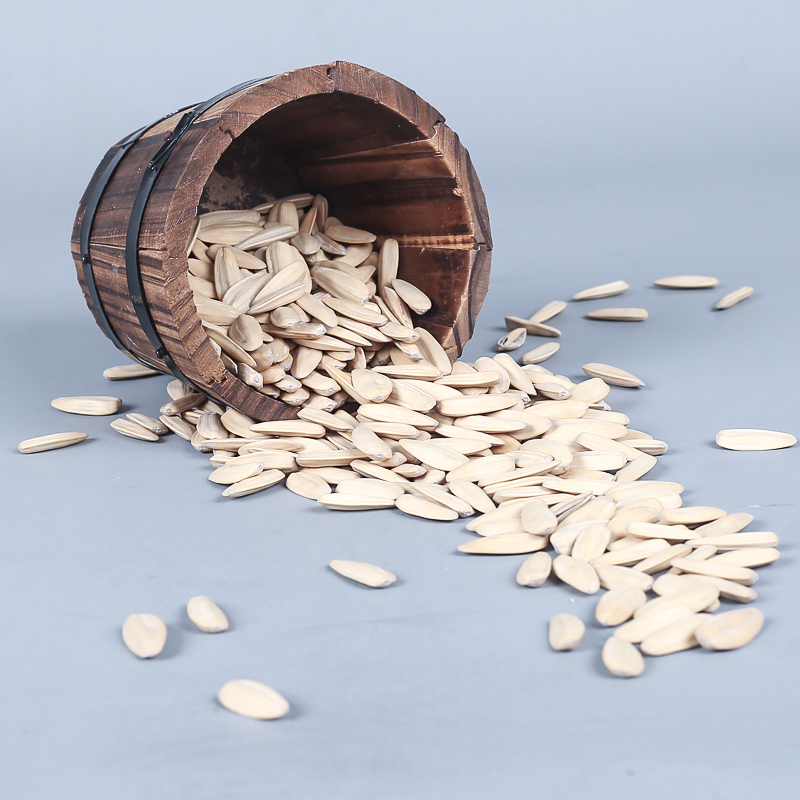
The primary material science considerations for china sunflower seeds chinese revolve around the composition of the seed itself. The kernel comprises approximately 40-50% oil, primarily linoleic acid (an omega-6 fatty acid) and oleic acid (a monounsaturated fatty acid). Protein content ranges from 18-25%, with a significant proportion being globulins and albumins. The seed coat, or hull, is composed of cellulose, hemicellulose, and lignin, providing structural integrity. Manufacturing begins with harvesting, typically employing combine harvesters equipped with seed savers to minimize loss. Post-harvest processing involves cleaning, drying (to a moisture content of approximately 8-10% to inhibit fungal growth), dehulling (removing the outer hull), and grading based on kernel size and quality. Dehulling is achieved through impact or abrasive methods, requiring precise control of pressure and abrasion to minimize kernel damage. Quality control during drying is critical, as excessive heat can denature proteins and reduce oil quality. Seed storage is a crucial manufacturing step, requiring controlled temperature (below 15°C) and humidity (below 65%) to prevent lipid oxidation and maintain viability. Specific cultivar selection plays a large role; oil content and fatty acid profiles are heavily influenced by genetics. The milling process, to extract oil, employs mechanical pressing or solvent extraction (typically hexane), each having its own impact on oil quality and residual solvent levels.
Performance & Engineering
Performance engineering related to china sunflower seeds chinese centers on optimizing oil yield, minimizing processing losses, and ensuring product safety. The mechanical strength of the seed coat dictates dehulling efficiency. Engineering tolerances in harvesting and processing equipment directly impact the percentage of broken kernels and hull fragments, influencing oil quality and refining costs. The oil extraction process involves mass transfer principles, with engineering focused on maximizing solvent contact area and minimizing residence time to optimize yield while reducing solvent retention. Aflatoxin contamination, caused by Aspergillus fungi, is a major performance concern. Engineering controls, such as proper drying techniques, storage environment management (temperature and humidity control), and the application of anti-fungal treatments, are crucial. Furthermore, the seed's resistance to insect infestation affects its storage life and requires engineering solutions like hermetic storage and controlled atmosphere storage. The flowability of seeds during processing is another key consideration, requiring optimization of equipment design to prevent clogging and ensure consistent processing rates. Force analysis of seed impact during dehulling is crucial for optimizing hulling efficiency and minimizing kernel damage. The resulting oil's oxidative stability is impacted by both seed quality and the engineering controls employed during extraction and refining.
Technical Specifications
| Parameter | Unit | Typical Value (China Sunflower Seeds) | Acceptable Range |
|---|---|---|---|
| Oil Content (Dry Basis) | % | 42-48 | 38-52 |
| Protein Content (Dry Basis) | % | 18-24 | 16-26 |
| Moisture Content | % | 8-10 | 6-12 |
| Kernel Size (Diameter) | mm | 12-16 | 10-18 |
| Aflatoxin Levels (B1, B2, G1, G2) | ppb | <5 | <20 (Regulatory Limit) |
| Free Fatty Acid (FFA) | % | <0.5 | <1.0 |
Failure Mode & Maintenance
Failure modes in china sunflower seeds chinese manifest across the entire supply chain. Post-harvest, fungal contamination (leading to aflatoxin production) is a primary failure mode, often linked to inadequate drying and storage. Kernel cracking during dehulling results in increased free fatty acids and reduced oil quality, representing a processing failure. Lipid oxidation during storage causes rancidity, impacting flavor and nutritional value. Insect infestation leads to seed loss and contamination. At the molecular level, oxidation of unsaturated fatty acids in the oil leads to polymerization and increased viscosity. From a structural perspective, the seed coat can become brittle due to moisture loss, increasing susceptibility to damage. Maintenance strategies involve implementing strict quality control protocols at each stage – thorough drying, temperature and humidity-controlled storage, regular monitoring for fungal growth and insect activity, and the use of appropriate packaging materials (e.g., hermetically sealed bags). Preventative maintenance of harvesting and processing equipment (cleaning, lubrication, calibration) minimizes kernel damage. Regular testing for aflatoxins and FFA levels is essential for detecting and mitigating quality issues. Proper silo cleaning and sanitation protocols are also critical for long-term storage. Periodic seed viability testing can identify aging seed stocks before they are processed.
Industry FAQ
Q: What are the key differences between high-oleic and linoleic sunflower seed varieties regarding oil stability?
A: High-oleic sunflower seeds contain a significantly higher proportion of oleic acid (typically >70-80%) compared to linoleic seeds (typically <30%). Oleic acid is a monounsaturated fatty acid, making it less susceptible to oxidation than linoleic acid, a polyunsaturated fatty acid. Consequently, high-oleic sunflower oil exhibits superior oxidative stability, resulting in a longer shelf life and reduced requirement for antioxidants during processing. This is crucial for applications requiring high thermal stability, such as frying.
Q: How does the dehulling process impact the overall oil yield and quality?
A: The dehulling process directly impacts oil yield. Incomplete dehulling leaves residual hull material, reducing the oil concentration in the final product. Aggressive dehulling can cause kernel damage, leading to increased free fatty acids and reduced oil quality. Optimizing the dehulling parameters (impact force, abrasion level, seed moisture content) is crucial. Modern dehulling systems often incorporate sorting mechanisms to remove damaged kernels and hull fragments, maximizing both yield and quality.
Q: What are the acceptable limits for heavy metal contamination in sunflower seeds intended for human consumption?
A: Acceptable limits for heavy metal contamination (lead, cadmium, mercury, arsenic) vary by country and region but are generally dictated by Codex Alimentarius standards and national food safety regulations. Typical limits are in the parts-per-billion (ppb) range. China has specific national standards (GB 2762-2017) outlining permissible levels. Regular testing using techniques like inductively coupled plasma mass spectrometry (ICP-MS) is essential to ensure compliance.
Q: What is the role of storage atmosphere modification in preserving sunflower seed quality?
A: Modifying the storage atmosphere by reducing oxygen levels (controlled atmosphere storage) and increasing carbon dioxide levels can significantly inhibit respiration, fungal growth, and insect activity. This extends the storage life of sunflower seeds and minimizes quality degradation. Hermetic storage, utilizing impermeable containers, is a common method for achieving atmosphere modification. The effectiveness of this approach is dependent on maintaining the integrity of the container and achieving a sufficiently low oxygen concentration.
Q: How do different drying methods (sun drying vs. mechanical drying) influence the final product quality?
A: Sun drying is a traditional method but is susceptible to contamination from dust, insects, and birds, and provides less control over drying temperature and humidity. This can result in uneven drying, increased fungal growth, and reduced oil quality. Mechanical drying, utilizing controlled temperature and airflow, offers superior quality control. However, excessive drying temperatures can denature proteins and reduce oil quality. The optimal drying method depends on the scale of operation, climate conditions, and desired product quality.
Conclusion
China sunflower seeds chinese represent a complex agricultural product requiring meticulous attention to detail throughout the entire supply chain. From genetic selection and agronomic practices to post-harvest handling, processing, and storage, each stage contributes to the final quality and safety of the product. Maintaining optimal moisture content, preventing aflatoxin contamination, and optimizing oil yield are paramount concerns for industry stakeholders.
Future advancements in sunflower seed technology will likely focus on developing cultivars with improved resistance to disease and pests, enhancing oil quality through genetic modification, and implementing more efficient and sustainable processing techniques. Continued adherence to international standards and rigorous quality control protocols will be critical for ensuring the long-term competitiveness of china sunflower seeds chinese in the global market.
