Introduction
Sunflower kernels, specifically those sourced from China and marketed for their nutritional value (“good for you”), represent a significant commodity within the global edible oilseed and snack food industries. These kernels are the fruit of the Helianthus annuus plant, cultivated for their high oil content and protein levels. Their technical position in the supply chain extends from agricultural production and primary processing (dehulling and drying) to secondary processing, including roasting, flavoring, and packaging. Core performance characteristics center around oil yield, protein content, fatty acid profile, moisture content, kernel size, and absence of foreign materials. The industry faces challenges related to maintaining consistent quality, managing aflatoxin contamination, ensuring traceability, and optimizing production efficiency to meet growing global demand. This guide provides an in-depth technical overview of China sunflower kernels, covering material science, manufacturing, performance, failure modes, and industry standards.
Material Science & Manufacturing
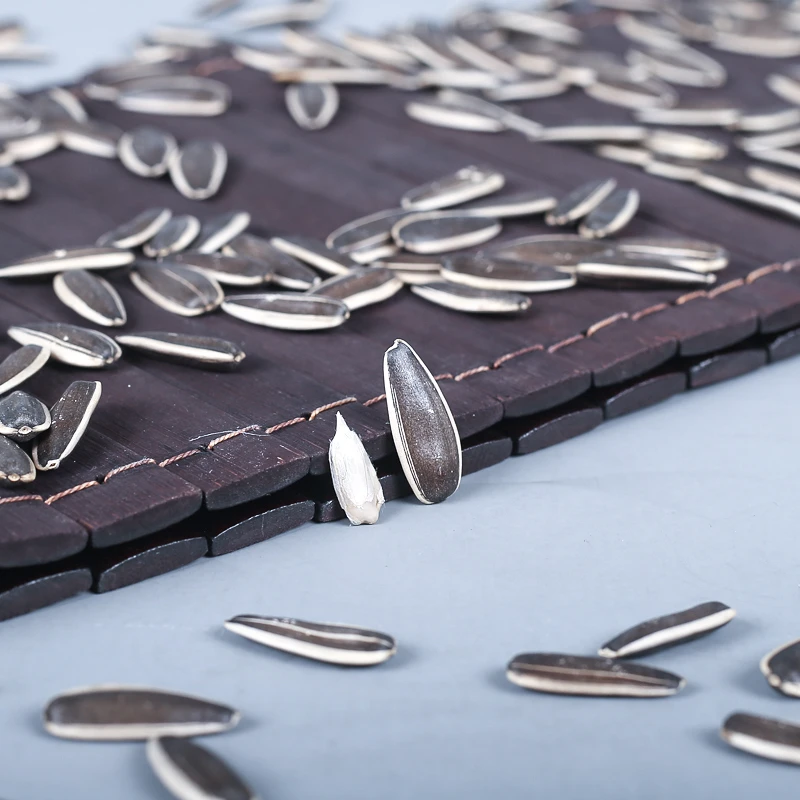
The primary raw material, the sunflower seed, comprises a hull (approximately 20-30% of the seed weight) and the kernel (approximately 70-80%). The kernel’s composition is roughly 50-60% oil, 20-25% protein, 10-15% carbohydrates, and 5-10% moisture. The oil is predominantly composed of linoleic acid (typically 60-74%), oleic acid (10-30%), and palmitic acid (3-6%). Protein content is significant, containing essential amino acids. Moisture content is critical, impacting storage life and susceptibility to fungal growth. Manufacturing begins with seed harvesting, cleaning, and drying to a moisture content of approximately 9-10%. Dehulling is a crucial process, typically employing mechanical methods involving impact and friction. Precise control of dehulling parameters (impact speed, gap settings) minimizes kernel damage and maximizes oil yield. Kernel drying follows, often utilizing fluid bed dryers to achieve uniform moisture reduction without thermal degradation. Roasting, if required, is performed at controlled temperatures (typically 120-160°C) and durations, influencing flavor development and color. Flavoring involves applying salt, spices, or coatings. Quality control throughout each stage is paramount, employing optical sorting and density separation to remove foreign matter and defective kernels. Parameter control focuses on maintaining precise temperature profiles during drying and roasting, ensuring optimal dehulling efficiency, and minimizing moisture variations. Packaging utilizes materials offering barrier protection against oxygen, moisture, and light to preserve freshness and prevent rancidity.
Performance & Engineering
The performance of sunflower kernels is largely defined by their nutritional profile and physical characteristics. Oil yield, expressed as a percentage of kernel weight, is a primary metric, heavily influenced by seed variety, growing conditions, and processing efficiency. Protein quality, assessed through amino acid analysis, dictates its value as a food ingredient. Fatty acid profile influences nutritional value and oxidative stability. Shear force analysis determines the force required to break the kernel, indicating brittleness and processing suitability. Moisture content impacts shelf life and susceptibility to microbial growth. Environmental resistance pertains to maintaining kernel integrity during storage and transportation, considering temperature fluctuations and humidity. Compliance requirements include adherence to food safety regulations (e.g., maximum allowable levels of aflatoxins, pesticide residues) and labeling standards. Functional implementation varies based on intended use – as a snack food, ingredient in confectionery, or source of oil. Engineering considerations during processing involve optimizing heat transfer rates during drying and roasting, minimizing mechanical damage during dehulling, and ensuring uniform coating application during flavoring. The kernels must withstand the forces involved in packaging, palletizing, and transportation without significant breakage or degradation. Finite element analysis can be employed to model stress distribution during these operations.
Technical Specifications
| Parameter | Unit | Typical Value (China Sunflower Kernels) | Testing Method |
|---|---|---|---|
| Oil Content (Dry Basis) | % | 50-60 | Soxhlet Extraction (AOAC 920.39) |
| Protein Content (Dry Basis) | % | 20-25 | Kjeldahl Method (AOAC 920.87) |
| Moisture Content | % | 8-10 | Oven Drying (AOAC 925.10) |
| Linoleic Acid (C18:2) | % of Total Fatty Acids | 60-74 | Gas Chromatography (AOCS Cd 14-91) |
| Oleic Acid (C18:1) | % of Total Fatty Acids | 10-30 | Gas Chromatography (AOCS Cd 14-91) |
| Aflatoxin B1 (Maximum Allowable) | ppb | <20 (regulated by various standards) | HPLC (AOCS 997.08) |
Failure Mode & Maintenance
Sunflower kernels are susceptible to several failure modes. Rancidity, caused by lipid oxidation, is a primary concern, manifesting as off-flavors and reduced nutritional value. This is accelerated by exposure to oxygen, light, and elevated temperatures. Aflatoxin contamination, resulting from fungal growth (primarily Aspergillus flavus and Aspergillus parasiticus), poses a significant health risk. Mechanical damage during processing (dehulling, sorting, packaging) leads to broken kernels and increased susceptibility to oxidation. Moisture absorption during storage promotes microbial growth and degradation. Fatigue cracking can occur during handling and transportation, particularly in larger kernel pieces. Maintenance focuses on preventive measures: maintaining optimal storage conditions (low temperature, low humidity, dark environment), implementing robust quality control procedures to detect and remove contaminated kernels, optimizing processing parameters to minimize mechanical damage, and employing packaging materials with effective barrier properties. Regular inspection for signs of mold growth, insect infestation, or rancidity is crucial. Inventory rotation (FIFO – First In, First Out) minimizes storage time and reduces the risk of degradation. Effective cleaning and sanitation of processing equipment prevent contamination.
Industry FAQ
Q: What are the primary factors influencing the oil yield of China sunflower kernels?
A: Several factors significantly impact oil yield. These include the sunflower seed variety (hybrid vs. open-pollinated), growing conditions (temperature, rainfall, sunlight), maturity at harvest, kernel size and density, and the efficiency of the dehulling process. Minimizing kernel damage during dehulling is critical, as damaged kernels release oil during processing and reduce overall yield. Proper drying to an optimal moisture content (around 9-10%) is also crucial.
Q: How is aflatoxin contamination controlled in sunflower kernels?
A: Aflatoxin control is a multi-stage process. It begins with selecting disease-resistant seed varieties and implementing good agricultural practices to minimize fungal infection in the field. Post-harvest handling is crucial, involving rapid drying to reduce moisture content and prevent fungal growth. Optical sorting and density separation are employed to remove visibly damaged or discolored kernels. Regular testing for aflatoxin levels (using HPLC) is essential, and contaminated lots must be rejected or diverted for non-food uses.
Q: What is the significance of the fatty acid profile in sunflower kernels?
A: The fatty acid profile dictates the nutritional value and oxidative stability of the oil. High linoleic acid content contributes to essential fatty acid intake but makes the oil more susceptible to oxidation. Varieties with higher oleic acid content offer improved oxidative stability and are preferred for applications requiring longer shelf life. The ratio of linoleic to oleic acid is a key specification for many buyers.
Q: What packaging materials are recommended for maintaining the quality of sunflower kernels during storage and transportation?
A: Packaging materials should provide effective barriers against oxygen, moisture, and light. Multi-layer films incorporating aluminum foil or metallized polyester are commonly used. The material should also be resistant to puncture and tearing. Modified atmosphere packaging (MAP) with nitrogen flushing can further extend shelf life by reducing oxygen levels. Proper sealing is crucial to maintain the barrier properties.
Q: What are the key differences between high-oleic and standard linoleic sunflower kernels?
A: High-oleic kernels contain a significantly higher proportion of oleic acid (typically >70%) compared to standard linoleic kernels (typically 60-74% linoleic acid). This results in improved oxidative stability, longer shelf life, and better performance in high-heat applications (e.g., frying). High-oleic oil also has a milder flavor profile and is less prone to developing off-flavors during storage. They generally command a premium price in the market.
Conclusion
China sunflower kernels, as a globally traded commodity, demand stringent quality control and a thorough understanding of their material properties and manufacturing processes. Maintaining optimal oil yield, ensuring food safety through aflatoxin management, and preserving freshness through appropriate packaging are critical challenges for producers and processors. Adherence to international standards and continuous improvement in processing technologies are essential for delivering a high-quality product that meets the demands of a discerning global market.
Future trends in the industry are likely to focus on developing sunflower varieties with enhanced nutritional profiles (e.g., increased vitamin E content), improving processing efficiency to reduce waste, and implementing blockchain technology for enhanced traceability and transparency throughout the supply chain. Sustainable agricultural practices and reducing the environmental impact of sunflower production will also gain increasing importance.
