Introduction
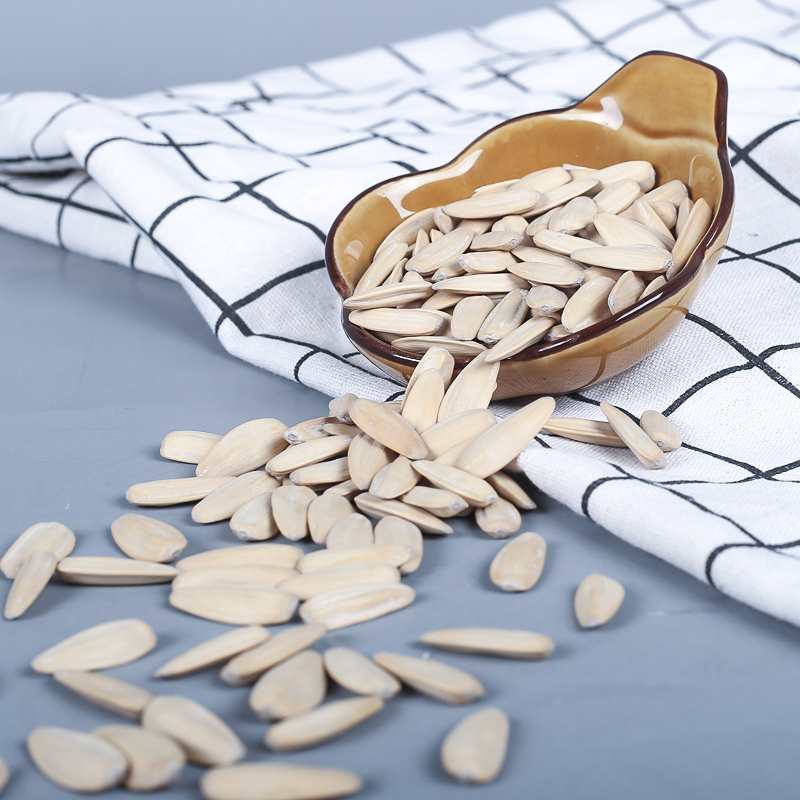
China smackin sunflower seeds represent a significant segment within the global snack food industry, specifically the processed seed market. These seeds, typically Helianthus annuus, undergo a specialized preparation process involving roasting, seasoning, and often cracking or partial shelling, differentiating them from standard sunflower seeds intended for cultivation. Their technical position lies at the intersection of agricultural processing, food chemistry, and packaging technology. Core performance characteristics center around palatability (flavor profile, texture), shell cracking efficiency, kernel integrity, moisture content (impacts shelf life and texture), and the adherence to stringent food safety regulations. A key pain point within the industry revolves around maintaining consistent shell cracking rates – excessive shattering yields undesirable small fragments, while insufficient cracking hinders consumption. Another critical challenge is preventing rancidity, a consequence of lipid oxidation during storage, and ensuring compliance with heavy metal limits (particularly cadmium) present in the soil where the sunflowers are grown.
Material Science & Manufacturing
The raw material, sunflower kernels, comprises approximately 30-50% oil (primarily linoleic acid), 20-30% protein, 10-20% carbohydrate, and 5-10% fiber. The quality of the kernels directly influences the final product. Manufacturing begins with cleaning and grading the seeds, removing foreign material and separating by size. Roasting is a crucial step, typically employing hot air at temperatures ranging from 140-180°C for 20-40 minutes. The roasting process develops flavor compounds via Maillard reactions and reduces moisture content to around 8-12%. Subsequent cracking involves mechanical force applied through rollers or impact devices. Key parameter control during cracking includes roller gap adjustment (affects cracking percentage and fragment size), seed feed rate, and impact force. Seasoning utilizes dry blends of salt, flavorings (e.g., chili powder, spices, MSG), and potentially coatings to enhance taste and visual appeal. Drying post-seasoning is necessary to ensure optimal moisture content for packaging and shelf-life stability. Packaging materials commonly include multi-layer films consisting of polypropylene (PP), polyethylene (PE), and metallized polyester (PET) to provide barrier protection against oxygen, moisture, and light. Chemical compatibility between the seasoning compounds and the packaging film is paramount to prevent migration of flavorings or leaching of film components into the seed product.
Performance & Engineering
Performance is heavily dictated by the mechanical properties of the shell and kernel. Shell fracture toughness, measured using impact testing, directly correlates to the cracking efficiency. Kernel hardness, determined through compression tests, impacts the “smackin’” sensation and consumer acceptability. Environmental resistance concerns primarily relate to moisture uptake and lipid oxidation. Water activity (aw) must be maintained below 0.6 to inhibit microbial growth and prevent textural changes. Lipid oxidation, leading to rancidity, is accelerated by oxygen, light, and elevated temperatures. Engineering considerations include the design of the cracking mechanism to minimize fragment generation and maximize kernel integrity. The seasoning application process requires precise control to ensure uniform coating without clumping or dusting. Packaging design focuses on providing an effective gas barrier to prevent oxidation and maintaining structural integrity during handling and transportation. Compliance requirements include adherence to food safety standards (HACCP, GMP), heavy metal limits (Pb, Cd, As), and labeling regulations pertaining to nutritional information and allergen declarations. Force analysis is critical in optimizing the cracking process; understanding the force required to fracture the shell without damaging the kernel is vital for equipment calibration and maintenance.
Technical Specifications
| Parameter | Unit | Typical Value | Acceptable Range |
|---|---|---|---|
| Kernel Moisture Content | % (wet basis) | 9.0 | 8.0 - 12.0 |
| Shell Cracking Rate | % | 85 | 80 - 95 |
| Peroxide Value (Oil) | meq O2/kg | 2.0 | < 5.0 |
| Cadmium (Cd) Content | mg/kg | 0.10 | < 0.20 (Regulatory Limit) |
| Water Activity (aw) | - | 0.55 | < 0.60 |
| Shell Fracture Toughness | N·mm | 15 | 10 - 20 |
Failure Mode & Maintenance
Common failure modes include rancidity (lipid oxidation), shell fragments (resulting from over-cracking), kernel damage during cracking, moisture absorption leading to textural changes, and packaging failures (seal integrity, puncture resistance). Rancidity is a primary concern, stemming from the oxidation of unsaturated fatty acids in the kernel oil. Prevention requires minimizing oxygen exposure through appropriate packaging and the addition of antioxidants (e.g., BHA, BHT – within permissible limits). Shell fragments reduce consumer appeal and can pose a choking hazard. This is primarily addressed through optimized cracking parameters. Kernel damage results in visually unappealing product and potential flavor loss. Moisture absorption leads to a softened texture and increased susceptibility to microbial spoilage. Maintenance of processing equipment (rollers, impact devices) is crucial; regular cleaning and replacement of worn parts prevent excessive cracking and kernel damage. Periodic inspection of sealing equipment is vital to maintain package integrity and prevent moisture ingress. Regular monitoring of peroxide value and water activity are essential quality control measures to detect early signs of degradation. Proper storage conditions – cool, dry, and dark – are fundamental to minimizing oxidative degradation and maintaining product quality.
Industry FAQ
Q: What are the key considerations regarding heavy metal contamination in sunflower seeds, specifically cadmium?
A: Cadmium uptake is primarily dependent on soil composition. Sunflower seeds are known to accumulate cadmium from the soil. Regulatory limits for cadmium vary by region (e.g., EU, China, USA). Suppliers must provide certificates of analysis demonstrating compliance with these limits. Sourcing seeds from regions with lower cadmium soil levels is a proactive measure. Processing techniques cannot effectively remove cadmium once it’s absorbed by the plant, making careful sourcing paramount.
Q: How does the choice of packaging material impact the shelf life and quality of the finished product?
A: The packaging material acts as a barrier against oxygen, moisture, and light – all factors that contribute to degradation. Multi-layer films incorporating metallized polyester (PET) provide excellent oxygen and light barrier properties. Polypropylene (PP) or polyethylene (PE) layers provide moisture resistance. Seal integrity is crucial; weak seals allow oxygen ingress. The material must also be chemically compatible with the seasoning compounds to prevent migration or leaching.
Q: What are the critical control points in the roasting process and how do they affect product quality?
A: Precise temperature control and roasting time are critical. Under-roasting results in a bland flavor and high moisture content. Over-roasting leads to burnt flavors and potential acrylamide formation. Maintaining uniform heat distribution within the roaster is essential. Monitoring moisture content throughout the process is vital to achieve the desired final moisture level (8-12%).
Q: What methods are used to assess the effectiveness of the shell cracking process?
A: Shell cracking rate (percentage of cracked seeds) is the primary metric. Fragment size distribution is also important – excessive small fragments are undesirable. Visual inspection and sieve analysis are commonly employed. Kernel damage assessment (percentage of broken kernels) provides an indication of the process’s gentleness. Statistical process control (SPC) charts can be used to monitor cracking performance and identify process deviations.
Q: What preventative measures can be taken to minimize lipid oxidation and maintain flavor stability?
A: Minimizing oxygen exposure through appropriate packaging is key. Adding antioxidants (BHA, BHT, tocopherols) within regulatory limits can inhibit oxidation. Controlling moisture content is important, as water activity influences oxidation rates. Storing the product in a cool, dark environment slows down the oxidation process. Nitrogen flushing of packaging can further reduce oxygen levels.
Conclusion
China smackin sunflower seeds, while seemingly simple, represent a complex interplay of agricultural processing, food chemistry, and packaging engineering. Achieving optimal product quality demands meticulous control over each stage of the manufacturing process, from raw material sourcing to final packaging. Maintaining consistent shell cracking rates, preventing rancidity through effective antioxidant strategies and barrier packaging, and adhering to stringent food safety regulations are the core technical challenges.
Future development will likely focus on improved cracking technology to minimize fragment generation, the exploration of natural antioxidants to replace synthetic preservatives, and the development of more sustainable and biodegradable packaging materials. Advancements in near-infrared spectroscopy could allow for non-destructive assessment of kernel quality and oil content, providing real-time process control. Ultimately, a deep understanding of the material science and engineering principles governing this product is crucial for success in a competitive market.
