Introduction
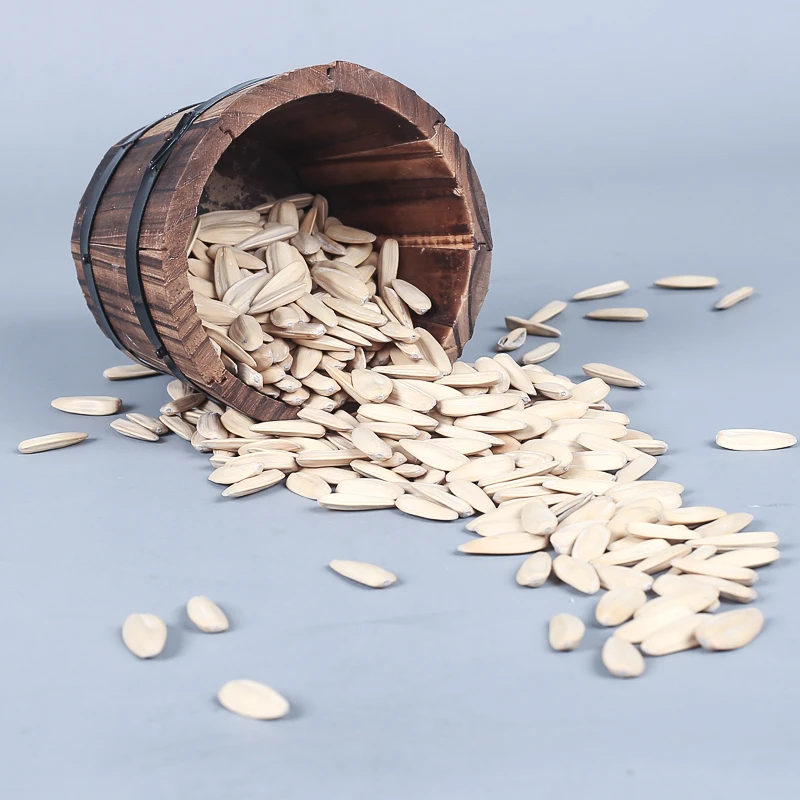
China roasted unsalted sunflower seeds represent a significant segment of the global snack food industry, particularly within Asian markets. Technically positioned as a processed agricultural product, they undergo a series of transformations from raw seed to a consumable snack. The process involves cleaning, dehulling, roasting, and seasoning (in this case, intentionally without salt). Core performance characteristics include consistent kernel size, optimized moisture content for crispness, minimal shell fragments, and a low free fatty acid (FFA) content indicative of oil quality and shelf-life stability. The absence of salt differentiates this product, targeting health-conscious consumers and serving as a base for further seasoning by the end user. A key industry pain point centers around maintaining consistent roasting profiles to achieve uniform color, texture, and prevent acrylamide formation, a carcinogenic compound. Another is achieving consistent low FFA levels during extended storage.
Material Science & Manufacturing
The primary raw material is the Helianthus annuus seed. Key physical properties include a kernel density of approximately 700-800 kg/m³, a moisture content ranging from 8-12% initially, and an oil content typically between 42-55% by weight. The seed hull consists largely of cellulose and lignin, providing structural integrity. Chemical composition centers on triglycerides (oleic, linoleic, palmitic acids being predominant), proteins, carbohydrates, and minor components like phospholipids, sterols, and tocopherols (Vitamin E). Manufacturing begins with cleaning to remove foreign matter. Dehulling is mechanically achieved via impact or friction, separating the kernel from the hull. Roasting, usually at temperatures between 140-180°C, is critical. Precise temperature control is paramount; exceeding optimal temperatures leads to oil oxidation and acrylamide formation. Roasting parameters – temperature, time, and airflow – are controlled via industrial ovens with programmable logic controllers (PLCs). Airflow ensures uniform heat distribution and removal of moisture. Kernel color, monitored via spectrophotometry (measuring L, a, and b color values), serves as a critical process control parameter. Final quality is assessed via sensory evaluation (taste, texture, appearance) and laboratory analysis (moisture content, FFA, peroxide value, acrylamide levels).
Performance & Engineering
Performance is largely dictated by physical integrity and sensory characteristics. Force analysis focuses on kernel fracture strength; excessive brittleness indicates over-roasting or low moisture content. Environmental resistance centers on preventing rancidity (oxidative degradation of oils). This is achieved through packaging materials with low oxygen transmission rates (OTR) and maintaining low storage temperatures. Compliance requirements pertain to food safety standards (HACCP, GMP) and permissible levels of contaminants (heavy metals, pesticides). Functional implementation relates to maintaining a consistent ‘snap’ upon consumption, a texture appreciated by consumers. Moisture content plays a vital role here – lower moisture content generally yields a crisper product, but excessive reduction can lead to brittleness. Furthermore, understanding the Maillard reaction, responsible for flavor and color development during roasting, is crucial. Controlling reaction kinetics is key to optimizing flavor profiles and minimizing undesirable by-products.
Technical Specifications
| Parameter | Unit | Specification | Test Method |
|---|---|---|---|
| Moisture Content | % w/w | ≤ 5.0 | Oven Drying (GB/T 5005-2008) |
| Free Fatty Acid (FFA) | % as oleic acid | ≤ 0.2 | Titration (GB/T 8605-2016) |
| Peroxide Value | meq O₂/kg | ≤ 5.0 | Potentiometric Titration (GB/T 38208-2003) |
| Acrylamide | µg/kg | ≤ 100 | GC-MS (GB 50008-2016) |
| Kernel Size (Average) | mm | 10-14 | Sieve Analysis |
| Broken Kernels (%) | % w/w | ≤ 3.0 | Visual Inspection/Weight Percentage |
Failure Mode & Maintenance
Common failure modes include rancidity due to lipid oxidation, leading to off-flavors and reduced shelf life. This is accelerated by exposure to oxygen, light, and elevated temperatures. Another mode is kernel cracking or chipping, resulting from excessive moisture loss during roasting or mechanical stress during handling. Acrylamide formation, as previously mentioned, represents a chemical degradation failure, posing a potential health risk. Shell fragments remaining in the final product are a physical contamination failure. Maintenance involves proper storage in airtight containers, protecting from light and heat. Regular monitoring of FFA and peroxide values provides an indication of oil stability. Packaging with a high barrier to oxygen and moisture is essential. Equipment maintenance focuses on accurate temperature control in roasting ovens and minimizing mechanical damage during dehulling and handling. Implementing a robust quality control program with regular sampling and analysis is critical to prevent failures.
Industry FAQ
Q: What is the primary driver for variation in the roasting process, and how can it be mitigated?
A: The primary driver is inconsistent heat distribution within the roasting oven. This can be mitigated through proper oven maintenance (calibration of heating elements, airflow optimization), precise control of batch size, and implementation of real-time temperature monitoring and adjustment via PLC. Regular inspection of oven insulation is also crucial.
Q: How does the initial moisture content of the sunflower seeds impact the final product quality?
A: Higher initial moisture content requires longer roasting times, potentially increasing acrylamide formation. Lower initial moisture content can lead to rapid heat transfer and uneven roasting. Maintaining a consistent initial moisture content within the 8-12% range is crucial for optimal results. Proper drying techniques are vital.
Q: What packaging materials are best suited for preserving the quality of unsalted roasted sunflower seeds?
A: Multi-layer films with high barrier properties against oxygen and moisture are essential. Typically, this involves a combination of polyethylene (PE), polypropylene (PP), and ethylene vinyl alcohol (EVOH). Aluminum foil layers can provide an additional barrier but increase cost. Modified atmosphere packaging (MAP) with nitrogen flushing can further extend shelf life.
Q: What analytical techniques are used to assess the oil quality of the sunflower seeds?
A: The primary techniques are determination of Free Fatty Acid (FFA) content via titration, Peroxide Value (PV) to measure oxidation, and Anisidine Value (AV) to assess secondary oxidation products. Gas Chromatography-Mass Spectrometry (GC-MS) can be used for detailed fatty acid profiling.
Q: What are the key considerations for scaling up production while maintaining consistent quality?
A: Maintaining consistent raw material quality is paramount. Automated process control systems (PLCs) are essential for precise temperature and time control during roasting. Statistical Process Control (SPC) should be implemented to monitor key parameters and identify deviations from established norms. Thorough operator training and adherence to Standard Operating Procedures (SOPs) are also critical.
Conclusion
China roasted unsalted sunflower seeds, while seemingly simple, involve a complex interplay of material science, thermal processing, and packaging technology. Achieving consistent quality requires meticulous control over each stage of the production process, from raw material sourcing to final packaging. Maintaining low FFA levels, preventing acrylamide formation, and ensuring consistent kernel texture are critical technical challenges.
Future advancements may focus on optimizing roasting profiles using machine learning algorithms to minimize acrylamide while maximizing flavor development. Exploring novel packaging materials with enhanced barrier properties and incorporating active packaging technologies to scavenge oxygen could further extend shelf life. A continued emphasis on stringent quality control and adherence to international food safety standards will be vital for maintaining consumer trust and market competitiveness.
