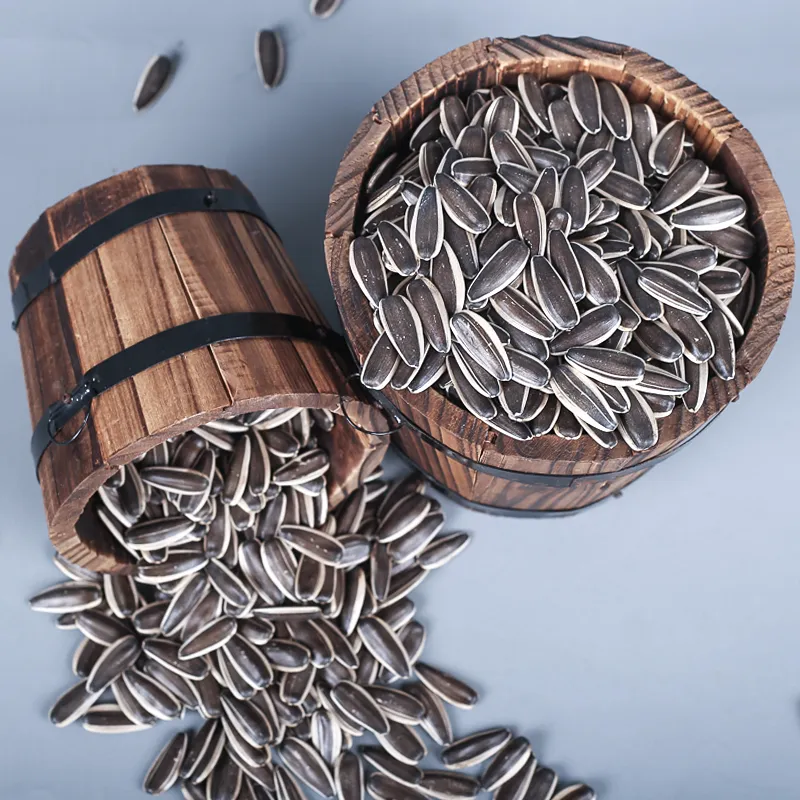
Introduction
China roasted sunflower seeds represent a significant commodity within the global snack food market, and particularly in Asian food cultures. This guide provides a detailed technical overview of their production, quality control, and key performance indicators, geared towards B2B procurement and quality assurance professionals. The industry faces challenges relating to aflatoxin contamination, consistent roast profile control, and maintaining kernel integrity during processing. Our focus will encompass raw material sourcing, processing parameters impacting flavor and texture, and analytical methods for assessing product safety and quality. The economic impact of sunflower seed production in China is substantial, and understanding the technical nuances of processing is crucial for maintaining market competitiveness and meeting stringent international food safety regulations. This guide aims to demystify the complexities, providing a robust technical foundation for informed decision-making.
Material Science & Manufacturing
The raw material for roasted sunflower seeds, Helianthus annuus, exhibits inherent variability in oil content (34-42% by weight), protein composition (18-25%), and moisture content (8-12%). Seed varieties are selected based on kernel size, oil profile (oleic vs. linoleic acid ratio), and susceptibility to disease. Manufacturing begins with dehulling, a critical step impacting final product appearance and mouthfeel. Dehulling efficiency is dependent on seed moisture content and the mechanical design of the dehuller; improper settings can lead to excessive kernel breakage. Post-dehulling, seeds undergo cleaning to remove foreign matter. Roasting, the core processing step, involves convective heat transfer, typically in rotating drum roasters or fluidized bed roasters. Key parameters include roasting temperature (120-160°C), roasting time (20-40 minutes), and drum speed. Precise control of these parameters is essential to develop the desired flavor profile – a balance of Maillard reaction products, caramelization, and volatile aroma compounds. Over-roasting leads to burnt flavors and acrylamide formation, while under-roasting results in a bland taste and suboptimal texture. Following roasting, seeds are typically seasoned with salt and other flavorings (e.g., spices, MSG) via tumble coating. Finally, the seeds are cooled, sorted (to remove broken or discolored kernels), and packaged in moisture-barrier films to prevent rancidity.
Performance & Engineering
Performance analysis of roasted sunflower seeds centers around several key areas: sensory attributes, nutritional value, and physical integrity. Sensory evaluation, utilizing trained panels, quantifies attributes like roast level, saltiness, and overall acceptability. Nutritional analysis assesses oil content, protein content, and the fatty acid profile. Physical integrity is determined by measuring kernel breakage, percentage of intact kernels, and moisture content. Environmental resistance, specifically shelf-life stability, is paramount. Roasted sunflower seeds are susceptible to rancidity due to lipid oxidation. This is accelerated by exposure to oxygen, light, and heat. Packaging materials with low oxygen transmission rates (OTR) and high barrier properties are crucial. Force analysis, applied to kernel strength, indicates susceptibility to breakage during handling and consumption. Compliance requirements include adherence to food safety standards (e.g., HACCP, GMP), limits for heavy metal contamination (lead, cadmium), and regulations regarding aflatoxin levels (detailed in Section 5). Furthermore, packaging must comply with regulations governing food contact materials.
Technical Specifications
| Parameter | Unit | Typical Range (China Roasted Sunflower Seeds) | Test Method |
|---|---|---|---|
| Moisture Content | % w/w | 4.0 – 6.0 | AOAC 925.10 |
| Oil Content | % w/w | 40 – 50 | Soxhlet Extraction (AOAC 920.39) |
| Salt Content (NaCl) | % w/w | 1.0 – 3.0 | Argentometric Titration (AOAC 937.06) |
| Aflatoxin B1 | ppb | < 5 | HPLC with Fluorescence Detection (AOAC 999.07) |
| Kernel Breakage | % w/w | < 5 | Visual Inspection & Weighing |
| Peroxide Value (PV) | meq O2/kg | < 5 | Titration Method (GB 5009.3-2016) |
Failure Mode & Maintenance
Common failure modes for roasted sunflower seeds include rancidity (oxidative degradation of lipids), aflatoxin contamination, and physical damage. Rancidity manifests as off-flavors and reduced shelf-life. This is mitigated through proper packaging (nitrogen flushing, moisture barrier films) and the addition of antioxidants (e.g., tocopherols). Aflatoxin contamination, caused by Aspergillus molds, is a significant food safety concern. Stringent quality control measures throughout the supply chain – from pre-harvest monitoring to post-harvest storage – are essential. This includes proper drying of seeds to minimize moisture content and preventing mold growth. Physical damage (kernel breakage) can occur during dehulling, roasting, or handling. Optimizing processing parameters and implementing gentle handling procedures are critical. Maintenance of roasting equipment involves regular cleaning to remove seed debris and buildup, calibration of temperature sensors, and inspection of rotating parts for wear and tear. Periodic assessments of the roasting profile are essential to ensure consistency. Furthermore, routine hygiene audits of the processing facility are necessary to prevent contamination and maintain product quality. Regular testing for aflatoxins and peroxide value is critical for monitoring product stability and safety.
Industry FAQ
Q: What are the primary risks associated with sourcing sunflower seeds from different regions in China?
A: Regional variations in climate and agricultural practices significantly impact seed quality. Northern regions may experience higher levels of mycotoxin contamination due to wetter harvest conditions. Southern regions might have different oil profiles affecting roasting characteristics. Thorough supplier qualification and rigorous testing are crucial to mitigate these risks. Traceability back to the origin of the seeds is essential.
Q: How can we accurately assess the roast profile of a batch of sunflower seeds?
A: Roast profile assessment involves a combination of sensory evaluation, colorimetry, and chemical analysis. Sensory panels quantify roast level based on aroma, taste, and texture. Colorimetry (using a colorimeter) measures seed color, which correlates with roast degree. Chemical analysis, specifically measuring acrylamide levels and free fatty acids, provides objective data on roasting conditions.
Q: What packaging materials offer the best protection against rancidity?
A: Multi-layer films incorporating aluminum foil or metallized PET (polyethylene terephthalate) provide excellent barrier properties against oxygen and light. Nitrogen flushing prior to sealing further reduces oxygen levels. The film thickness and material composition should be optimized based on the intended shelf-life and storage conditions.
Q: What are the current regulatory limits for aflatoxin in roasted sunflower seeds in the EU and US?
A: The European Union’s maximum permissible level for total aflatoxins (B1, B2, G1, G2) in foodstuffs is 2 ppb. The US FDA action level for aflatoxin in nuts (including sunflower seeds) is 20 ppb. It is crucial to adhere to the more stringent of these regulations when exporting to these markets.
Q: What preventative measures can be implemented to minimize kernel breakage during processing?
A: Minimizing kernel breakage requires careful control of dehulling parameters (moisture content, dehuller speed), gentle handling during roasting and seasoning, and optimized packaging to prevent damage during transportation. Using cushioned packaging and avoiding excessive compression during storage are also beneficial.
Conclusion
China roasted sunflower seeds, while a popular snack, demand a rigorous approach to quality control and processing optimization. Maintaining consistent roast profiles, ensuring food safety through aflatoxin mitigation, and preserving kernel integrity are paramount for successful B2B operations. Understanding the material science underpinning seed characteristics, coupled with meticulous monitoring of processing parameters, is fundamental to achieving superior product quality and meeting stringent international standards.
Future trends in the industry will likely focus on advancements in seed breeding for improved oil profiles and disease resistance, the development of more sustainable packaging materials, and the implementation of advanced analytical techniques for rapid and accurate quality assessment. Investing in robust quality assurance systems and fostering strong supplier relationships will be crucial for navigating the evolving landscape and maintaining a competitive edge.
