Introduction
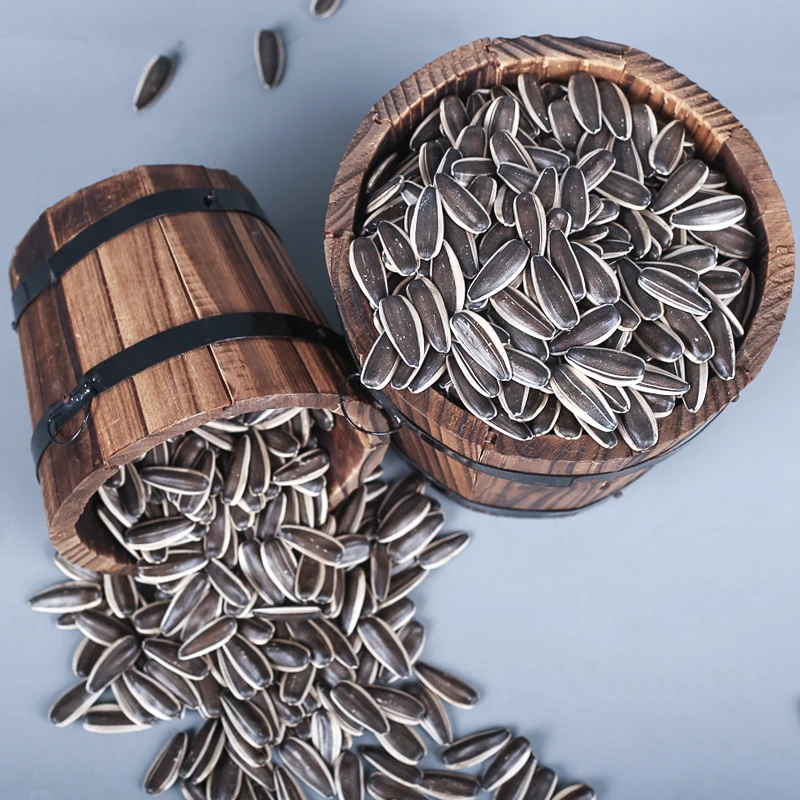
Oven-roasted sunflower seeds represent a significant processed food sector, particularly within Chinese agricultural exports. These seeds, derived from Helianthus annuus, undergo a controlled roasting process to enhance palatability, nutritional value, and shelf life. Technically positioned between raw agricultural output and consumer packaged goods, this processing step is crucial for value addition. Core performance characteristics include consistent kernel size, optimized moisture content for crunch, controlled salt adhesion, and minimized levels of acrylamide – a byproduct of high-temperature roasting. The industry faces challenges related to maintaining seed quality throughout the supply chain, achieving uniform roasting across large batches, adhering to strict food safety regulations, and providing consistent flavor profiles demanded by diverse international markets. Understanding the nuances of seed variety, roasting parameters, and post-roasting handling is essential for producing a competitive and safe product.
Material Science & Manufacturing
The primary raw material, sunflower seeds, consists of approximately 35-45% oil, 20-30% protein, and 15-25% carbohydrates, with the remainder being moisture and minerals. The oil composition is dominated by linoleic acid, an omega-6 fatty acid, influencing oxidative stability and flavor development. Seed shell composition is predominantly cellulose and lignin, impacting hulling efficiency and final product aesthetic. The roasting process itself is a complex interplay of heat and mass transfer. Seeds are typically pre-heated to remove initial moisture, followed by a primary roasting stage at 140-180°C. This stage drives Maillard reactions, creating the characteristic roasted flavor and color. Precise temperature control is critical to avoid overheating, which leads to acrylamide formation and rancidity. Batch roasting utilizes hot air circulation within a rotating drum, requiring precise control of drum speed, airflow rate, and heating element output. Continuous roasting employs conveyor belts passing through heated zones. Key parameters include belt speed, temperature gradient across zones, and air velocity. Post-roasting, seeds are often seasoned with salt, spices, and flavor enhancers, requiring even distribution and adhesion. Coating materials are typically aqueous solutions containing salt, flavorings, and binders like maltodextrin, sprayed onto the seeds. Control of solution viscosity and spray nozzle parameters is crucial for uniform coverage. Seed variety greatly influences processing – high-oleic sunflower seeds exhibit increased oxidative stability compared to linoleic varieties, allowing for higher roasting temperatures and longer shelf life. The presence of foreign matter (stalks, leaves, stones) must be rigorously controlled during pre-processing to prevent equipment damage and maintain product purity. Moisture content prior to roasting must be optimized (typically 8-10%) to ensure efficient heat transfer and prevent cracking.
Performance & Engineering
The mechanical integrity of the roasted seed is paramount. Force analysis during handling and packaging reveals that seeds experience compressive stresses during bagging and transport. Shell fracture resistance is therefore a critical performance metric. Furthermore, the seed's ability to withstand impact during handling is essential to minimize the generation of fines (broken seed fragments). Environmental resistance considerations center on moisture absorption and oxidative degradation. High humidity can lead to softening of the kernel and loss of crunch. Exposure to oxygen accelerates lipid oxidation, resulting in rancidity and off-flavors. Packaging materials must therefore provide an effective barrier to moisture and oxygen. Compliance requirements are stringent, encompassing food safety standards like HACCP (Hazard Analysis and Critical Control Points) and regulations related to heavy metal content (lead, cadmium, arsenic). Acrylamide levels are also subject to regulatory limits in many countries. Functional implementation requires precise control of roasting parameters to achieve desired flavor profiles and texture. This is often achieved through the use of process analytical technology (PAT), which employs real-time monitoring of seed temperature, moisture content, and color during roasting. Mathematical models, based on heat transfer and reaction kinetics, are used to optimize roasting profiles and predict final product quality. The Maillard reaction, responsible for much of the characteristic flavor, is a complex non-enzymatic browning reaction between reducing sugars and amino acids, heavily influenced by temperature and moisture content.
Technical Specifications
| Parameter | Unit | Typical Value | Acceptable Range |
|---|---|---|---|
| Moisture Content | % (wb) | 5.0 | 4.0 - 6.0 |
| Oil Content | % (db) | 45 | 42 - 48 |
| Kernel Size (Average Diameter) | mm | 8.0 | 7.0 - 9.0 |
| Salt Content | % (wb) | 1.5 | 1.2 - 1.8 |
| Acrylamide Content | µg/kg | 80 | < 100 (Regulatory Limit) |
| Peroxide Value (PV) | meq O2/kg | 2.0 | < 5.0 (Indicator of Oxidative Stability) |
Failure Mode & Maintenance
Common failure modes include rancidity due to lipid oxidation, evidenced by off-flavors and odors. This is accelerated by exposure to oxygen, light, and elevated temperatures. Shell fracture during handling leads to the generation of fines and reduces product aesthetic appeal. This can be caused by excessive impact forces or brittle shells due to improper drying. Acrylamide formation, a chemical failure, is driven by high roasting temperatures and low moisture content. Uneven roasting results in inconsistent flavor and texture, a process control failure. Microbial contamination, though less common with roasted seeds, can occur due to inadequate sanitation or moisture uptake post-roasting. Maintenance focuses on preventative measures. Regular cleaning of roasting equipment prevents buildup of seed debris and reduces the risk of overheating. Calibration of temperature sensors and control systems ensures accurate process control. Proper storage of raw materials and finished products is crucial to minimize oxidation and moisture absorption. This includes maintaining cool, dry conditions and utilizing airtight packaging. Monitoring peroxide value (PV) is a key indicator of oxidative stability and can be used to predict shelf life. Regular inspections for shell cracks and fines provide insights into handling practices and equipment performance. Implementing a robust quality control program, including routine testing for acrylamide, salt content, and microbial contamination, is essential for maintaining product safety and quality.
Industry FAQ
Q: What is the optimal roasting profile to minimize acrylamide formation while maximizing flavor development?
A: The optimal profile balances temperature and time. Lower roasting temperatures (140-160°C) for longer durations, coupled with careful control of seed moisture content (8-10% prior to roasting, reducing to 2-3% during roasting), are key. Implementing a two-stage roasting process – a lower temperature pre-roast followed by a higher temperature finish – can also help. Addition of asparaginase, an enzyme that breaks down asparagine (a precursor to acrylamide), is another mitigation strategy.
Q: How does sunflower seed variety impact the roasting process and final product quality?
A: High-oleic varieties are preferred due to their improved oxidative stability, allowing for longer shelf life and the potential for higher roasting temperatures. Kernel size and shape also influence heat transfer and flavor development. Larger kernels generally require longer roasting times. Seed coat thickness affects moisture loss during roasting and can impact texture.
Q: What packaging materials are recommended to maintain product freshness and prevent rancidity?
A: Multi-layer films incorporating aluminum foil or metallized polyester provide excellent barrier properties against oxygen and moisture. Modified atmosphere packaging (MAP), using nitrogen flushing to displace oxygen, further enhances shelf life. The use of oxygen absorbers within the package can also be beneficial.
Q: What are the critical control points in the roasting process for ensuring food safety?
A: Key CCPs include raw material sourcing (to ensure absence of contaminants), pre-roasting moisture content control, roasting temperature and time control (to minimize acrylamide), post-roasting cooling rate (to prevent condensation and microbial growth), and packaging integrity.
Q: How is the salt adhesion rate measured and controlled during seasoning?
A: Salt adhesion is assessed by measuring the percentage of salt retained on the seed surface after a standardized agitation process. It’s controlled by adjusting the salt solution viscosity (using binders like maltodextrin), spray nozzle parameters (droplet size and pressure), and seed temperature during seasoning. Proper mixing ensures uniform coating.
Conclusion
The production of oven-roasted sunflower seeds is a technically demanding process requiring meticulous control of material properties, processing parameters, and packaging. Achieving consistent product quality, maximizing shelf life, and meeting stringent food safety regulations depend on a thorough understanding of heat transfer, mass transfer, and chemical reactions. Optimizing the roasting profile to minimize acrylamide formation while maximizing flavor development remains a key challenge.
Future advancements are likely to focus on employing advanced process analytical technology (PAT) for real-time monitoring and control, utilizing predictive modeling to optimize roasting parameters, and exploring novel packaging materials with enhanced barrier properties. Continued research into the genetic modification of sunflower varieties to improve oil composition and oxidative stability will also contribute to enhanced product quality and sustainability.
