Introduction
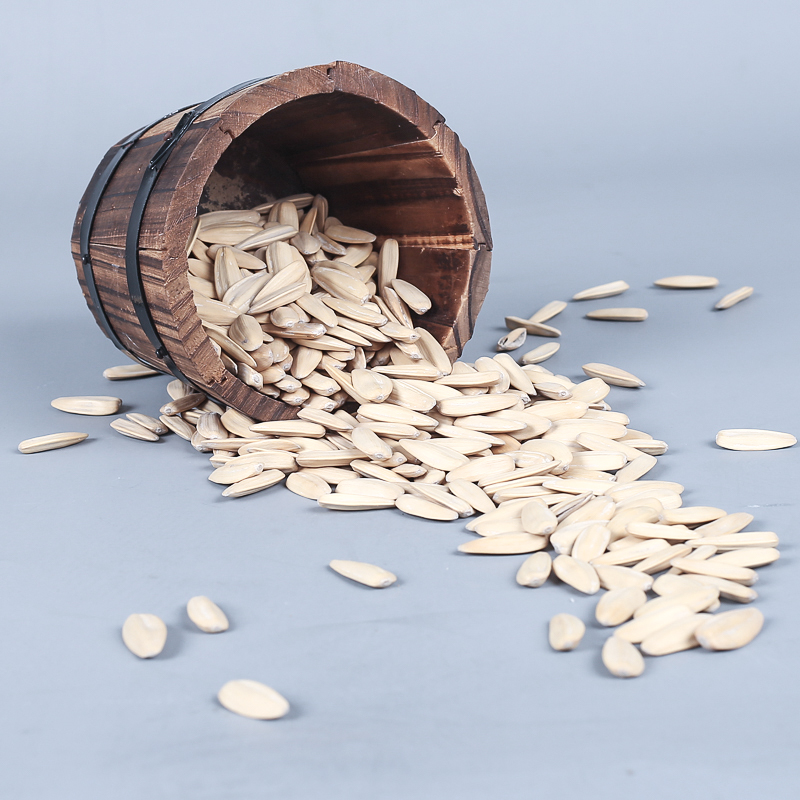
China raw shelled sunflower seeds represent a significant commodity within the global agricultural and food processing industries. Positioned as a semi-finished product, these seeds occupy a critical intermediate point in the value chain, bridging raw agricultural output with consumer-facing snack foods, ingredient applications in confectionery, baking, and animal feed. Their quality is defined by kernel size, oil content, protein content, moisture levels, and the absence of defects. This technical guide provides an in-depth examination of the material science, manufacturing processes, performance characteristics, potential failure modes, and relevant industry standards pertaining to china raw shelled sunflower seeds. A core industry pain point lies in maintaining consistent quality across large-scale production, specifically mitigating aflatoxin contamination and ensuring optimal oil yield for downstream processing.
Material Science & Manufacturing
Sunflower seeds (Helianthus annuus) consist of a shell (hull) and a kernel. Raw shelled seeds primarily comprise the kernel, with residual hull fragments acceptable within specified tolerances. The kernel’s composition is approximately 20-50% oil (primarily linoleic acid – an omega-6 fatty acid), 20-25% protein, 15-20% carbohydrates, and 5-10% moisture. Manufacturing begins with harvesting mature sunflower heads. Mechanical dehulling separates the kernels from the hulls. Key parameters during dehulling include impact force, gap width between rollers, and aspiration airflow to remove hull fragments. Following dehulling, seeds undergo cleaning (removal of foreign materials) and sizing (separation based on kernel diameter). Drying is critical to reduce moisture content to 8-10% to inhibit microbial growth and enzymatic activity. Drying utilizes controlled temperature (typically <45°C) and airflow. Post-drying, optical sorting utilizes color and shape recognition to identify and remove discolored, damaged, or immature kernels. Quality control at each stage – dehulling, cleaning, drying, and sorting – involves regular moisture content analysis (using a moisture analyzer), oil content determination (Soxhlet extraction or near-infrared spectroscopy), and visual inspection for defects. The purity of the seed, defined as the percentage of kernel material, is a critical parameter monitored throughout the process. Failure to control these parameters can lead to increased free fatty acid content due to lipid oxidation, impacting oil quality and creating rancidity.
Performance & Engineering
The performance of china raw shelled sunflower seeds is primarily assessed based on their suitability for downstream processing (oil extraction, snack food production). Oil yield, expressed as a percentage of kernel weight, is a critical performance indicator. Engineering considerations focus on maintaining kernel integrity during handling and transportation. Impact resistance is important to minimize kernel breakage. The kernel’s shell-less state makes it more vulnerable to damage compared to in-shell seeds. Aflatoxin contamination is a significant concern. Aspergillus flavus, a fungus, produces aflatoxins, potent carcinogens. Proper drying and storage conditions (low temperature, low humidity) are essential to prevent aflatoxin formation. Environmental resistance considerations include protection from insects and rodents during storage. Packaging materials must provide a barrier against moisture, oxygen, and light to prevent oxidation and maintain oil quality. Compliance requirements include adherence to maximum aflatoxin levels specified by regulatory agencies (FDA, EFSA). Force analysis during handling (e.g., conveying, sorting) informs the design of equipment to minimize kernel damage. Particle size distribution analysis of residual hull fragments is also conducted to ensure compliance with customer specifications. Storage stability is assessed through accelerated shelf-life testing, monitoring changes in oil quality (peroxide value, acid value) and aflatoxin levels over time.
Technical Specifications
| Parameter | Unit | Typical Value | Acceptable Range |
|---|---|---|---|
| Moisture Content | % | 9.0 | 8.0 – 10.0 |
| Oil Content | % | 48.0 | 45.0 – 52.0 |
| Protein Content | % | 22.0 | 20.0 – 24.0 |
| Kernel Size (Diameter) | mm | 10.0 | 9.0 – 12.0 |
| Aflatoxin B1 | ppb | <2 | <20 (Regulatory Limit) |
| Free Fatty Acids (as Oleic Acid) | % | 0.5 | <1.0 |
Failure Mode & Maintenance
Failure modes for china raw shelled sunflower seeds primarily relate to degradation of oil quality and kernel damage. Lipid oxidation, leading to rancidity and off-flavors, is a common failure mode, accelerated by exposure to oxygen, light, and elevated temperatures. Aflatoxin contamination represents a critical failure mode, rendering the seeds unusable for human consumption. Kernel breakage during handling and transportation results in fines (small kernel fragments), reducing the product's value. Insect infestation and rodent damage cause direct product loss. Maintenance to prevent these failures involves strict adherence to storage guidelines – cool, dry, and dark conditions. Packaging materials should be airtight and opaque. Regular monitoring of moisture content, oil quality parameters (peroxide value, acid value), and aflatoxin levels is essential. Proper cleaning and sanitation of processing equipment prevent microbial contamination. Implementing a robust pest control program mitigates insect and rodent infestations. Implementing first-in, first-out (FIFO) inventory management minimizes storage time and reduces the risk of degradation. Visual inspection for signs of mold growth or insect activity is also a crucial preventative measure. Failure analysis of damaged kernels can identify weaknesses in handling procedures or equipment design.
Industry FAQ
Q: What is the primary method for controlling aflatoxin levels in raw shelled sunflower seeds?
A: The primary method is preventative – ensuring rapid and thorough drying of the kernels after harvest to reduce moisture content below 10%. Combined with proper storage in cool, dry conditions and the use of packaging that minimizes oxygen exposure, this significantly inhibits Aspergillus flavus growth and aflatoxin production. Regular testing for aflatoxin levels is also crucial for quality control.
Q: How does kernel size impact downstream oil extraction efficiency?
A: Generally, larger kernels tend to yield more oil due to a higher proportion of oil-containing tissue relative to hull remnants. Uniform kernel size also improves processing efficiency during oil extraction, reducing energy consumption and maximizing oil recovery. Variations in size can lead to uneven pressing and reduced oil yields.
Q: What is the significance of the free fatty acid (FFA) content in raw shelled sunflower seeds?
A: FFA content is an indicator of oil quality and the degree of hydrolysis. Higher FFA levels suggest the oil has begun to break down, leading to rancidity and reduced shelf life. It also impacts the refining process during oil production, requiring more extensive treatment to remove the FFAs. High FFA levels are often a result of improper storage or delayed processing.
Q: What packaging materials are best suited for long-term storage of raw shelled sunflower seeds?
A: Multi-layer packaging incorporating a moisture barrier (e.g., polyethylene), an oxygen barrier (e.g., metallized polyester), and a light barrier (opaque material) is recommended. Vacuum sealing or nitrogen flushing can further reduce oxygen levels within the package. Bags constructed from woven polypropylene with a polyethylene liner are commonly used for bulk storage, provided they offer sufficient barrier properties.
Q: What quality control tests are essential for verifying the purity of raw shelled sunflower seeds?
A: Key tests include visual inspection for foreign material, determination of kernel percentage (purity), moisture content analysis, oil content analysis, protein content analysis, and aflatoxin testing. Particle size analysis of hull fragments is also important to ensure compliance with specifications. Regular calibration of testing equipment is vital for accurate results.
Conclusion
China raw shelled sunflower seeds, while seemingly simple, involve a complex interplay of material science, engineering principles, and stringent quality control measures. Maintaining optimal oil yield and preventing aflatoxin contamination are paramount concerns for producers and processors. The technical specifications outlined provide a framework for assessing seed quality and ensuring suitability for intended applications. Successful production relies on careful monitoring and control of parameters throughout the entire supply chain, from harvesting to storage and transportation.
Future advancements in sunflower seed breeding may focus on developing varieties with increased oil content, enhanced resistance to Aspergillus flavus, and improved kernel integrity. Improvements in dehulling and sorting technologies could further enhance seed purity and reduce processing losses. Continued investment in analytical techniques for rapid and accurate aflatoxin detection will be critical for ensuring food safety. A commitment to sustainable agricultural practices and responsible handling procedures will contribute to the long-term viability of this important agricultural commodity.
