Introduction
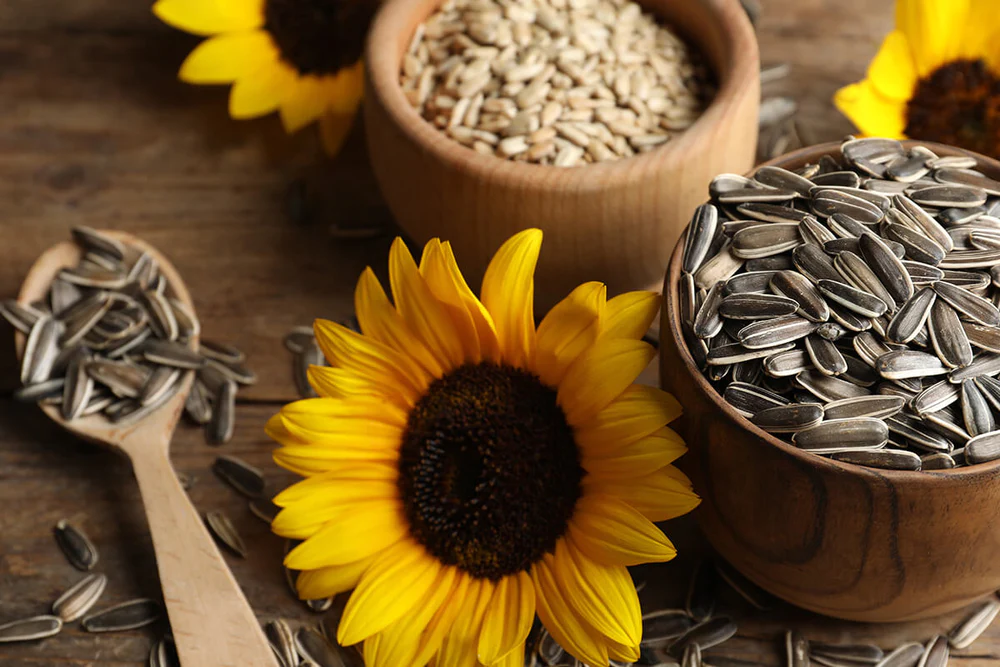
China plain sunflower seeds ( Helianthus annuus) represent a significant agricultural commodity, primarily utilized as a snack food and increasingly as a source of vegetable oil. Their position in the food industry chain is post-harvest, residing between agricultural production and consumer packaged goods. While seemingly simple, the quality and consistency of these seeds are governed by a complex interplay of genetics, agronomic practices, post-harvest handling, and processing techniques. Core performance characteristics revolve around kernel size, oil content, protein content, moisture levels, and the absence of defects. Increasing global demand necessitates a comprehensive understanding of the factors influencing these characteristics to ensure a reliable and high-quality supply. This guide provides an in-depth analysis of the science and engineering behind china plain sunflower seeds, detailing their material properties, manufacturing processes, potential failure modes, and relevant industry standards. A key pain point within the industry centers around maintaining consistent kernel quality and minimizing aflatoxin contamination, impacting both domestic consumption and export viability.
Material Science & Manufacturing
The primary raw material, the sunflower seed, is a dicotyledonous seed composed of several distinct layers. The hull (pericarp) constitutes approximately 20-30% of the seed weight and is composed primarily of cellulose, hemicellulose, and lignin, providing structural integrity. The kernel (cotyledon) comprises 60-70% of the seed weight and is rich in lipids (40-50%), proteins (20-25%), carbohydrates (15-20%), and fiber. The oil is primarily composed of linoleic acid (around 60%), oleic acid (around 30%), and palmitic acid (around 10%). Manufacturing begins with harvesting when the seed moisture content is optimized (typically 8-12%). Mechanical harvesting is prevalent, followed by drying to reduce moisture content to around 6-7% for storage stability. Hulling is a crucial step, mechanically removing the pericarp. The efficiency of hulling significantly impacts the yield and quality of the kernel. Key parameters during hulling include impact velocity, feed rate, and clearance settings. Improper hulling can result in kernel damage and increased fines. Subsequent grading and sorting are performed based on size, shape, and color using optical sorters. Quality control involves assessing oil content using solvent extraction methods (e.g., hexane extraction) and determining protein content via Kjeldahl analysis. Aflatoxin testing is paramount, utilizing ELISA or HPLC methods to ensure compliance with safety regulations. The thermal stability of the oil during drying and storage is also carefully monitored to prevent rancidity, with parameters such as peroxide value and acid value being tracked.
Performance & Engineering
The performance of china plain sunflower seeds hinges on their physical and chemical integrity. From an engineering perspective, the seeds undergo significant compressive forces during processing and packaging. The hull provides initial impact resistance, but the kernel is more susceptible to cracking and fracturing. The tensile strength of the kernel is directly correlated with its oil content – higher oil content generally results in lower tensile strength. Environmental resistance is critical during storage and transportation. Exposure to moisture can lead to fungal growth and aflatoxin production. Temperature fluctuations can accelerate lipid oxidation, leading to rancidity and reduced nutritional value. Packaging materials play a vital role in providing a barrier against moisture and oxygen. Compliance requirements are stringent, particularly concerning aflatoxin levels. International regulations (detailed in the footer) dictate maximum permissible limits. Functional implementation – specifically, the roasting process for snack seeds – requires precise control of temperature and time. Over-roasting can degrade oil quality and produce undesirable flavors, while under-roasting can result in a bland taste and reduced shelf life. Heat transfer analysis is crucial to ensure uniform roasting and minimize kernel damage. Furthermore, seed size consistency is important for uniform roasting and packaging efficiency. Particle size distribution analysis is employed to monitor seed uniformity.
Technical Specifications
| Parameter | Unit | Typical Value (China Plain Sunflower Seeds) | Standard Deviation |
|---|---|---|---|
| Kernel Moisture Content | % | 6.5 | 0.5 |
| Oil Content (Dry Basis) | % | 48 | 3 |
| Protein Content (Dry Basis) | % | 22 | 2 |
| Hull Percentage | % | 25 | 5 |
| Kernel Size (1000-Kernel Weight) | g | 60 | 5 |
| Aflatoxin B1 | ppb | <2 | N/A (Must be <2) |
Failure Mode & Maintenance
Failure modes in china plain sunflower seeds manifest in several ways. Fatigue cracking of the kernel can occur during processing and handling due to repeated compressive forces. Delamination of the kernel structure can be induced by rapid temperature fluctuations or improper drying. Degradation of the oil, leading to rancidity, is a common failure mode during storage, accelerated by exposure to oxygen, light, and heat. This manifests as an off-flavor and reduced nutritional value. Oxidation of lipids generates free radicals, further accelerating degradation. Aflatoxin contamination represents a critical safety failure mode, resulting from fungal growth during pre- and post-harvest stages. Maintenance strategies focus on preventative measures. Controlled drying and storage conditions (temperature < 25°C, relative humidity < 65%) are essential. Proper sanitation practices throughout the processing chain minimize fungal growth. Regular monitoring of oil quality (peroxide value, acid value) detects early signs of oxidation. Packaging in airtight, opaque containers protects against oxygen and light. For large-scale storage, aeration systems can maintain uniform temperature and moisture levels. Implementing a robust HACCP (Hazard Analysis and Critical Control Points) plan is crucial for preventing aflatoxin contamination. This includes sourcing seeds from reputable suppliers, conducting regular aflatoxin testing, and establishing effective pest control measures.
Industry FAQ
Q: What are the critical factors influencing oil quality in china plain sunflower seeds?
A: Oil quality is primarily influenced by the genetics of the sunflower variety, the maturity stage at harvest, and post-harvest handling practices. Linoleic acid content is susceptible to oxidation, leading to rancidity. Minimizing exposure to heat, light, and oxygen during drying, storage, and processing is crucial. Maintaining a low moisture content also inhibits lipid oxidation.
Q: How can we reliably minimize aflatoxin contamination?
A: A comprehensive approach is required. This includes sourcing seeds from regions with low aflatoxin risk, implementing effective pest control measures in the field, ensuring proper drying to minimize moisture content, using appropriate storage facilities, and conducting regular aflatoxin testing at critical control points throughout the processing chain.
Q: What is the significance of kernel size uniformity?
A: Kernel size uniformity impacts processing efficiency, particularly during hulling and roasting. Consistent size allows for uniform heat penetration during roasting, preventing some kernels from being under-roasted while others are over-roasted. It also improves packaging efficiency and product appearance.
Q: What packaging materials are best suited for long-term storage of china plain sunflower seeds?
A: Multi-layer films incorporating an aluminum foil layer provide an excellent barrier against moisture, oxygen, and light. High-density polyethylene (HDPE) or polypropylene (PP) containers with airtight seals are also suitable. Vacuum packaging or modified atmosphere packaging (MAP) can further extend shelf life by reducing oxygen levels.
Q: How does hull percentage impact the overall value of the seeds?
A: A lower hull percentage generally increases the value of the seeds, as it represents a higher proportion of the desirable kernel. Efficient hulling processes are essential for maximizing kernel yield and minimizing waste. However, some hull material can be beneficial as a fiber source in certain applications.
Conclusion
China plain sunflower seeds, while seemingly a simple commodity, are governed by complex material science principles and require meticulous control throughout the entire supply chain. Maintaining optimal kernel quality – defined by oil content, protein content, moisture levels, and the absence of defects – necessitates a deep understanding of the factors influencing these parameters, from agronomic practices to post-harvest handling and processing techniques. The critical importance of aflatoxin mitigation and oil quality preservation dictates adherence to stringent industry standards and the implementation of robust quality control measures.
Looking forward, advancements in seed breeding programs focused on enhanced oil quality, increased disease resistance, and improved hulling characteristics will continue to drive innovation within the industry. Furthermore, the adoption of precision agriculture techniques and real-time monitoring systems will enable more efficient resource utilization and improved quality control. Ultimately, a holistic approach that integrates scientific understanding, engineering principles, and rigorous quality management will be crucial for ensuring a sustainable and high-quality supply of china plain sunflower seeds to meet growing global demand.
