Introduction
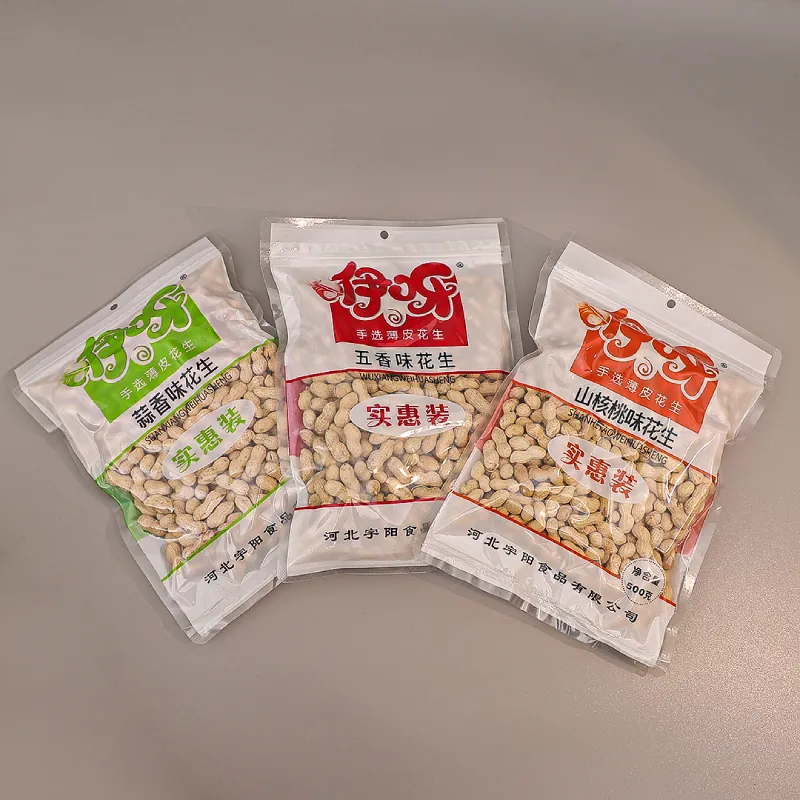
China customized packing for sunflower seeds represents a critical component within the agricultural supply chain, specifically addressing post-harvest handling and retail presentation. These packing solutions extend beyond simple containment; they encompass barrier properties to maintain seed viability, branding elements to enhance market appeal, and logistical considerations to facilitate efficient distribution. The industry trend focuses on flexible packaging formats, driven by demands for reduced material usage, improved shelf life, and enhanced consumer convenience. This guide provides a detailed technical overview of the materials, manufacturing processes, performance characteristics, and potential failure modes associated with these customized sunflower seed packages, aligning with international standards for food-grade packaging.
Material Science & Manufacturing
The primary materials employed in china customized packing sunflower seeds are typically multi-layer films consisting of polyethylene (PE), polypropylene (PP), polyethylene terephthalate (PET), and aluminum foil. PE provides flexibility and heat sealability; PP offers improved barrier properties and stiffness; PET delivers tensile strength and clarity; and aluminum foil provides an excellent barrier against oxygen, moisture, and light. The specific ratios and layering depend on the desired shelf life and product presentation. Manufacturing commonly involves blown film extrusion to create the individual film layers, followed by lamination to combine them into a composite structure. Printing is typically accomplished using rotogravure or flexographic techniques, employing food-safe inks compliant with regulations. Bag forming is achieved through vertical form-fill-seal (VFFS) or horizontal form-fill-seal (HFFS) machinery. Critical parameters during manufacturing include film thickness control (maintained within ±5% tolerance), lamination adhesive strength (exceeding 10 N/mm peel strength), and print registration accuracy (±0.2 mm). Control of residual solvents in inks is paramount, adhering to limits specified by food packaging regulations. Material selection must account for the oil content of sunflower seeds, ensuring compatibility and preventing plasticizer migration into the product.
Performance & Engineering
Performance of sunflower seed packaging is dictated by its ability to protect the seeds from environmental factors and mechanical stresses throughout the supply chain. Oxygen Transmission Rate (OTR) and Water Vapor Transmission Rate (WVTR) are critical parameters, influencing seed rancidity and germination rate. Target OTR values typically fall below 5 cm³/m²/day, and WVTR below 3 g/m²/day. Tensile strength and elongation at break are essential for withstanding handling and transportation stresses. Packages must maintain integrity during drop tests (meeting ISTA standards) and vibration tests. Seal strength, measured using peel tests, must exceed 2 N/mm to prevent leakage. The package’s design must also consider the ‘headspace’ – the volume of air within the package – influencing the rate of oxidation. Engineering considerations include selection of appropriate film gauges to balance barrier properties with cost-effectiveness, design of reclosable features (zippers, sliders) to maintain product freshness after opening, and implementation of venting mechanisms to prevent package rupture during altitude changes. Finite element analysis (FEA) is used to optimize package geometry and material distribution for maximum performance under load.
Technical Specifications
| Material | Thickness (µm) | Oxygen Transmission Rate (cm³/m²/day) | Water Vapor Transmission Rate (g/m²/day) |
|---|---|---|---|
| PET | 12 | < 2 | < 1 |
| Aluminum Foil | 9 | 0.01 | 0.01 |
| PE | 50 | 5 | 5 |
| PP | 40 | 3 | 4 |
| Composite Film (PET/Al/PE) | 111 | <0.5 | <0.5 |
| Seal Strength (N/mm) | - | >2 | - |
Failure Mode & Maintenance
Common failure modes in sunflower seed packaging include puncture damage during handling, seal failures leading to product leakage, delamination of film layers reducing barrier properties, and cracking due to stress concentrations. Puncture resistance is dependent on material thickness and impact energy. Seal failures can occur due to insufficient heat sealing temperature, contamination at the seal interface, or defects in the sealing equipment. Delamination results from inadequate adhesive bonding during lamination. Creep and stress cracking can occur over prolonged storage, especially at elevated temperatures. Preventative maintenance involves regular inspection of sealing equipment, ensuring consistent heat application and pressure. Proper storage conditions – maintaining temperature and humidity within specified limits – are crucial to prevent material degradation. Package handling procedures should minimize impact and abrasion. Quality control checks, including OTR and WVTR measurements, should be performed periodically to verify barrier performance. For end-users, proper resealing of opened packages is critical to maintain product freshness and prevent moisture ingress. Consideration should be given to using packaging with tear notches for controlled opening, reducing the risk of accidental damage during access.
Industry FAQ
Q: What are the key considerations when selecting a film structure for sunflower seed packaging, balancing cost with required shelf life?
A: The choice of film structure is a compromise between barrier performance and cost. Aluminum foil offers superior barrier properties but is more expensive than metallized films. A PET/Al/PE laminate provides an excellent balance, offering high oxygen and moisture barrier at a reasonable cost. For shorter shelf lives, a metallized OPP/PE structure may be sufficient. The desired shelf life dictates the required OTR and WVTR, which in turn determine the necessary film thickness and materials.
Q: How does the oil content of sunflower seeds impact material selection for the packaging?
A: Sunflower seeds contain significant oil content, which can migrate into the packaging material over time. This migration can cause plasticizer leaching from the packaging film, potentially affecting food safety. Therefore, it’s essential to select materials with low migration potential and use food-grade compliant adhesives and inks. Testing for migration levels is crucial to ensure compliance with food safety regulations.
Q: What testing protocols are essential for validating the performance of customized sunflower seed packaging?
A: Essential testing protocols include OTR and WVTR measurements, seal strength testing, tensile strength and elongation testing, drop tests (ISTA standards), vibration testing, and accelerated aging studies. Migration testing is also vital to ensure food safety compliance. These tests validate the package's ability to protect the product throughout the supply chain.
Q: What are the advantages and disadvantages of VFFS versus HFFS packaging machines for sunflower seeds?
A: VFFS machines are generally more economical for high-volume production of standard-sized packages. HFFS machines offer greater flexibility in package size and shape and are better suited for smaller production runs or specialized packaging formats. The choice depends on production volume, packaging requirements, and budget constraints.
Q: How can packaging be designed to minimize oxygen exposure after the package is opened and resealed?
A: Incorporating a robust reclosure system, such as a zipper or slider, is crucial. Minimizing headspace within the package reduces the volume of oxygen available. Additionally, utilizing a nitrogen flush before sealing can displace oxygen, further extending shelf life. Material selection, prioritizing low OTR films, also plays a vital role.
Conclusion
China customized packing for sunflower seeds requires a sophisticated understanding of material science, manufacturing processes, and performance engineering. Achieving optimal packaging necessitates a holistic approach, considering barrier properties, mechanical strength, food safety compliance, and cost-effectiveness. The selection of appropriate film structures, coupled with rigorous quality control and adherence to international standards, is paramount to ensuring product integrity and maximizing shelf life.
Future developments will likely focus on sustainable packaging solutions, utilizing biodegradable or compostable materials. Innovations in barrier coatings and active packaging technologies, such as oxygen scavengers, will further enhance product preservation. Continuously optimizing packaging design and manufacturing processes will remain critical to meet evolving consumer demands and maintain competitiveness within the agricultural market.
