Introduction
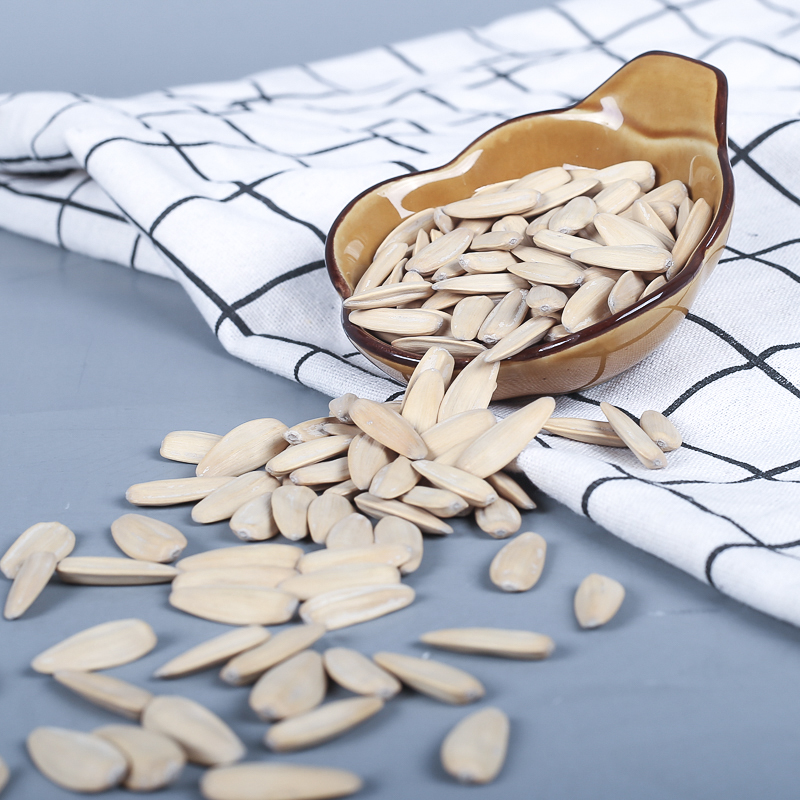
China banana flavor sunflower seeds represent a processed snack food product derived from sunflower seeds ( Helianthus annuus), commonly cultivated and consumed throughout Asia. This product occupies a specific niche within the broader snack food industry, distinguished by its flavoring profile. The production process involves dehulling, roasting, and coating sunflower seeds with a flavoring blend designed to mimic the taste and aroma of bananas. Unlike simple roasted sunflower seeds, these flavored varieties necessitate a more complex manufacturing process, incorporating food-grade flavorings, coatings (often involving sugars and starches), and quality control measures to ensure consistent flavor and safety. Core performance metrics revolve around flavor intensity, coating adhesion, seed integrity (minimizing broken kernels), and shelf life, dictated primarily by moisture content and lipid oxidation. The industry addresses growing consumer demand for convenient, flavorful snacks, but faces challenges related to consistent flavoring application and the prevention of rancidity, particularly in warmer climates. Understanding the material science behind seed conditioning and coating technology is crucial for maintaining product quality.
Material Science & Manufacturing
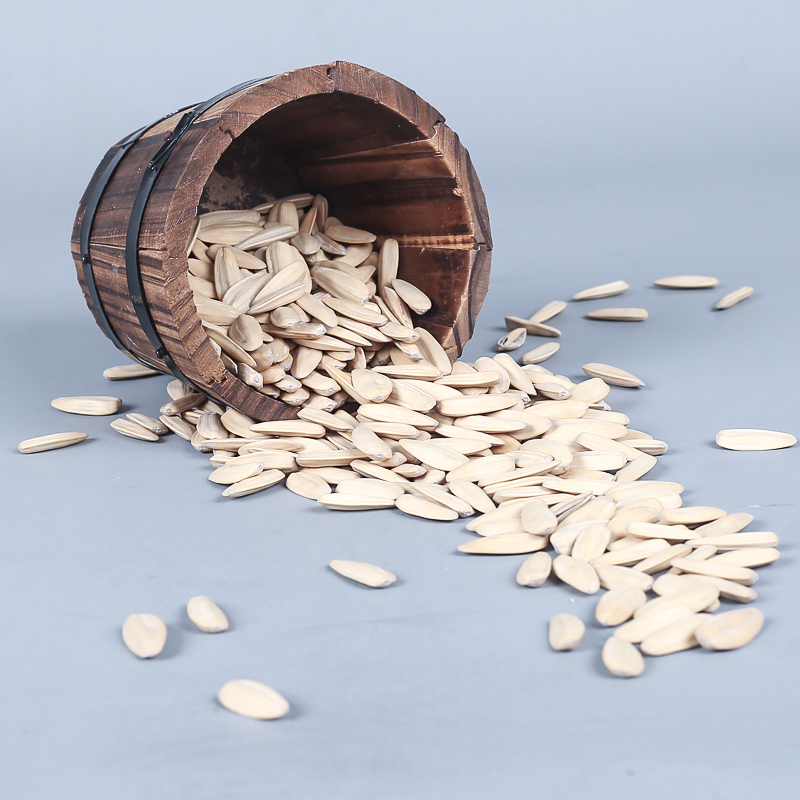
The core raw material is the sunflower seed kernel, possessing approximately 40-50% oil content primarily composed of linoleic acid. The shell is composed of cellulose and lignin, requiring mechanical dehulling techniques. Banana flavoring agents are generally synthetic, comprised of esters (e.g., isoamyl acetate, butyl acetate) which contribute to the characteristic banana aroma. The coating typically utilizes a mixture of sucrose, glucose syrup, modified starches (to control viscosity and adhesion), and vegetable oils to encapsulate the flavor compounds. Manufacturing begins with seed selection based on kernel size and quality. Dehulling is achieved via impact or abrasive methods, followed by cleaning to remove residual shell fragments. Seed conditioning involves controlled drying to reach an optimal moisture content (around 8-10%) for roasting. Roasting, typically carried out between 120-150°C, develops the characteristic nutty flavor and enhances crispness. Precise temperature and time control are critical to prevent scorching and lipid oxidation. The flavoring stage utilizes a drum coating process where seeds are tumbled while a heated, viscous flavoring mixture is sprayed onto the surface. Critical parameters include coating solution viscosity, drum rotation speed, spray rate, and drying temperature. Proper control of these parameters is essential to ensure uniform coating coverage and prevent clumping. Finally, seeds are cooled, sorted (removal of broken kernels), and packaged in moisture-barrier materials.
Performance & Engineering
The mechanical strength of the coating is a critical performance parameter, determining resistance to breakage during handling and transportation. This is governed by the tensile strength of the coating film, which is influenced by the sugar content, starch modification, and oil content. Environmental resistance focuses on moisture absorption and lipid oxidation. Sunflower seed oil is susceptible to rancidity, leading to off-flavors and reduced shelf life. Packaging materials with low oxygen transmission rates (OTR) and low water vapor transmission rates (WVTR) are essential to mitigate oxidation and maintain crispness. Force analysis during packaging and transportation considers impact forces and compression loads. The coating needs sufficient strength to withstand these forces without cracking or flaking. Compliance requirements are governed by food safety regulations (e.g., GB 2760 in China, FDA regulations in the US, and EFSA regulations in Europe) which specify permissible levels of flavoring agents, heavy metal contaminants, and microbial limits. The heat generated during the coating process must also be managed to avoid degrading the flavor compounds and exceeding temperature limits stipulated by food safety standards. Further engineering challenges involve maintaining consistent flavor distribution across batches, optimizing coating efficiency to minimize waste, and controlling dust generation during the manufacturing process.
Technical Specifications
| Parameter | Unit | Specification | Test Method |
|---|---|---|---|
| Moisture Content | % w/w | ≤ 8.0 | GB 5005-2008 (Oven Drying Method) |
| Oil Content | % w/w | 40 – 50 | Soxhlet Extraction (GB/T 6492) |
| Banana Flavor Intensity | Arbitrary Units (AU) | ≥ 80 (sensory panel) | Sensory Evaluation (GB/T 17204) |
| Coating Uniformity | % Coverage | ≥ 95 | Visual Inspection & Image Analysis |
| Peroxide Value (Indicator of Rancidity) | meq O2/kg | ≤ 5.0 | GB/T 3782-2010 |
| Broken Kernel Rate | % w/w | ≤ 2.0 | Sieve Analysis |
Failure Mode & Maintenance
Common failure modes include coating delamination, flavor fading, rancidity, and kernel breakage. Coating delamination occurs due to insufficient adhesion between the coating and the seed surface, often caused by improper seed conditioning (excessive moisture) or incorrect coating formulation. Flavor fading is a result of volatilization of flavor compounds, accelerated by high temperatures and improper packaging. Rancidity, as previously mentioned, is caused by lipid oxidation, leading to off-flavors and reduced product acceptability. Kernel breakage results from mechanical stress during handling, packaging, or transportation, and can also be caused by excessive roasting. Maintenance strategies focus on preventative measures. Proper seed storage (cool, dry environment) is crucial to minimize moisture absorption and lipid oxidation. Regular monitoring of peroxide value can detect early stages of rancidity. Optimizing packaging materials to provide a sufficient barrier to oxygen and moisture is essential. Implementing robust quality control measures during the coating process (e.g., viscosity monitoring, spray rate control) can prevent coating defects. Equipment maintenance (e.g., cleaning and calibrating roasting ovens and coating drums) is vital to ensure consistent processing parameters. Staff training on proper handling and storage procedures is also critical to minimize damage and maintain product quality. Periodic sensory evaluation should be conducted to monitor flavor stability.
Industry FAQ
Q: What is the impact of different sugar types on coating adhesion and texture?
A: Different sugar types significantly affect coating characteristics. Sucrose provides hardness and brittleness, while glucose syrup enhances tackiness and adhesion. Using a blend of sugars allows for optimization of both properties. Higher glucose syrup content generally leads to a more pliable coating with improved adhesion but can also increase hygroscopicity (moisture absorption). Maltodextrin can be added to reduce stickiness and improve flowability during coating.
Q: How do you control the oxidation of sunflower oil during storage?
A: Controlling oxidation requires a multi-faceted approach. Utilizing packaging with low OTR is paramount. Adding natural antioxidants like tocopherols (Vitamin E) to the coating can retard oxidation. Storing the product in a cool, dark environment reduces the rate of oxidation. Nitrogen flushing during packaging replaces oxygen with an inert gas, further minimizing oxidation. Monitoring peroxide value regularly is crucial for assessing the effectiveness of these preventative measures.
Q: What are the regulatory considerations regarding synthetic banana flavoring agents?
A: Regulatory bodies like the FDA and EFSA have strict guidelines regarding the use of synthetic flavoring agents. All flavoring ingredients must be GRAS (Generally Recognized as Safe) or approved for use in food. Maximum permissible levels are established for each flavoring compound. Documentation proving the purity and origin of the flavoring agents is required. Labeling requirements necessitate clear identification of flavoring ingredients.
Q: What is the optimal roasting profile to maximize flavor development while minimizing lipid oxidation?
A: The optimal roasting profile depends on the specific sunflower seed variety and desired flavor intensity. Generally, a two-stage roasting process is employed. An initial stage at a lower temperature (100-120°C) gently dries the seeds and develops precursor flavors. A subsequent stage at a higher temperature (130-150°C) promotes Maillard reactions and generates the characteristic roasted flavor. Precise temperature and time control are essential. Roasting time should be minimized to reduce oxidation. Adding antioxidants during roasting can also help protect the oil.
Q: How does seed variety impact the final product quality and flavor?
A: Sunflower seed variety significantly influences the oil content, protein content, and kernel size, all of which impact the final product. High-oleic acid varieties are preferred due to their increased resistance to oxidation. Kernel size affects coating adhesion; larger kernels provide a greater surface area for coating application. Different varieties also exhibit subtle variations in inherent flavor profiles, which can influence the overall taste of the finished product.
Conclusion
China banana flavor sunflower seeds represent a complex product requiring careful control of material science and manufacturing processes. The interplay between seed quality, coating formulation, and roasting parameters dictates the final product's flavor, texture, and shelf life. Maintaining product quality necessitates stringent adherence to food safety regulations and the implementation of robust quality control measures to prevent failures related to oxidation, coating defects, and kernel damage.
Future advancements will likely focus on developing more sustainable coating materials, optimizing antioxidant strategies to extend shelf life, and employing precision roasting technologies to enhance flavor development while minimizing lipid degradation. Continued research into novel flavoring encapsulation techniques will also be crucial for delivering consistent and intense flavor experiences to consumers, driving further innovation within this competitive snack food segment.
