Introduction
China Active Student Sunflower (CASS) refers to a specific cultivar of Helianthus annuus developed and widely utilized within the Chinese educational system, primarily as a classroom-based biological specimen for student observation and experimentation. Its technical position within the broader agricultural chain is as a readily accessible, rapidly growing, and visually demonstrative plant for elementary to secondary botanical studies. Core performance characteristics revolve around rapid germination rates, predictable growth patterns, distinct morphological features (leaf arrangement, stem height, flower head diameter), and a relatively short life cycle facilitating multiple observation phases within a standard academic year. Unlike commercial sunflower cultivars bred for seed yield, CASS prioritizes pedagogical utility – specifically ease of growth, structural clarity for teaching, and minimal allergen production for safe student handling. The selection process for CASS strains emphasizes uniformity in seed size and germination rates, directly addressing a key pain point in educational settings: inconsistent results hindering demonstrative learning.
Material Science & Manufacturing
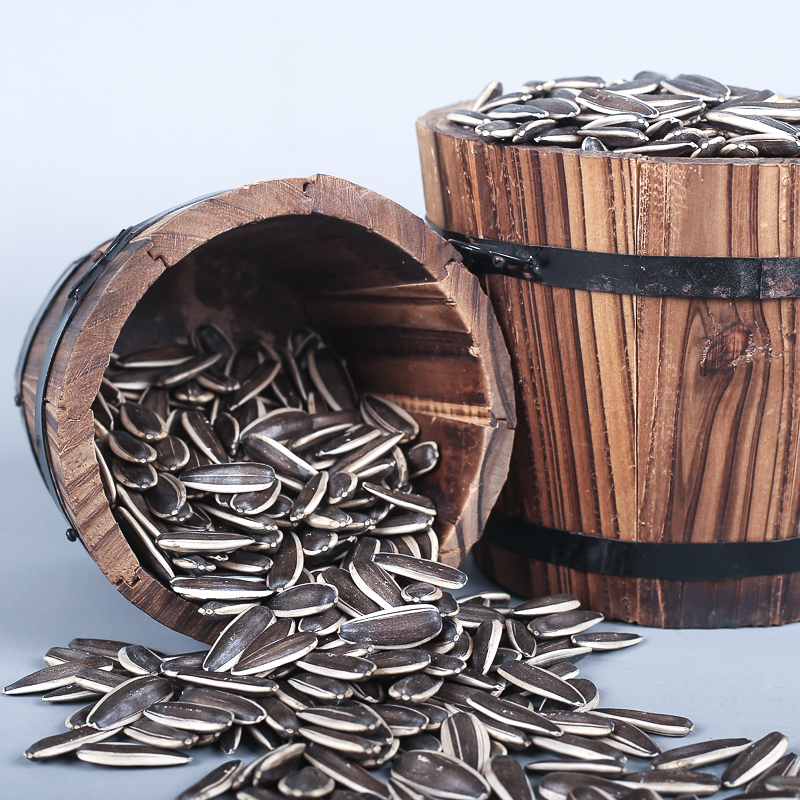
The primary raw material for CASS is, of course, the Helianthus annuus seed. Seed composition includes approximately 30-40% oil (primarily linoleic acid), 20-30% protein, and 15-20% carbohydrate. The seed coat, composed predominantly of cellulose and lignin, provides physical protection and determines germination success. Manufacturing, in this context, refers to the seed propagation and cultivation processes. Seed processing involves cleaning, drying, and often a fungicide treatment (typically captan or thiram) to prevent fungal growth during storage. Cultivation relies on soil composition; a loamy soil with a pH between 6.0 and 7.5 is optimal. Critical parameters during cultivation include watering frequency (maintaining consistent soil moisture without saturation), sunlight exposure (minimum 6 hours daily), and temperature control (optimal germination between 21-29°C). Nutrient management, focusing on nitrogen, phosphorus, and potassium, is crucial for maximizing plant growth and flower head development. Failure to control these parameters results in inconsistent germination, stunted growth, reduced flowering, and increased susceptibility to pests and diseases. Genetic stability of the strain is maintained through controlled pollination practices within seed production facilities to minimize cross-contamination with other sunflower varieties. A significant challenge is ensuring seed viability across diverse climatic conditions present within China’s vast geographical range.
Performance & Engineering
Performance evaluation of CASS focuses on several key engineering and biological parameters. Stem strength, a critical factor in preventing lodging (stem bending), is evaluated through flexural modulus testing. Typical values range from 0.8 to 1.2 GPa, depending on growing conditions and plant age. Leaf area index (LAI), a measure of leaf surface area per unit ground area, impacts photosynthetic efficiency and is maintained within a range of 2.5 to 3.5 during peak growth. The flower head, the primary observation point for students, exhibits heliotropism (tracking the sun) which is governed by auxin distribution within the stem and is a demonstration of plant growth response to environmental stimuli. Environmental resistance is particularly important. CASS exhibits moderate tolerance to drought stress (wilting point at approximately -1.5 MPa soil water potential) and limited resistance to common sunflower pathogens such as Alternaria and Sclerotinia. Compliance requirements center around seed purity and freedom from harmful contaminants. Chinese agricultural standards (NY/T 1163-2000 for sunflower seeds) dictate maximum permissible levels of heavy metals, pesticides, and mycotoxins. Functional implementation involves providing a stable, visually clear specimen for students to dissect, measure, and observe throughout its growth cycle, aligning with national educational curricula. The angle of the phyllotactic spiral arrangement in the flower head also serves as a valuable teaching tool to demonstrate mathematical principles like the Fibonacci sequence.
Technical Specifications
| Parameter | Unit | Typical Value | Testing Standard |
|---|---|---|---|
| Germination Rate | % | ≥ 95 | GB/T 3547-2008 |
| Seed Moisture Content | % | ≤ 8 | GB 5532-2008 |
| Plant Height (Mature) | cm | 120-180 | Visual Observation |
| Flower Head Diameter | cm | 10-15 | Visual Observation |
| Oil Content (Seed) | % | 35-40 | GB 6088-2006 |
| Protein Content (Seed) | % | 22-28 | GB 5009.3-2016 |
Failure Mode & Maintenance
Failure modes for CASS can be categorized into several areas. Seed failure includes non-germination due to seed dormancy, physical damage, or fungal infection. Post-germination, seedling damping-off (stem rot caused by Pythium or Rhizoctonia) is a common failure point, especially in high-humidity environments. Plant failure during vegetative growth can result from nutrient deficiencies (manifesting as chlorosis – yellowing of leaves – due to nitrogen or magnesium deficiency) or water stress. Flower head failure includes premature wilting due to insufficient water uptake or damage from pests like aphids. Failure analysis reveals that most issues stem from suboptimal environmental control. Maintenance involves providing adequate watering, ensuring sufficient sunlight exposure, and applying appropriate fertilization. Preventative fungicide treatment can mitigate damping-off risk. Pest control, using organic methods like insecticidal soap, is recommended. Regular inspection for signs of disease or nutrient deficiency is crucial for early intervention. Seed storage must be cool and dry (below 15°C and <60% relative humidity) to prevent viability loss. Addressing soil compaction and ensuring proper drainage are vital to prevent root rot, a common overlooked failure mode. Post-flowering, the plants naturally begin to senesce and should be removed to prevent seed dispersal and potential spread of pathogens.
Industry FAQ
Q: What is the acceptable range of seed moisture content for long-term storage of CASS seeds?
A: The acceptable range for long-term storage of CASS seeds is ≤ 8% moisture content. Higher moisture levels promote fungal growth and reduce seed viability. Controlled storage environments (cool, dry conditions) are essential to maintain seed quality over extended periods, typically up to 2-3 years.
Q: How does the soil pH affect the uptake of essential nutrients by CASS plants?
A: CASS plants thrive in slightly acidic to neutral soil, with an optimal pH range of 6.0 to 7.5. Below pH 6.0, the availability of phosphorus, calcium, and magnesium decreases. Above pH 7.5, iron, manganese, and zinc become less available, leading to nutrient deficiencies and stunted growth. Soil pH adjustments, using lime to raise pH or sulfur to lower pH, may be necessary based on initial soil testing.
Q: What preventative measures can be taken to minimize the risk of seedling damping-off in CASS cultivation?
A: Minimizing damping-off risk involves several preventative measures: 1) Using sterilized soil or seedling trays to eliminate fungal pathogens. 2) Avoiding overwatering, as excessive moisture promotes fungal growth. 3) Ensuring adequate ventilation to reduce humidity. 4) Applying a preventative fungicide treatment (captan or thiram) to the seeds prior to planting. 5) Maintaining optimal soil temperature for germination.
Q: How often should CASS plants be fertilized, and what is the recommended NPK ratio?
A: CASS plants benefit from fertilization at three key stages: initial seedling establishment, pre-flowering, and during flower head development. A balanced NPK ratio of 10-10-10 or 15-15-15 is generally recommended, applied at a rate of 5-10 grams per plant per application. Over-fertilization can lead to excessive vegetative growth at the expense of flower development.
Q: What testing standards are used to verify the purity and quality of CASS seeds?
A: CASS seeds are typically tested according to several Chinese national standards, including GB/T 3547-2008 (Seed Purity), GB 6088-2006 (Seed Oil Content Determination), and GB 5532-2008 (Seed Moisture Content Determination). Additional tests may be conducted to assess seed viability, germination rate, and the absence of harmful contaminants (heavy metals, pesticides).
Conclusion
China Active Student Sunflower represents a specialized botanical specimen optimized for educational purposes. Its performance characteristics, ranging from germination rate to stem strength and oil content, are meticulously controlled to provide a consistent and reliable teaching tool. Understanding the underlying material science – the composition of the seed and the soil requirements – is paramount to successful cultivation and maximizing pedagogical value.
Future developments may focus on enhancing disease resistance through selective breeding, optimizing seed storage techniques to improve long-term viability, and developing standardized cultivation protocols tailored to different regional climates within China. Continued adherence to stringent quality control standards, as outlined in national regulations, will be crucial to maintaining the integrity and effectiveness of CASS as a core component of the Chinese educational system.
