Introduction
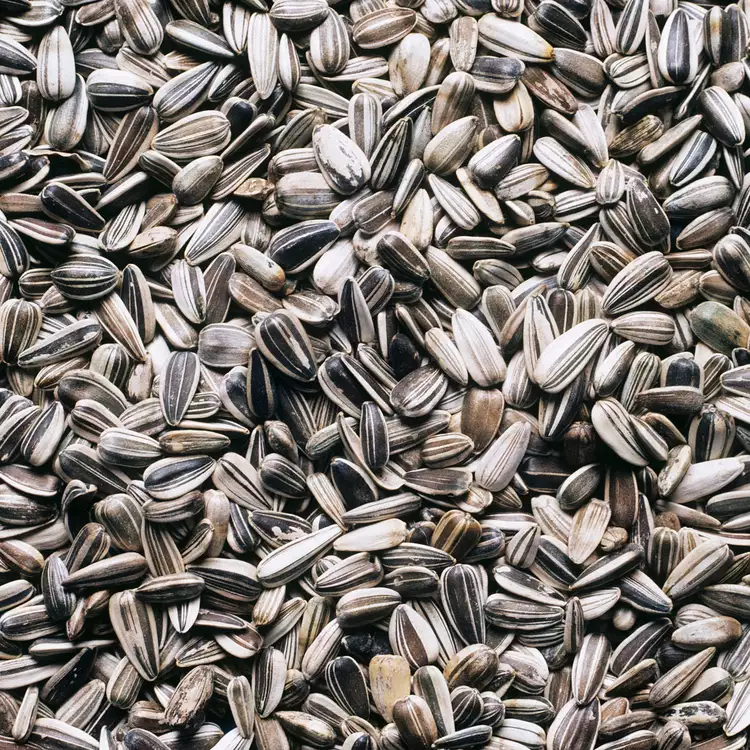
China 100g of sunflower seeds represent a significant commodity within the global agricultural and snack food industries. Positioned as a processed agricultural product, they fall between primary agricultural production (sunflower farming) and consumer packaged goods. Core performance characteristics encompass nutritional value (oil content, protein, vitamins), seed integrity (absence of damage/splits), flavor profile (influenced by variety and processing), and compliance with food safety regulations. This guide provides an in-depth technical analysis of the production, properties, quality control, and potential failure modes associated with this product, targeting procurement managers, quality control engineers, and food scientists.
Material Science & Manufacturing
Sunflower seeds ( Helianthus annuus) are composed primarily of an outer hull (pericarp) containing cellulose and lignin, and an inner kernel rich in lipids (35-55% by weight, primarily linoleic acid), proteins (18-25%), and carbohydrates. The manufacturing process begins with sunflower harvesting. Critical parameters during harvesting include moisture content (ideal range 9-12%) and mechanical damage minimization. Post-harvest processing involves drying to further reduce moisture content (typically to 6-8% for long-term storage), cleaning to remove debris, dehulling (removing the outer pericarp – can be mechanical or chemical), grading by size and quality, and finally, roasting or seasoning. Roasting temperature (140-180°C) and duration (15-30 minutes) are crucial for flavor development and moisture reduction. Seasoning involves applying salt, flavorings, and potentially coatings. The pericarp composition affects dehulling efficiency; lignin content dictates its brittleness. Oil content variability within the kernel is genetically determined and impacted by growing conditions (sunlight, water availability, soil nutrients). Control parameters in processing include airflow rates during drying, roller pressure during dehulling, and accurate temperature control during roasting to prevent lipid oxidation.
Performance & Engineering
The performance of China 100g sunflower seeds is dictated by several engineering considerations. Seed coat strength, measured via fracture resistance testing, is critical for preventing breakage during handling and transport. A key consideration is maintaining kernel integrity. Moisture content directly impacts shelf life and susceptibility to fungal growth. Water activity (Aw) is a critical parameter – maintaining Aw < 0.65 inhibits microbial proliferation. Packaging material selection is paramount, focusing on oxygen transmission rate (OTR) and water vapor transmission rate (WVTR). High OTR leads to lipid oxidation and rancidity; high WVTR leads to moisture absorption and potential mold growth. Force analysis during packaging (compressive strength of stacks) informs palletizing and transport limitations. Compliance with food safety standards (see section 7) requires rigorous monitoring of heavy metal content (lead, cadmium, arsenic) and pesticide residues. The oil stability index (OSI) is a key metric for evaluating the oxidative stability of the oil within the seeds, predicting shelf life. Thermal analysis (DSC – Differential Scanning Calorimetry) can assess the melting behavior of the oil, relating to texture and mouthfeel. Environmental resistance testing assesses packaging integrity under varying temperature and humidity conditions.
Technical Specifications
| Parameter | Unit | Specification (Typical Range) | Test Method |
|---|---|---|---|
| Moisture Content | % (Weight) | 6.0 - 8.0 | AOAC 925.10 |
| Oil Content | % (Dry Weight Basis) | 48 – 58 | Soxhlet Extraction (AOAC 920.39) |
| Protein Content | % (Dry Weight Basis) | 18 – 24 | Kjeldahl Method (AOAC 920.87) |
| Broken Kernel Rate | % (By Count) | < 5 | Visual Inspection, Seed Counter |
| Foreign Material | % (By Weight) | < 0.5 | Visual Inspection, Sieving |
| Peroxide Value | meq O2/kg | < 5 | AOCS Cd 8-53 |
Failure Mode & Maintenance
Common failure modes for China 100g sunflower seeds include rancidity due to lipid oxidation (manifesting as off-flavors and odors), mold growth from excessive moisture absorption, physical damage (cracked kernels) during handling, and insect infestation. Rancidity is accelerated by exposure to oxygen, light, and elevated temperatures. Mold growth is favored by high Aw and humidity. Maintenance (preventative measures) revolves around proper storage conditions: cool (below 25°C), dry (relative humidity < 60%), dark, and well-ventilated. Packaging integrity is paramount; resealable pouches or airtight containers are recommended after opening. Regular monitoring of peroxide value is critical for assessing oxidative stability. Infestation can be prevented by using insect-proof packaging and maintaining sanitary storage practices. Addressing lipid oxidation requires the use of antioxidants in packaging materials or as seed coatings (e.g., Vitamin E, BHA, BHT – within regulatory limits). Visual inspection for signs of mold or insect damage is essential during quality control checks. Failure analysis of damaged seeds should include microscopic examination to identify the root cause (mechanical stress, fungal hyphae, insect damage).
Industry FAQ
Q: What is the acceptable level of aflatoxin contamination in sunflower seeds intended for human consumption?
A: Aflatoxin levels are strictly regulated. The European Union sets a maximum limit of 2 µg/kg for total aflatoxins (B1, B2, G1, G2) in sunflower seeds. US FDA guidelines are similar, although enforcement may vary. Regular testing using ELISA or HPLC methods is required to ensure compliance.
Q: How does the variety of sunflower seed affect its oil quality and stability?
A: High-oleic sunflower seeds contain predominantly oleic acid (typically >70%), which is more resistant to oxidation than linoleic acid. Seeds derived from high-oleic varieties exhibit a significantly higher OSI and extended shelf life compared to conventional linoleic varieties.
Q: What packaging materials offer the best barrier properties for maintaining sunflower seed quality?
A: Multi-layer films combining polyethylene (PE) for sealing, polypropylene (PP) for strength, and ethylene vinyl alcohol (EVOH) or metalized polyester (PET) for oxygen barrier are ideal. Aluminum foil offers the highest oxygen barrier but is less transparent and more expensive. WVTR should also be considered; a suitable outer layer with a low WVTR is essential.
Q: What are the key considerations for large-scale storage of sunflower seeds?
A: Temperature and humidity control are paramount. Storage facilities should be well-ventilated and maintained at a temperature below 25°C and a relative humidity below 60%. Regular monitoring for temperature, humidity, and insect activity is crucial. Proper stack height limitations and pest control measures are also essential.
Q: How does dehulling efficiency impact the final product quality and yield?
A: Incomplete dehulling leads to a higher proportion of hull fragments in the final product, reducing its appeal and potentially affecting texture. It also decreases the oil content per unit weight. Optimizing dehulling parameters (roller pressure, feed rate) and pre-treatment (conditioning) are critical for maximizing dehulling efficiency and yield.
Conclusion
China 100g sunflower seeds represent a complex agricultural product requiring careful consideration of material science, manufacturing processes, and quality control parameters. Maintaining seed integrity, preventing lipid oxidation, and ensuring compliance with stringent food safety regulations are critical for delivering a high-quality, safe, and palatable product. Optimized harvesting, drying, dehulling, and roasting processes, coupled with appropriate packaging and storage conditions, are essential for maximizing shelf life and minimizing product defects.
Future developments in sunflower seed processing may focus on advanced dehulling technologies to minimize kernel damage, innovative packaging materials with enhanced barrier properties (e.g., bio-based polymers), and improved methods for monitoring and predicting oxidative stability. A proactive approach to quality control, incorporating real-time monitoring of key parameters and advanced analytical techniques, will be vital for maintaining competitiveness in the global market.
