Introduction
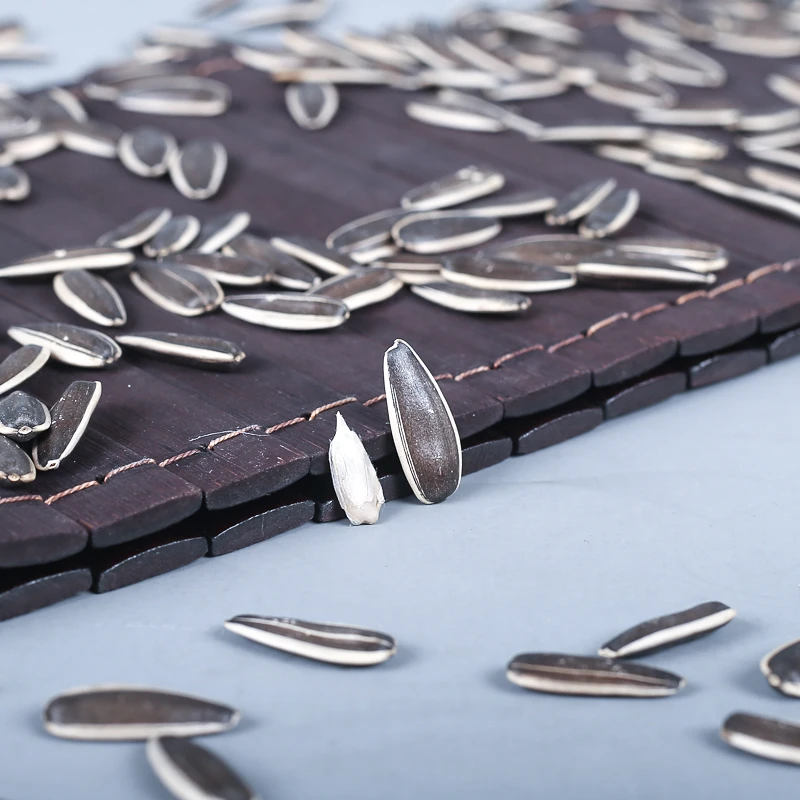
Banana-flavored sunflower seeds represent a significant sector within the broader processed seed market, functioning as a snack food product primarily positioned within impulse purchasing and convenience store distribution channels. Technically, these seeds constitute a composite product, built upon a base of Helianthus annuus (common sunflower) seeds which undergo a series of processing steps including dehulling, roasting, seasoning, and flavor encapsulation. The ‘banana’ flavor is achieved through a complex formulation of artificial and natural flavoring compounds, carriers (typically maltodextrin or modified food starch), and potentially colorants. Core performance attributes revolve around maintaining structural integrity of the seed kernel during processing, ensuring consistent flavor adhesion, achieving acceptable sensory properties (texture, aroma, taste), and maintaining a specified shelf life. A critical pain point for manufacturers centers around achieving uniform flavor coating without compromising the seed’s inherent crispness and mitigating issues related to flavor leaching and agglomeration during storage and distribution. Furthermore, consumer demand for ‘clean label’ ingredients places pressure on reformulation efforts to minimize artificial additives.
Material Science & Manufacturing
The primary raw material, sunflower seeds, are composed of approximately 35-45% oil (primarily linoleic acid), 20-25% protein, 15-20% carbohydrate (including fiber), and 5-10% moisture. Seed quality is significantly influenced by cultivar, growing conditions (temperature, rainfall, sunlight), and post-harvest handling. Dehulling removes the outer pericarp, reducing fiber content and improving flavor carrier adhesion. Roasting, typically conducted between 140-180°C, develops characteristic flavor compounds through Maillard reactions and reduces moisture content, enhancing crispness. Flavor application relies on a spray coating process. A slurry containing the banana flavor blend (typically comprising artificial banana flavoring like amyl acetate, isoamyl butyrate, and natural flavor extracts, along with a carrier and potentially a humectant like glycerol to improve adhesion) is atomized onto the roasted seeds in a rotating drum. Critical parameters include slurry viscosity, spray nozzle size, drum rotation speed, and inlet air temperature. Insufficient viscosity leads to uneven coating, while excessive viscosity results in agglomeration. The carrier's glass transition temperature (Tg) is crucial – it needs to be above ambient storage temperatures to prevent flavor migration. Moisture content post-flavoring must be carefully controlled (typically below 2%) to prevent caking and microbial growth. The coating material's compatibility with the seed oil is paramount; lipid oxidation of the sunflower oil can lead to rancidity and off-flavors if the coating isn’t sufficiently protective. Quality control involves measuring moisture content, oil content, flavor intensity, and particle size distribution of the coated seeds.
Performance & Engineering
The structural integrity of the coated seed is governed by principles of brittle fracture mechanics. Impact resistance, relevant during handling and transportation, is influenced by the coating’s thickness and its adhesion to the kernel. Finite element analysis (FEA) can be utilized to model stress distribution under compressive loads, optimizing coating parameters to minimize cracking. Environmental resistance concerns primarily relate to moisture ingress and oxygen permeation. The coating acts as a barrier, delaying flavor degradation and preventing rancidity. Permeability is a function of the coating’s composition and thickness. Water activity (aw) must be maintained below 0.6 to inhibit microbial growth. Shelf-life studies, conducted under accelerated aging conditions (elevated temperature and humidity), determine the product’s stability over time. Compliance requirements include adherence to food safety regulations (FDA in the US, EFSA in Europe), labeling standards (accurate ingredient declaration, allergen information), and potentially organic certification if applicable. Flavor release kinetics are crucial to the sensory experience. The rate at which flavor compounds volatilize and interact with taste receptors determines perceived intensity and duration of flavor. This is influenced by the flavor encapsulation technique and the coating's porosity. Furthermore, the hardness of the seed influences how easily it fractures, releasing the flavor. A desirable product possesses an optimal balance between hardness and brittleness, allowing for a satisfying crunch without excessive fragmentation.
Technical Specifications
| Parameter | Specification | Test Method | Tolerance |
|---|---|---|---|
| Moisture Content | ≤ 2.0% | Karl Fischer Titration (AOCS Official Method) | ± 0.2% |
| Oil Content | 38 – 42% | Soxhlet Extraction (AOCS Official Method) | ± 1.0% |
| Flavor Intensity (Banana) | ≥ 80 ppm (Banana Aroma Compound Concentration) | Gas Chromatography-Mass Spectrometry (GC-MS) | ± 10 ppm |
| Coating Uniformity | ≥ 95% Seed Coverage | Visual Inspection & Image Analysis | ± 2% |
| Particle Size Distribution | Mean Diameter: 6-8 mm | Sieve Analysis | ± 0.5 mm |
| Water Activity (aw) | ≤ 0.6 | Water Activity Meter | ± 0.02 |
Failure Mode & Maintenance
Common failure modes include: Flavor Leaching: Migration of flavor compounds from the coating to the seed or to the packaging, resulting in diminished flavor intensity over time. This is exacerbated by high humidity and temperature. Caking/Agglomeration: Seeds sticking together due to moisture absorption or insufficient coating adhesion. This reduces flowability and consumer acceptability. Coating Cracking/Delamination: Fractures in the coating caused by impact during handling or thermal stress, leading to flavor loss and potential oxidation of the seed oil. Rancidity: Oxidation of the sunflower oil, resulting in off-flavors and odors. This is accelerated by exposure to oxygen and light. Microbial Growth: Contamination with molds or bacteria, particularly in high-moisture environments. Maintenance focuses on proper storage conditions. Seeds should be stored in a cool, dry, and dark environment, ideally in airtight containers with a nitrogen flush to minimize oxygen exposure. Regular quality control checks, including moisture content and flavor intensity assessments, are essential. Packaging materials with high barrier properties (low OTR and WVTR) are crucial. For large-scale storage, monitoring temperature and humidity levels and implementing a First-In, First-Out (FIFO) inventory management system are recommended. Preventative maintenance of coating equipment (spray nozzles, drums) is also vital to ensure uniform coating application. Addressing cracked or delaminated seeds through automated sorting systems can minimize the inclusion of defective products in the final packaging.
Industry FAQ
Q: What is the primary factor influencing flavor retention during long-term storage?
A: The primary factor is the integrity of the coating and the barrier properties it provides against moisture and oxygen. A robust coating formulation with low permeability and strong adhesion to the seed kernel is crucial, coupled with appropriate packaging materials (e.g., metallized films). Minimizing water activity (aw) is also essential.
Q: How does the choice of carrier material (maltodextrin vs. modified starch) affect flavor release?
A: Maltodextrin generally provides faster flavor release due to its lower molecular weight and greater solubility, while modified starch offers a more sustained release profile. The choice depends on the desired sensory experience – a burst of initial flavor versus a longer-lasting taste. Modified starch also tends to provide a more stable coating.
Q: What are the challenges associated with achieving a "clean label" banana flavor?
A: Replacing artificial flavor compounds with natural banana extracts is challenging due to cost, availability, and stability. Natural extracts often have a weaker flavor intensity and are more susceptible to oxidation. Achieving a comparable flavor profile requires careful formulation and potentially the use of flavor masking agents.
Q: How does the roasting profile influence the adhesion of the flavor coating?
A: Proper roasting is critical. Insufficient roasting leaves the seed surface too smooth, reducing adhesion. Over-roasting can create a brittle surface prone to cracking. Optimal roasting develops a slightly textured surface that provides a mechanical key for the coating to adhere to, but without compromising kernel integrity.
Q: What analytical techniques are used to quantify flavor adhesion and uniformity?
A: GC-MS can quantify the amount of banana aroma compounds present on the seed surface. Image analysis, coupled with microscopic examination, can assess coating coverage and uniformity. Solvent extraction followed by spectrophotometric analysis can also be used to measure the amount of coating material transferred to a solvent, providing an indirect measure of adhesion.
Conclusion
Banana-flavored sunflower seeds are a complex engineered snack food, demanding careful control over material science, manufacturing processes, and quality assurance protocols. Achieving optimal performance necessitates a comprehensive understanding of sunflower seed characteristics, flavor chemistry, coating technology, and packaging requirements. The balance between flavor intensity, seed integrity, and shelf-life stability represents a significant technical challenge.
Future developments will likely focus on sustainable sourcing of raw materials, enhanced flavor encapsulation techniques, and the development of “clean label” flavor formulations. Furthermore, advancements in packaging materials with improved barrier properties and the implementation of real-time monitoring systems for storage conditions will contribute to extending shelf-life and maintaining product quality. The industry will continue to address consumer demands for healthier snack options and environmentally responsible production practices.
