Introduction
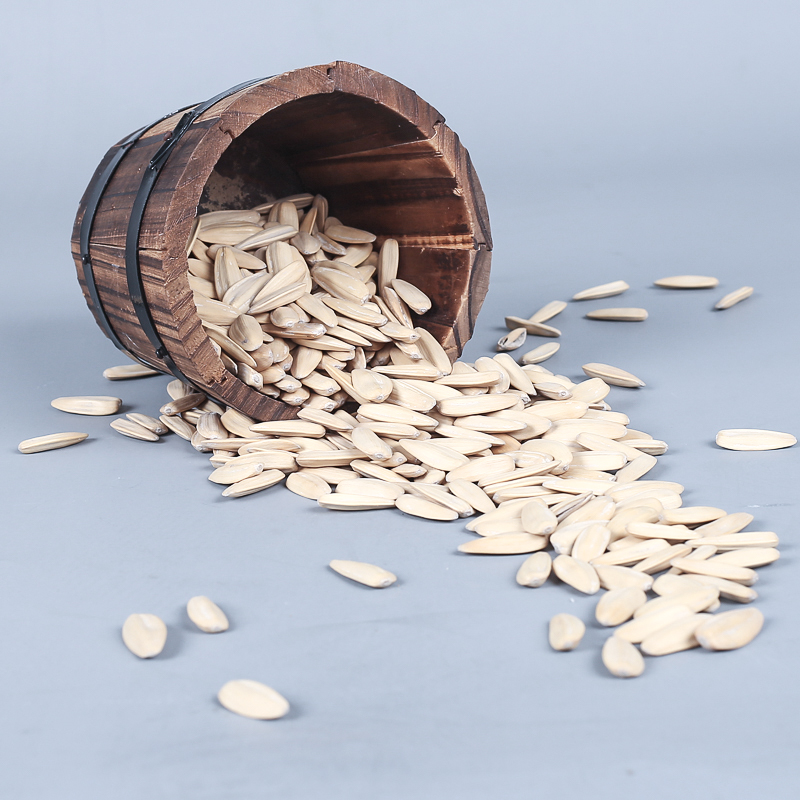
Unshelled sunflower seeds, Helianthus annuus, represent a significant commodity within the agricultural and food processing industries. As a supplier, understanding the intricacies of seed quality, handling, and storage is paramount. This guide details the technical aspects of unshelled sunflower seeds, focusing on the key properties influencing their suitability for various applications, from direct consumption to oil extraction and bird feed. The industry faces consistent challenges related to maintaining seed viability during storage, mitigating aflatoxin contamination, and adhering to increasingly stringent food safety regulations. This document provides a comprehensive overview for procurement managers, quality control engineers, and food scientists involved in the sourcing and utilization of unshelled sunflower seeds.
Material Science & Manufacturing
Sunflower seeds are composed of approximately 35-45% oil, 20-30% protein, and 15-25% carbohydrate, with the remainder comprising fiber, moisture, and minerals. The kernel, protected by a hard pericarp (hull), contains the majority of these components. The pericarp itself consists primarily of cellulose and lignin, contributing to its protective function. Seed quality is profoundly influenced by genetics (hybrid variety), growing conditions (soil composition, rainfall, sunlight), and harvesting practices. Manufacturing begins with field harvesting, typically employing combine harvesters. Initial processing involves cleaning to remove debris (stalks, leaves, soil). Drying is a critical step, reducing moisture content from approximately 30% to 8-10% to inhibit microbial growth and enzymatic activity. This is usually achieved through forced-air drying, where temperature and airflow are carefully controlled (typically 40-60°C) to prevent thermal damage to the oil and protein. Hull content is a key specification; a lower hull content generally indicates higher oil yield. Dehulling is sometimes performed, but unshelled seeds offer extended shelf life due to the protective hull. Seed size and density are also controlled through screening and gravity separation techniques. Quality control at this stage involves monitoring moisture content (using near-infrared spectroscopy), hull percentage (visual inspection and laboratory analysis), and foreign material content (manual sorting and automated optical sorting). Kernel damage during harvesting and processing must be minimized to prevent lipid oxidation and mycotoxin development.
Performance & Engineering
The performance of unshelled sunflower seeds is governed by their physical and chemical properties, impacting storage stability, processability (oil extraction), and nutritional value. Moisture content is the most critical factor affecting shelf life. Above 10%, mold growth and aflatoxin production are significantly increased. Storage conditions (temperature, humidity, aeration) directly influence moisture migration. The hull provides a barrier against moisture absorption, but this barrier is not absolute. Seed density affects oil yield; higher density seeds generally contain more oil. Kernel hardness influences the efficiency of oil extraction. Force analysis during oil pressing reveals that harder kernels require greater force, potentially leading to increased oil yield but also higher energy consumption. Environmental resistance concerns center around insect infestation and fungal contamination. Proper storage in airtight containers, with controlled temperature and humidity, is crucial. Compliance requirements include adherence to food safety standards (FDA in the US, EFSA in Europe), mycotoxin limits (aflatoxin B1 is a primary concern), and labeling regulations. Germination rate, while not a primary concern for oilseed applications, is important for seed destined for bird feed or sprouting purposes. The oil content is engineered via hybrid breeding for maximized yield.
Technical Specifications
| Parameter | Unit | Typical Range | Test Method |
|---|---|---|---|
| Moisture Content | % | 8.0 - 10.0 | AOAC 925.10 |
| Oil Content | % | 40 - 50 | NMR (Nuclear Magnetic Resonance) |
| Protein Content | % | 18 - 25 | Kjeldahl Method (AOAC 978.05) |
| Hull Content | % | 20 - 30 | Visual Inspection/Manual Sorting |
| Aflatoxin B1 | ppb | <20 | ELISA (Enzyme-Linked Immunosorbent Assay) |
| Broken Kernels & Foreign Material | % | <2.0 | Visual Inspection/Screening |
Failure Mode & Maintenance
Failure modes for unshelled sunflower seeds primarily manifest as quality degradation during storage. Lipid oxidation is a major concern, leading to rancidity and decreased oil quality. This is accelerated by high temperature, exposure to oxygen, and the presence of metal ions. Aflatoxin contamination, caused by Aspergillus flavus and Aspergillus parasiticus fungi, is a severe failure mode, rendering the seeds unsuitable for consumption. This is favored by high moisture content and warm temperatures. Physical damage to the kernel (cracking, chipping) increases susceptibility to oxidation and contamination. Insect infestation (e.g., by storage beetles) can lead to significant losses. Maintenance strategies revolve around proper storage practices. This includes maintaining a cool, dry environment (temperature below 15°C and humidity below 65%). Regular monitoring of moisture content is essential. Using airtight storage containers and implementing aeration systems can help prevent moisture buildup. Insect control measures (e.g., fumigation, controlled atmosphere storage) may be necessary. Periodic testing for aflatoxin levels is crucial. Preventative measures include sourcing seeds from reputable suppliers with robust quality control procedures and employing proper harvesting and drying techniques. Seed coatings can offer protection against insects and fungal growth.
Industry FAQ
Q: What is the acceptable level of aflatoxin in unshelled sunflower seeds for human consumption?
A: The acceptable level of aflatoxin B1 varies by country. The US FDA sets a limit of 20 ppb. The European Food Safety Authority (EFSA) establishes a maximum level for total aflatoxins, taking into account both B1 and other aflatoxins. Exceeding these limits renders the seeds unfit for human consumption due to the carcinogenic nature of aflatoxins.
Q: How does hull content affect the oil yield from sunflower seeds?
A: Lower hull content generally correlates with higher oil yield. The hull is non-oil-bearing material, so reducing its proportion increases the percentage of oil within the overall seed mass. However, the hull provides structural integrity and protection during storage, so a balance must be considered.
Q: What are the key factors influencing the shelf life of unshelled sunflower seeds?
A: The primary factors affecting shelf life are moisture content, temperature, oxygen exposure, and insect/fungal contamination. Maintaining a low moisture content (below 10%), storing seeds in a cool, dry environment, and protecting them from oxygen and pests are crucial for maximizing shelf life.
Q: What analytical methods are used to determine the oil content of sunflower seeds?
A: The most accurate and widely used method is Nuclear Magnetic Resonance (NMR) spectroscopy. Other methods include Soxhlet extraction, although NMR is preferred for its speed, accuracy, and non-destructive nature.
Q: How important is the hybrid variety of sunflower seed when assessing its quality as a supplier?
A: The hybrid variety is critically important. Different varieties are bred for specific traits, such as high oil content, disease resistance, and seed size. Knowing the hybrid variety allows for a better prediction of the seed's performance characteristics and consistency.
Conclusion
Unshelled sunflower seeds represent a complex agricultural product with a wide range of applications. Maintaining quality requires a thorough understanding of the underlying material science, manufacturing processes, and potential failure modes. Careful control of moisture content, adherence to food safety regulations, and implementation of robust storage practices are essential for ensuring a consistent, high-quality supply.
Future advancements in sunflower seed technology will likely focus on developing varieties with enhanced oil content, improved resistance to aflatoxin contamination, and optimized hull characteristics. Continuous monitoring of industry standards and adoption of best practices in storage and handling will remain crucial for suppliers to meet evolving market demands and ensure the integrity of this valuable agricultural commodity.
