Introduction
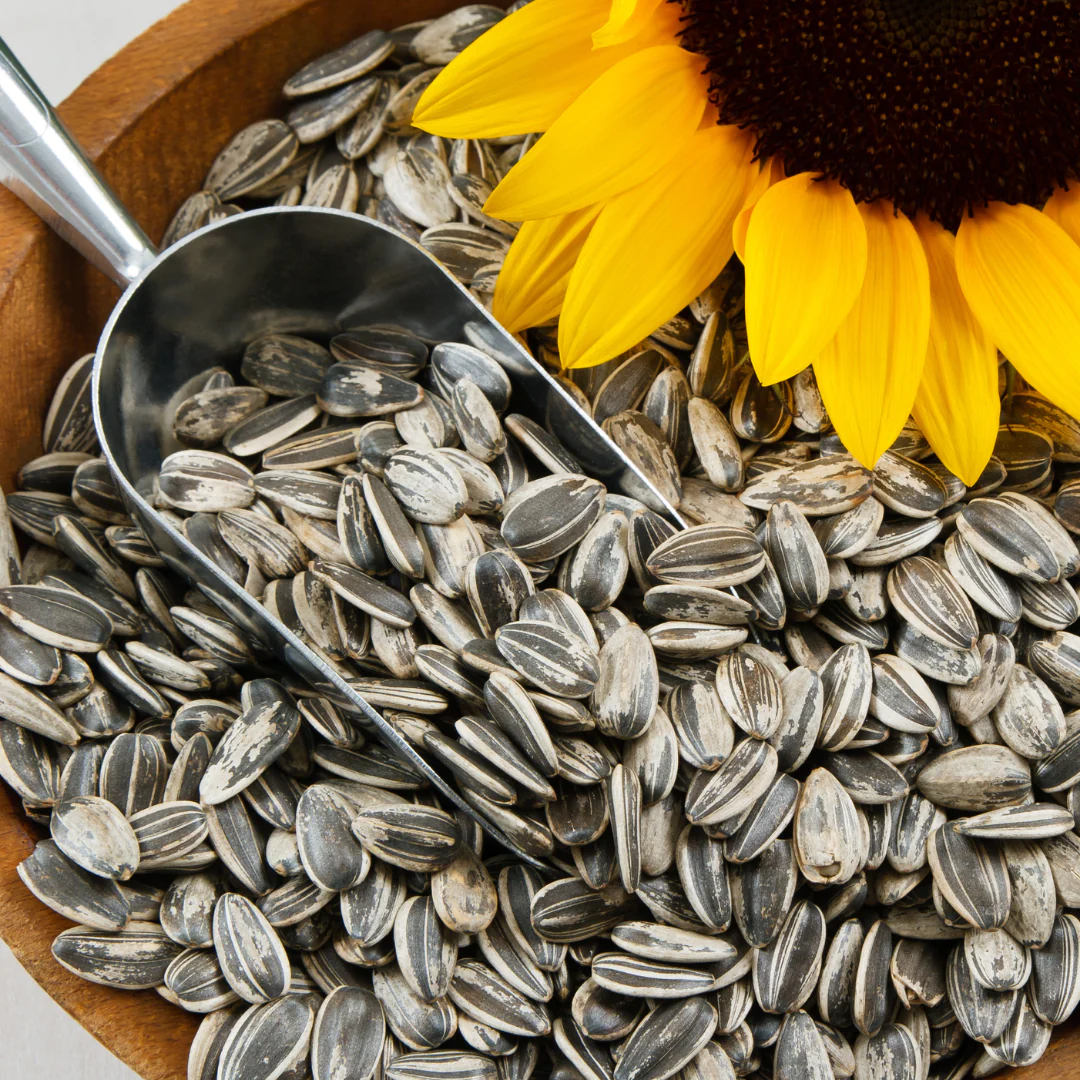
Unshelled sunflower seeds ( Helianthus annuus ) represent a significant commodity within the agricultural and food processing industries. Positioned between primary agricultural production and consumer product manufacturing, these seeds serve as a crucial input for edible oil production, snack food processing, and animal feed formulations. Core performance characteristics revolve around oil content, protein levels, fatty acid profile, and overall seed integrity, directly impacting downstream processing efficiency and final product quality. The industry currently faces challenges related to consistent quality control, minimizing mycotoxin contamination, and optimizing seed dormancy characteristics for storage and processing.
Material Science & Manufacturing
Sunflower seeds, botanically achenes, are composed of approximately 35-50% oil, 20-25% protein, 15-20% carbohydrate (primarily cellulose and hemicellulose in the hull), and 5-10% moisture. The hull, or pericarp, is composed of lignin and cellulose providing structural integrity. Oil composition is dominated by linoleic acid (around 60%), oleic acid (20-40%), and palmitic acid (5-10%), influencing oil stability and nutritional value. Manufacturing begins with field cultivation, focusing on hybrid seed varieties optimized for oil content and disease resistance. Harvesting involves mechanical combine operations, followed by cleaning to remove debris (stalks, leaves, other seeds). Drying is critical, typically achieved through forced-air systems, to reduce moisture content to 8-10% for safe storage, preventing fungal growth and lipid oxidation. Further processing may involve dehulling (splitting the hull) depending on end-use, requiring controlled impact or abrasion. Seed sizing and grading are performed to ensure uniformity. Key parameter control during drying includes temperature (avoiding excessive heat which degrades oil quality) and airflow rates (ensuring even moisture removal). Post-harvest storage demands controlled temperature (below 15°C) and humidity (below 65%) to minimize deterioration.
Performance & Engineering
The performance of unshelled sunflower seeds is critically linked to their physical and mechanical properties. Seed hardness, measured through impact resistance, influences dehulling efficiency and processing damage. Seed density dictates separation efficacy during grading. The hull's tensile strength determines its resistance to cracking during handling and transportation, minimizing seed loss. Environmental resistance is primarily related to moisture content; elevated moisture leads to increased susceptibility to fungal infection (e.g., Aspergillus species producing aflatoxins) and lipid peroxidation. Compliance requirements include adherence to food safety standards (e.g., maximum allowable aflatoxin levels), seed purity regulations (specified minimum germination rates for seed intended for replanting), and labeling regulations (accurate declaration of oil content and nutritional information). Force analysis during dehulling involves understanding the fracture mechanics of the hull; optimal dehulling requires sufficient force to crack the hull without damaging the kernel. Storage stability is governed by reaction kinetics; lipid oxidation (rancidity) is a primary degradation pathway, accelerated by temperature, oxygen exposure, and the presence of metal catalysts.
Technical Specifications
| Oil Content (%) | Protein Content (%) | Moisture Content (%) | Aflatoxin Level (ppb) |
|---|---|---|---|
| 48-52 | 22-26 | 8-10 | < 5 |
| 42-46 (High Oleic) | 20-24 | 7-9 | < 2 |
| 50-55 (Confectionary) | 24-28 | 6-8 | < 1 |
| 40-44 (Bird Seed) | 18-22 | 9-11 | < 10 |
| 45-50 (Oil Production) | 23-27 | 8-10 | < 4 |
| 43-48 (Organic) | 21-25 | 7-9 | < 2 |
Failure Mode & Maintenance
Failure modes in unshelled sunflower seeds relate to deterioration during storage and processing. Common failures include lipid oxidation (rancidity), leading to off-flavors and reduced nutritional value. This is accelerated by high temperatures, oxygen, and light exposure. Fungal contamination, particularly with Aspergillus species, results in aflatoxin production, rendering the seeds unsafe for consumption. Physical damage (cracking, chipping) during handling and processing leads to seed loss and reduced oil yield. Hull integrity failure can compromise storage stability and increase susceptibility to insect infestation. Maintenance involves stringent quality control measures throughout the supply chain. Proper drying and storage conditions (low temperature, low humidity, aeration) are crucial for preventing fungal growth and lipid oxidation. Regular monitoring of aflatoxin levels is essential. Implementing effective pest control measures minimizes insect damage. Seed coatings (e.g., with antifungal agents) can provide an additional layer of protection, although regulatory compliance must be ensured. Implementing a First-In, First-Out (FIFO) inventory system minimizes storage duration and reduces the risk of deterioration.
Industry FAQ
Q: What is the primary factor affecting the oil quality of unshelled sunflower seeds?
A: The primary factor is the fatty acid profile and the degree of oxidation. Higher levels of linoleic acid are more susceptible to oxidation, leading to rancidity. Proper drying, storage, and handling practices are crucial to minimize oxidation.
Q: How are aflatoxin levels monitored and controlled?
A: Aflatoxin levels are typically monitored through HPLC (High-Performance Liquid Chromatography) analysis. Control measures involve proper drying to reduce moisture content, implementing effective pest control, utilizing resistant seed varieties, and employing post-harvest treatments (where permitted by regulations).
Q: What constitutes an acceptable moisture content for long-term storage?
A: An acceptable moisture content for long-term storage is generally considered to be 8-10%. Maintaining this level minimizes fungal growth and lipid oxidation, preserving seed quality.
Q: What is the significance of ‘high oleic’ sunflower seeds?
A: High oleic sunflower seeds contain a significantly higher proportion of oleic acid (typically >70%) compared to standard varieties. This results in improved oil stability, increased shelf life, and better performance in high-heat applications, such as frying.
Q: What impact does seed size and uniformity have on processing efficiency?
A: Seed size and uniformity are crucial for efficient dehulling and oil extraction. Consistent seed size ensures even processing, minimizes damage, and maximizes oil yield. Variability in size can lead to incomplete dehulling and reduced oil extraction rates.
Conclusion
Unshelled sunflower seeds represent a complex agricultural product requiring careful consideration of material science, manufacturing processes, and quality control measures. Maintaining optimal oil content, minimizing aflatoxin contamination, and ensuring appropriate moisture levels are paramount to maximizing value and ensuring food safety. The industry faces ongoing challenges related to improving storage stability and enhancing processing efficiency.
Future advancements will likely focus on developing more disease-resistant seed varieties, improving drying and storage technologies, and implementing real-time monitoring systems for detecting contaminants. Furthermore, research into novel processing techniques, such as supercritical fluid extraction, may lead to increased oil yields and improved product quality. Adherence to international standards is critical for successful trade and market access.
