
Introduction
Toasted sunflower seeds represent a significant sector within the broader snack food industry, characterized by a demand for consistent quality, optimal flavor profiles, and adherence to stringent food safety regulations. These seeds, derived from Helianthus annuus, undergo a controlled roasting process to develop their characteristic taste and texture, becoming a globally traded commodity. This guide provides a comprehensive technical overview for manufacturers of toasted sunflower seeds, detailing material science, production methodologies, performance criteria, potential failure modes, and relevant industry standards. The primary concerns for manufacturers revolve around controlling acrylamide formation during roasting, ensuring consistent kernel integrity, mitigating lipid oxidation, and achieving desired color and flavor development, all while meeting global regulatory requirements. Understanding these factors is crucial for optimizing production efficiency, maximizing product quality, and maintaining a competitive edge.
Material Science & Manufacturing
The raw material, sunflower seeds, comprises approximately 35-45% oil, primarily linoleic acid (a polyunsaturated fatty acid), 20-25% protein, and significant levels of carbohydrates and fiber. Kernel quality is determined by seed size, oil content, moisture content (typically 8-12% pre-roasting), and the presence of hull. The manufacturing process begins with cleaning and grading to remove foreign materials and sort seeds by size. Pre-heating, often employing indirect heat (hot air), reduces moisture content and prepares the seeds for roasting. Roasting itself is a critical step, typically conducted using either batch or continuous roasters. Batch roasters offer greater control but lower throughput; continuous roasters provide high volume processing but require precise parameter control. Key parameters include roasting temperature (typically 120-180°C), roasting time (20-60 minutes, depending on desired color and flavor), and air velocity. Controlling these parameters is vital to minimize acrylamide formation (a potential carcinogen formed from the Maillard reaction between reducing sugars and asparagine) and lipid oxidation (leading to rancidity). Post-roasting processes include cooling (rapid cooling minimizes further cooking), seasoning (salt, spices, flavorings), and packaging (typically in moisture-barrier films to prevent staling and oxidation). Flavor coatings necessitate precise application parameters (coating weight, viscosity, drying temperature) to ensure even distribution and adhesion.
Performance & Engineering
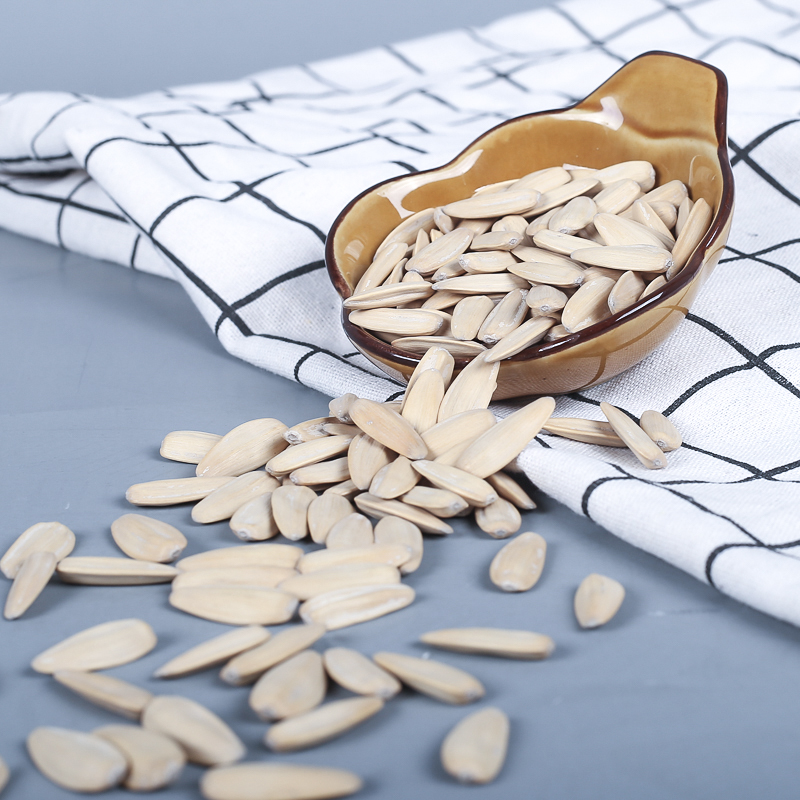
Performance characteristics of toasted sunflower seeds are assessed through several key engineering principles. Moisture content post-roasting is critical, ideally maintained below 3% to inhibit microbial growth and maintain crispness. Water Activity (Aw) is a more precise measure, typically targeted below 0.6. Kernel breakage during processing and handling represents a yield loss and quality defect. Force analysis determines the shell strength (for in-shell seeds) and kernel fracture resistance. Environmental resistance focuses on oxidative stability, assessed by measuring peroxide value (PV) and Anisidine Value (AV) over time. Packaging materials play a crucial role in controlling oxygen exposure and maintaining product quality. Compliance requirements are extensive, encompassing regulations from bodies like the FDA (USA), EFSA (Europe), and local food safety authorities. These regulations dictate permissible acrylamide levels, limits on pesticide residues, and adherence to Good Manufacturing Practices (GMP). Furthermore, packaging materials must comply with regulations regarding food contact materials. Roasting equipment must be engineered for precise temperature control, efficient heat transfer, and minimal kernel damage. Computational Fluid Dynamics (CFD) modeling can optimize roaster design for uniform roasting and reduced energy consumption.
Technical Specifications
| Parameter | Unit | Specification Range | Test Method |
|---|---|---|---|
| Moisture Content (Post-Roast) | % | < 3.0 | Oven Drying (AOAC 925.10) |
| Water Activity (Aw) | - | < 0.6 | Water Activity Meter |
| Oil Content | % | 40 – 50 | Soxhlet Extraction (AOAC 920.39) |
| Acrylamide Content | µg/kg | < 100 (dependent on regulation) | GC-MS (Gas Chromatography-Mass Spectrometry) |
| Peroxide Value (PV) | meq O2/kg | < 5.0 (initial) | Titration (AOCS Cd 8-53) |
| Anisidine Value (AV) | - | < 10 (initial) | Spectrophotometry (AOCS Cd 8-53) |
Failure Mode & Maintenance
Failure modes in toasted sunflower seeds encompass a range of issues. Rancidity develops due to lipid oxidation, manifesting as off-flavors and odors. This is accelerated by exposure to oxygen, light, and elevated temperatures. Kernel cracking during roasting or handling reduces product quality and yield. This can be caused by excessive roasting temperatures, rapid temperature changes, or mechanical damage. Acrylamide formation exceeding regulatory limits poses a food safety concern. Color inconsistency affects consumer appeal and indicates inadequate temperature control during roasting. Staling (loss of crispness) results from moisture regain after roasting, emphasizing the importance of effective packaging. Maintenance of roasting equipment is crucial. Regular cleaning prevents buildup of seed debris and ensures efficient heat transfer. Temperature sensors must be calibrated regularly to maintain accurate process control. Fan motors and belts require periodic inspection and replacement. Preventative maintenance schedules should include lubrication of moving parts and inspection of heating elements. Packaging equipment requires regular cleaning and inspection to prevent seal failures and ensure package integrity. Storage of raw materials and finished products must be controlled to minimize exposure to moisture, pests, and temperature fluctuations.
Industry FAQ
Q: What strategies can be employed to minimize acrylamide formation during the roasting process?
A: Minimizing acrylamide formation requires a multi-faceted approach. Reducing roasting temperature and time, while still achieving desired color and flavor, is paramount. Optimizing the pre-roasting moisture content, typically within the 8-12% range, can also help. The addition of asparaginase (an enzyme that degrades asparagine) during pre-treatment is a potential, though regulated, strategy. Careful selection of sunflower seed varieties with lower asparagine levels is also under investigation.
Q: How can lipid oxidation be effectively controlled to extend shelf life?
A: Lipid oxidation is best controlled through a combination of preventative measures. Utilizing packaging materials with high oxygen barrier properties (e.g., metallized films) is crucial. Adding antioxidants, such as tocopherols (Vitamin E) or rosemary extract, can inhibit oxidation. Storing the product in cool, dark conditions further slows down the oxidation process. Nitrogen flushing of packaging can displace oxygen and enhance shelf life.
Q: What are the key considerations when selecting a roasting system (batch vs. continuous)?
A: Batch roasters offer greater control over process parameters and are suitable for smaller production volumes and specialty products. They allow for fine-tuning of roasting profiles. Continuous roasters are ideal for large-scale production, providing higher throughput and lower labor costs. However, they require more sophisticated control systems to ensure consistent product quality and minimize variability.
Q: What quality control tests are essential for ensuring consistent product quality?
A: Essential quality control tests include moisture content analysis, water activity measurement, oil content determination, acrylamide testing, peroxide value and anisidine value measurements (to assess oxidative stability), and sensory evaluation (taste, aroma, texture). Regular monitoring of these parameters ensures adherence to specifications and identifies potential issues.
Q: How does seed variety impact the final product quality and roasting process?
A: Sunflower seed variety significantly impacts oil content, protein content, and kernel size, all of which influence the roasting process and final product quality. Higher oil content seeds generally roast more evenly. Kernel size affects roasting time and breakage susceptibility. Varieties bred for lower asparagine levels can contribute to lower acrylamide formation.
Conclusion
The production of high-quality toasted sunflower seeds demands a deep understanding of material science, precise process control, and diligent adherence to food safety regulations. Optimizing the roasting process to minimize acrylamide formation and lipid oxidation while achieving the desired color and flavor profile represents a significant technical challenge. Implementing robust quality control procedures, coupled with preventative maintenance of processing equipment, are essential for consistent product quality and maximizing operational efficiency.
Future trends in the industry likely will focus on developing innovative roasting technologies (e.g., microwave or infrared roasting) to improve energy efficiency and reduce acrylamide formation, exploring novel packaging materials with enhanced barrier properties, and utilizing data analytics to optimize process parameters based on real-time monitoring and feedback. Continued research into sunflower seed genetics to develop varieties with superior roasting characteristics will also play a key role in advancing the industry.
