Introduction
Roasted unsalted sunflower seeds represent a significant commodity within the global food industry, serving as both a direct consumer snack and a crucial ingredient in various food processing applications. Their role as an export product necessitates a robust understanding of quality control, logistical considerations, and adherence to international food safety standards. This technical guide provides a comprehensive overview of the sunflower seed roasting process, focusing on the parameters critical to maintaining product integrity, optimizing shelf life, and meeting the stringent demands of international B2B purchasers. Sunflower seeds, Helianthus annuus, are valued for their high oil content, protein levels, and nutritional profile, including Vitamin E and essential fatty acids. The absence of salt in this specific export configuration caters to health-conscious markets and food manufacturers seeking controlled sodium levels in their products. The industry faces core pain points surrounding aflatoxin contamination, rancidity development during storage and transport, and maintaining consistent kernel size and roast uniformity for automated processing by buyers.
Material Science & Manufacturing
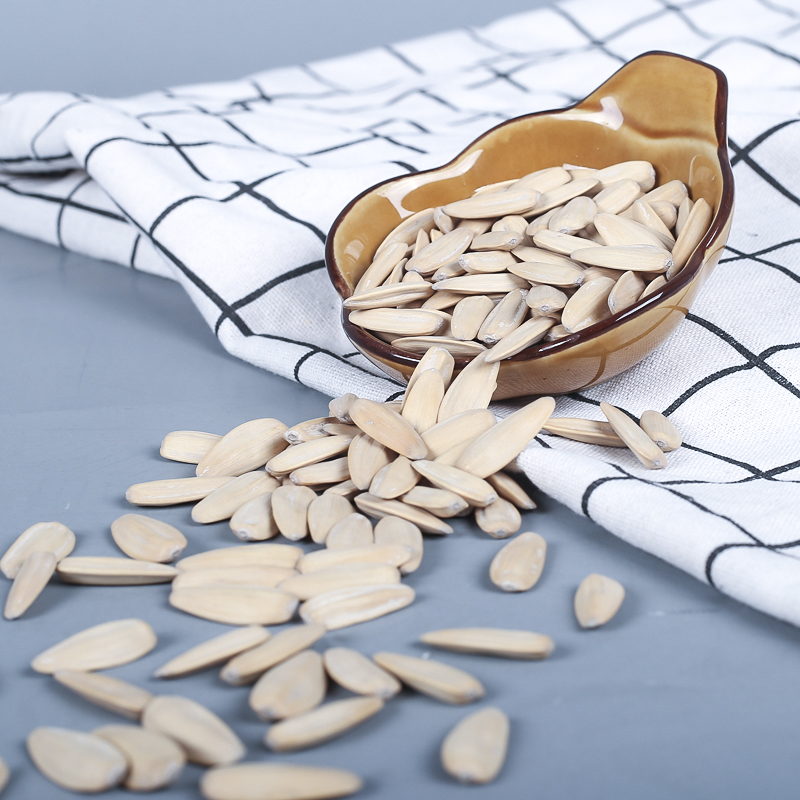
The raw material, sunflower seeds, comprises a hull (pericarp) typically representing 20-30% of the seed's weight, a kernel containing the endosperm, embryo, and seed coat, and a small amount of residual moisture. Kernel oil content typically ranges from 42-58% depending on the variety. Manufacturing begins with seed selection, prioritizing high-oil content varieties (e.g., Peredovik, Pioneer) and screening for foreign matter. Cleaning processes utilize air separation, sieving, and destoning to remove impurities. Roasting is the critical processing step, employing either batch or continuous roasting systems. Batch roasters offer greater control over roast profiles but have lower throughput. Continuous roasters, such as fluid bed or rotary drum systems, are favored for large-scale production. Roast parameters – temperature (typically 120-180°C), duration (15-30 minutes), and airflow – are meticulously controlled to achieve optimal moisture reduction (reducing from ~10% to 2-3%), develop characteristic flavor compounds through Maillard reactions and Strecker degradation, and ensure microbial inactivation. Key parameters include the water activity (Aw) level, which must be below 0.65 to inhibit microbial growth. The physical properties of the seed itself, specifically its thermal conductivity and heat capacity, dictate the roasting process’s efficiency. Careful monitoring of seed temperature, utilizing infrared sensors, is vital to prevent scorching and uneven roasting. Chemical compatibility considerations involve preventing oxidation of unsaturated fatty acids during roasting and subsequent storage, often employing nitrogen flushing during packaging.
Performance & Engineering
Performance is assessed through several key metrics: kernel integrity (percentage of unbroken kernels), moisture content, oil content, free fatty acid (FFA) levels, peroxide value (PV) – indicating oxidation – and aflatoxin contamination. Force analysis is relevant in understanding kernel fracture during handling and processing; shell strength and kernel resilience are critical factors. Environmental resistance focuses on preventing moisture re-absorption during storage and transit, necessitating the use of moisture barrier packaging materials. Compliance requirements are extensive, encompassing food safety regulations in importing countries (e.g., FDA in the US, EFSA in Europe). Aflatoxin limits are particularly stringent, often requiring adherence to parts per billion (ppb) thresholds. The roasting process is engineered to maximize heat transfer efficiency while minimizing oil oxidation. This involves optimizing airflow patterns within the roaster, controlling roasting temperature profiles, and employing appropriate cooling methods to rapidly reduce kernel temperature post-roast. Kernel expansion during roasting must be accounted for in process design to prevent damage to equipment. Functional implementation focuses on ensuring consistent kernel size and shape for automated packaging lines utilized by customers.
Technical Specifications
| Parameter | Unit | Specification | Test Method |
|---|---|---|---|
| Moisture Content | % | ≤ 3.0 | AOAC 925.10 |
| Oil Content | % | ≥ 45.0 | Soxhlet Extraction (AOAC 920.39) |
| Free Fatty Acid (FFA) | % as oleic acid | ≤ 0.5 | Titration (AOCS Cd 3-63) |
| Peroxide Value (PV) | meq O2/kg | ≤ 5.0 | Titration (AOCS Cd 8-53) |
| Aflatoxin B1 | ppb | ≤ 2 | HPLC-FLD (AOAC 999.07) |
| Kernel Size (Average) | mm | 10-12 | Sieve Analysis |
Failure Mode & Maintenance
Failure modes in roasted unsalted sunflower seeds primarily relate to quality degradation during storage and transport. Rancidity, caused by lipid oxidation, is a significant concern, manifested by off-flavors and odors. This is accelerated by exposure to oxygen, light, and elevated temperatures. Aflatoxin contamination can occur post-roast if seeds are exposed to moisture and fungal spores. Physical damage to kernels during handling can lead to breakage and dust formation. Delamination, or separation of the kernel from the hull, can occur due to insufficient roasting or improper cooling. Oxidation is mitigated through packaging with oxygen absorbers and nitrogen flushing. Preventative maintenance of roasting equipment is critical, including regular cleaning to prevent buildup of seed residue and calibration of temperature sensors. Storage facilities must be kept cool, dry, and well-ventilated. Regular monitoring of moisture content, FFA, and peroxide value is essential for early detection of quality degradation. Implementing a First-In, First-Out (FIFO) inventory management system minimizes storage time. Failure analysis involves identifying the root cause of quality defects through laboratory testing and process review. Packaging integrity should be routinely inspected to ensure a proper seal and prevent moisture ingress.
Industry FAQ
Q: What are the critical control points for preventing aflatoxin contamination?
A: The critical control points are raw material sourcing (selecting suppliers with robust quality control), pre-roast cleaning (removing visibly moldy seeds), roasting (achieving sufficient temperature and duration to inactivate aflatoxin-producing fungi), and post-roast storage (preventing moisture re-absorption and fungal growth). Regular testing for aflatoxin levels is paramount.
Q: How does packaging impact the shelf life of roasted sunflower seeds?
A: Packaging is crucial. Moisture barrier materials (e.g., metallized films, high-density polyethylene) are essential to prevent moisture re-absorption. Oxygen absorbers and nitrogen flushing minimize oxidation. Proper sealing is vital to maintain barrier integrity. The type of packaging (e.g., flexible pouches, rigid containers) influences its effectiveness.
Q: What are acceptable levels of FFA and peroxide value for export-grade seeds?
A: While specific limits vary by importing country, generally, FFA should be ≤ 0.5% as oleic acid, and peroxide value should be ≤ 5.0 meq O2/kg. Exceeding these limits indicates significant oxidation and reduced product quality.
Q: What is the optimal roasting profile for maximizing flavor development while minimizing oil oxidation?
A: A multi-stage roasting profile is often employed. A lower temperature initial phase (e.g., 120°C) slowly reduces moisture, followed by a higher temperature phase (e.g., 160-180°C) for flavor development. Rapid cooling immediately after roasting minimizes residual heat and oxidation. Optimizing airflow is also critical.
Q: What analytical methods are used to verify the quality of the exported product?
A: Common analytical methods include moisture content analysis (AOAC 925.10), oil content determination (Soxhlet extraction), FFA analysis (titration), peroxide value measurement (titration), aflatoxin testing (HPLC-FLD), and kernel size analysis (sieve analysis).
Conclusion
The export of roasted unsalted sunflower seeds demands a stringent focus on process control, material science, and adherence to international standards. Maintaining optimal roasting parameters, employing effective packaging solutions, and implementing robust quality control measures are paramount for ensuring product integrity and meeting the expectations of discerning B2B customers. The industry's key challenges center on mitigating aflatoxin contamination and preventing rancidity during storage and transport, necessitating continuous improvement and investment in advanced analytical techniques.
Future trends will likely focus on sustainable sourcing practices, innovative packaging technologies utilizing biodegradable materials, and the development of roasting techniques that further minimize oil oxidation and enhance flavor profiles. Real-time monitoring of critical process parameters using IoT sensors and data analytics will become increasingly important for optimizing efficiency and ensuring consistent product quality. Adopting a proactive approach to food safety and quality assurance is crucial for long-term success in the global sunflower seed market.
