Introduction
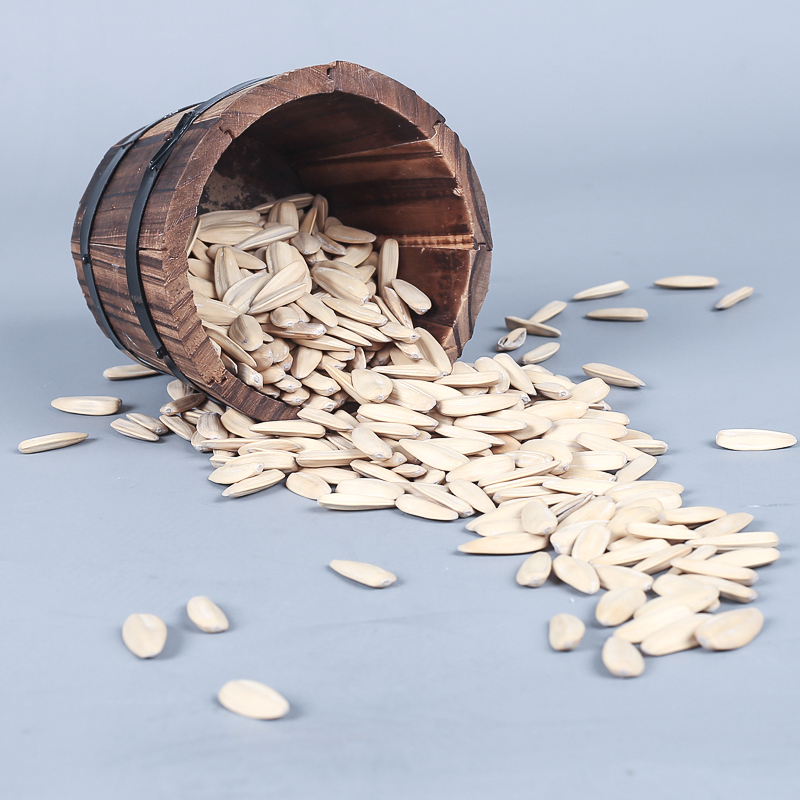
Sunflower seeds, specifically the hulled (no shell) variety, represent a significant commodity in the global agricultural market. This technical guide focuses on the quality control, processing, and preservation aspects crucial for exporters. Sunflower seeds are the fruit of the Helianthus annuus plant and are categorized as oilseeds due to their high lipid content. Their primary applications are direct human consumption as a snack food, confectionary ingredient, and increasingly, as a source of protein and fiber in nutraceutical applications. The international trade of hulled sunflower seeds demands adherence to stringent standards regarding oil content, moisture levels, foreign matter, and microbial contamination. Understanding these parameters, and the impact of post-harvest handling on seed quality, is paramount for successful export. The absence of a shell necessitates more rigorous quality control to prevent damage during handling and maintain product integrity. This guide details the critical factors influencing the export-grade quality of hulled sunflower seeds, covering material science principles, manufacturing protocols, performance indicators, and potential failure modes.
Material Science & Manufacturing
The primary constituents of hulled sunflower seeds are lipids (40-55%), proteins (20-25%), carbohydrates (15-20%), and moisture (7-10%). The lipid fraction comprises primarily linoleic acid (an omega-6 fatty acid), oleic acid (an omega-9 fatty acid), and palmitic acid. Protein content includes essential amino acids contributing to nutritional value. Carbohydrates are primarily starch. Seed coat removal (dehulling) is a critical step, typically achieved through mechanical means employing impact and friction. Dehulling efficiency directly impacts seed damage and the presence of residual shell fragments. Post-dehulling, the seeds undergo cleaning to remove foreign material (straw, stems, dust, and other seeds). Sorting by size and color is frequently employed to achieve uniformity. Drying is a critical processing step to reduce moisture content to below 8%, inhibiting microbial growth and enzymatic activity. Drying methods include ambient air drying, forced-air drying, and vacuum drying. Each method affects seed quality differently; high-temperature drying can lead to lipid oxidation and protein denaturation. The packaging material is a significant factor in maintaining quality during transit. Materials must provide a barrier to moisture, oxygen, and light. Common materials include multi-layer films composed of polyethylene, polypropylene, and aluminum foil. Parameter control during drying – temperature, airflow, and duration – is essential to minimize lipid peroxidation. The raw material quality, influenced by the sunflower variety and growing conditions, dictates the final product characteristics.
Performance & Engineering
The performance of hulled sunflower seeds as an export product is assessed through several key engineering parameters. These include compressive strength (resistance to crushing during handling and transportation), friability (tendency to crumble), oil stability (resistance to rancidity), and water activity (a measure of available water for microbial growth). Compressive strength is directly related to seed density and the integrity of the cotyledons. Higher density seeds generally exhibit greater compressive strength. Friability is minimized through careful control of the drying process, avoiding excessive moisture removal. Oil stability is critical for maintaining product quality during storage and transit. The Peroxide Value (PV) is a common indicator of lipid oxidation, and acceptable values are typically below 10 meq O2/kg. Water activity should be maintained below 0.6 to inhibit microbial growth. Packaging engineering plays a vital role in protecting the seeds from environmental factors. Oxygen permeability of the packaging material must be minimized to prevent lipid oxidation. The mechanical strength of the packaging must withstand the stresses of transportation (vibration, impact, and compression). Compliance requirements include adherence to maximum permissible levels of contaminants (heavy metals, pesticides, and mycotoxins) as stipulated by importing countries. These requirements often necessitate rigorous testing and certification.
Technical Specifications
| Parameter | Unit | Typical Range (Export Grade) | Test Method |
|---|---|---|---|
| Moisture Content | % | ≤ 8.0 | AOAC 925.10 |
| Oil Content | % | 48 - 58 | Soxhlet Extraction (ISO 6593) |
| Protein Content | % | 20 - 26 | Kjeldahl Method (ISO 8968) |
| Foreign Matter | % | ≤ 1.0 | Visual Inspection (ICC 128) |
| Damaged Kernels | % | ≤ 2.0 | Visual Inspection (ICC 130) |
| Peroxide Value (PV) | meq O2/kg | ≤ 10.0 | AOCS Cd 8-53 |
Failure Mode & Maintenance
Hulled sunflower seeds are susceptible to several failure modes that can compromise their export quality. Lipid oxidation, leading to rancidity and off-flavors, is a primary concern. This is accelerated by exposure to oxygen, light, and elevated temperatures. Mechanical damage during handling and transportation can result in kernel breakage and increased friability. Microbial contamination, particularly with molds and yeasts, can produce mycotoxins, rendering the seeds unsuitable for human consumption. Moisture absorption during storage can reactivate enzymatic activity and promote microbial growth. The presence of residual shell fragments can also be considered a failure mode, impacting product appearance and mouthfeel. Preventive maintenance includes proper storage conditions (cool, dry, and dark), use of appropriate packaging materials, and implementation of a robust quality control program. Regular monitoring of moisture content, oil stability (PV), and microbial levels is essential. Proper cleaning and sanitization of processing equipment are crucial to minimize microbial contamination. Packaging should be inspected for integrity before shipment. Damage during transport can be minimized by employing secure packaging and careful handling procedures. Implementing a First-In, First-Out (FIFO) inventory management system helps prevent prolonged storage and minimizes the risk of quality degradation.
Industry FAQ
Q: What is the acceptable level of aflatoxin contamination for export to the European Union?
A: The European Union has stringent regulations regarding aflatoxin contamination. For hulled sunflower seeds, the maximum permissible level is generally 2 parts per billion (ppb) for total aflatoxins (B1, B2, G1, and G2). Regular testing and certification are required to demonstrate compliance with these regulations.
Q: How does the drying method affect the oil quality of the sunflower seeds?
A: High-temperature drying can accelerate lipid oxidation, leading to a decrease in oil quality and the formation of off-flavors. Vacuum drying and controlled forced-air drying at lower temperatures are preferable methods for preserving oil quality. Monitoring the Peroxide Value (PV) after drying is essential.
Q: What packaging materials provide the best barrier properties for long-term storage of hulled sunflower seeds?
A: Multi-layer films incorporating polyethylene, polypropylene, and an aluminum foil layer offer the best barrier properties against moisture, oxygen, and light. The thickness and composition of the film should be tailored to the expected storage duration and environmental conditions.
Q: What are the key differences between high-oleic and standard sunflower seeds in terms of export suitability?
A: High-oleic sunflower seeds contain a higher proportion of oleic acid, which is more resistant to oxidation than linoleic acid. This results in improved oil stability and a longer shelf life, making them more desirable for export markets. However, pricing may be higher.
Q: What role does seed variety play in determining the final product quality and export potential?
A: Seed variety significantly influences oil content, protein content, kernel size, and overall seed quality. Varieties bred for high oil content and large kernel size are generally preferred for export due to their higher economic value and easier processing. The genetic predisposition to certain diseases also impacts quality.
Conclusion
The successful export of hulled sunflower seeds hinges on a comprehensive understanding of the interplay between material science, manufacturing processes, and quality control parameters. Maintaining low moisture content, minimizing lipid oxidation, and preventing microbial contamination are critical for preserving product integrity and meeting international standards. Adherence to established testing methodologies and rigorous quality assurance protocols are essential for ensuring consistent product quality and satisfying the demands of discerning global markets.
Future trends in the industry point toward increased demand for organically grown and non-GMO sunflower seeds. Implementing sustainable agricultural practices and investing in advanced processing technologies will be key to maintaining competitiveness. Furthermore, exploring innovative packaging solutions that further enhance barrier properties and reduce environmental impact will be crucial for long-term success in the global market.
