Introduction
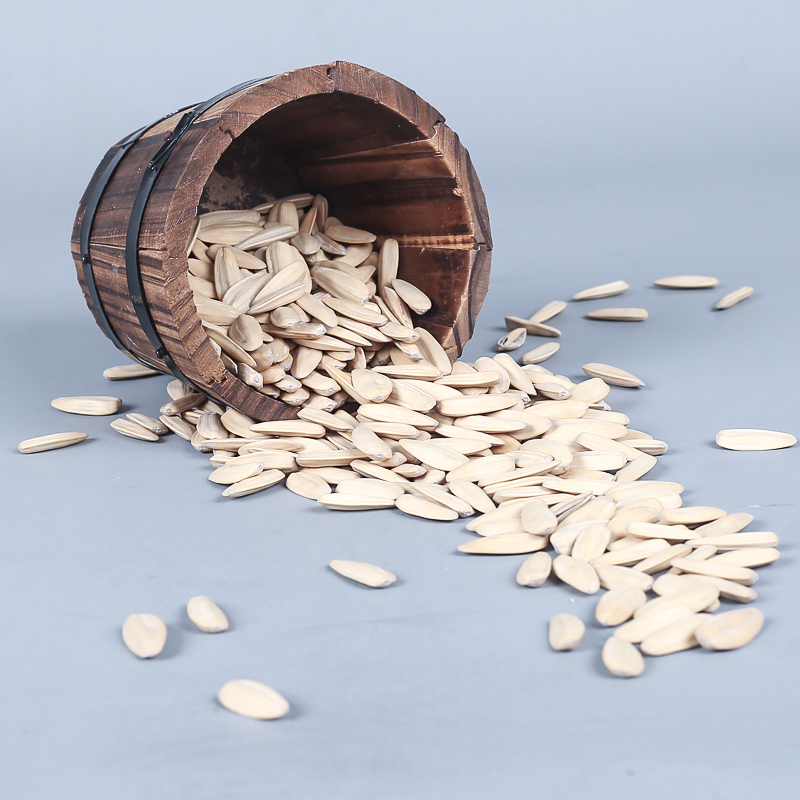
Sunflower seeds, Helianthus annuus, are increasingly utilized in the salad manufacturing industry as a functional ingredient contributing texture, nutritional value, and visual appeal. Their position in the food chain is as a processed agricultural product, moving from primary agricultural production through cleaning, dehulling, grading, and often roasting or seasoning prior to inclusion in salad mixes. Core performance characteristics relevant to salad manufacturers encompass hulling efficiency, kernel integrity (minimizing broken kernels), oil content affecting texture and flavor stability, and microbiological safety. A significant industry pain point revolves around maintaining consistent seed quality – specifically, minimizing foreign material, mycotoxin levels, and rancidity due to oxidation – which directly impacts product shelf life and consumer safety. Another challenge is efficient dehulling to maximize edible kernel yield while minimizing damage, and optimizing the roasting process to achieve desired flavor profiles without compromising nutritional value. The selection of appropriate sunflower seed varieties based on kernel size, oil profile, and hullability is crucial for efficient processing and consistent product quality.
Material Science & Manufacturing
Sunflower seeds comprise three primary components: the hull (approximately 20-50% by weight, depending on variety), the kernel (40-60%), and the embryo (5-10%). The hull is largely cellulose and hemicellulose, providing structural integrity. The kernel is rich in lipids (35-55%), proteins (20-25%), and carbohydrates (10-20%). Lipid composition predominantly features linoleic acid (a polyunsaturated omega-6 fatty acid), with varying levels of oleic acid (a monounsaturated fatty acid) depending on the seed variety. Manufacturing begins with harvesting and drying to reduce moisture content (typically to around 9-10%) to prevent fungal growth and facilitate storage. Dehulling is a critical step, often employing mechanical abrasion or impact methods. Parameter control during dehulling includes impact velocity, clearance between rollers, and feed rate; these parameters directly impact kernel damage and hull separation efficiency. Roasting, frequently performed to enhance flavor and extend shelf life, introduces Maillard reactions and alters lipid oxidation rates. Temperature control during roasting (typically 120-180°C) is paramount to avoid overheating and lipid degradation. Seasoning applications, often involving salt, spices, or flavorings, require uniform coating to ensure consistent taste. Chemical compatibility between seasoning agents and the seed oil is a key consideration to prevent off-flavors or rancidity. Some manufacturers employ nitrogen flushing during packaging to minimize oxygen exposure and further retard oxidation. Variety selection impacts all these processes. High-oleic sunflower seeds, for instance, exhibit greater oxidative stability compared to linoleic varieties, allowing for extended shelf life. Hull thickness and adhesion also significantly influence dehulling efficiency.
Performance & Engineering
The performance of sunflower seeds in salad applications is governed by their physical and textural properties. Force analysis during chewing reveals that kernel hardness and crispness significantly impact the perceived eating experience. A harder kernel requires greater compressive force, while a crisp kernel exhibits a higher fracture resistance. These properties are directly related to oil content, moisture content, and the degree of roasting. Environmental resistance is primarily related to lipid oxidation. Exposure to oxygen, light, and elevated temperatures accelerates oxidation, leading to rancidity and off-flavors. Packaging materials with low oxygen transmission rates (OTR) are crucial for maintaining product quality. Compliance requirements include adherence to food safety standards set by regulatory bodies like the FDA (USA) and EFSA (Europe). Specifically, limits on mycotoxin contamination (aflatoxins, ochratoxins) are strictly enforced. The oil content must also meet labeling requirements. Furthermore, sunflower seeds intended for organic salad mixes must be certified according to organic farming standards. Functional implementation necessitates consideration of seed size and shape to ensure uniform distribution within the salad mix. Excessively large or irregularly shaped seeds can disrupt the visual appeal and textural balance of the salad. The presence of hull fragments must be minimized to avoid a gritty mouthfeel. Surface treatments, like light coating with vegetable oil or a thin film of edible wax, can improve flowability during mixing and reduce dust formation. Engineering considerations for processing equipment include minimizing kernel damage during dehulling and roasting, and ensuring precise temperature control for optimal roasting profiles.
Technical Specifications
| Parameter | Unit | Typical Value (Standard Variety) | Typical Value (High Oleic Variety) |
|---|---|---|---|
| Kernel Moisture Content | % | 8-10 | 8-10 |
| Oil Content (Kernel Basis) | % | 48-52 | 60-70 |
| Linoleic Acid Content (of total oil) | % | 60-70 | <10 |
| Oleic Acid Content (of total oil) | % | 20-30 | 70-80 |
| Kernel Hardness (Compression Force) | N | 50-80 | 60-90 |
| Hull Percentage (of total seed weight) | % | 30-40 | 30-40 |
Failure Mode & Maintenance
Sunflower seeds in salad applications are susceptible to several failure modes. Rancidity, caused by lipid oxidation, is a primary concern, resulting in off-flavors and reduced product quality. This is accelerated by exposure to oxygen, light, and heat. Fatigue cracking of the kernel can occur during processing (dehulling, roasting) or handling, leading to increased breakage and dust formation. Delamination of the kernel, although less common, can occur if the seed is subjected to rapid temperature changes or excessive moisture. Mycotoxin contamination, particularly with aflatoxins, is a significant food safety risk, arising from fungal growth during pre-harvest or storage conditions. Foreign material contamination (stones, stems, soil) can occur during harvesting and processing. Maintenance involves implementing strict quality control procedures throughout the supply chain. Proper storage conditions (cool, dry, dark) are essential to minimize oxidation and fungal growth. Regular monitoring of mycotoxin levels is crucial. Equipment maintenance focuses on ensuring proper calibration and cleaning of dehulling and roasting equipment to minimize kernel damage. Preventive maintenance on packaging machinery ensures proper sealing to maintain a low-oxygen environment. Implementing a robust HACCP (Hazard Analysis and Critical Control Points) plan is essential for identifying and mitigating potential hazards. Routine inspections for foreign material are also vital.
Industry FAQ
Q: What is the impact of different sunflower seed varieties on salad shelf life?
A: High-oleic sunflower seeds significantly extend shelf life due to their greater resistance to oxidation. Linoleic varieties are more prone to rancidity, requiring more stringent packaging and storage conditions. Selecting the appropriate variety depends on the desired shelf life and the storage environment.
Q: How do you ensure consistent kernel size and minimize breakage during processing?
A: Consistent kernel size is achieved through variety selection and precise grading procedures. Minimizing breakage requires careful control of dehulling parameters (impact velocity, clearance) and roasting temperatures. Regular maintenance of processing equipment is also crucial.
Q: What are the acceptable limits for mycotoxin contamination in sunflower seeds used for salad production?
A: Acceptable limits for aflatoxins and ochratoxins are regulated by national and international food safety agencies (e.g., FDA, EFSA). Typically, total aflatoxin levels are limited to 20 ppb, and ochratoxin A levels are limited to 3 ppb. Regular testing is required to ensure compliance.
Q: What packaging materials are recommended to prevent oxidation and maintain seed quality?
A: Packaging materials with low oxygen transmission rates (OTR) and moisture permeability are recommended. Examples include multi-layer films with aluminum foil or EVOH (ethylene vinyl alcohol) barriers. Nitrogen flushing during packaging can further reduce oxygen levels.
Q: What quality control measures are implemented to prevent foreign material contamination?
A: Quality control measures include pre-harvest field inspections, thorough cleaning of raw seeds, optical sorting to remove foreign objects, and metal detection during processing. Regular audits of suppliers and adherence to Good Manufacturing Practices (GMP) are also essential.
Conclusion
Sunflower seeds represent a valuable functional ingredient for salad manufacturers, offering nutritional benefits and textural enhancement. However, maintaining consistent quality requires meticulous attention to material science, manufacturing processes, and quality control procedures. Addressing challenges related to lipid oxidation, kernel damage, and mycotoxin contamination is crucial for ensuring product safety and extending shelf life. Careful variety selection, optimized processing parameters, and appropriate packaging solutions are all key components of a successful sunflower seed program.
Future trends may involve the development of sunflower varieties with even higher oleic acid content and improved hullability, as well as the implementation of advanced processing technologies to minimize kernel damage and enhance flavor profiles. Continued research into the prevention of mycotoxin contamination and the development of sustainable packaging solutions will also be critical for the long-term viability of sunflower seeds in the salad industry.
