Introduction
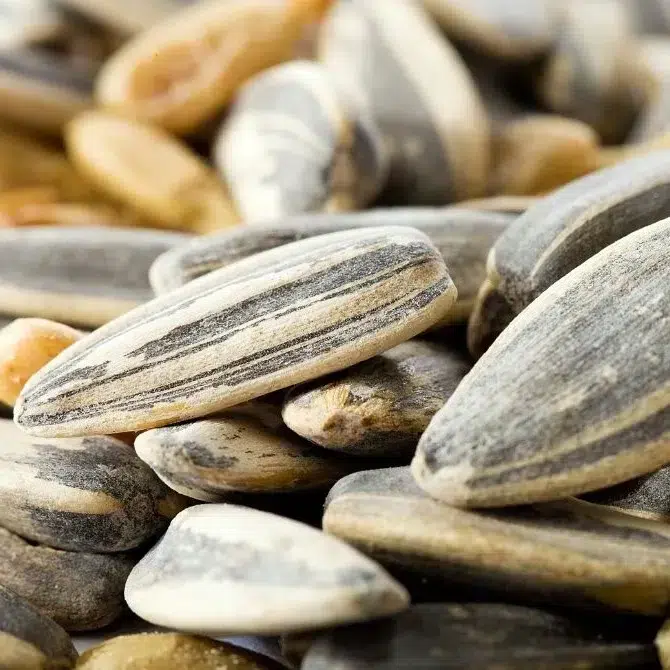
Sunflower seeds, Helianthus annuus, represent a significant agricultural commodity globally, categorized as oilseeds due to their high lipid content. Bulk supply of sunflower seeds serves a diverse range of industries, including human consumption (direct snacking, confectionary inclusions), animal feed production (poultry, livestock), and oil extraction for industrial applications. This technical guide provides an in-depth analysis of sunflower seed characteristics, manufacturing processes impacting quality, performance criteria relevant to various applications, potential failure modes, and industry standards governing production and trade. The primary challenges in bulk sunflower seed supply revolve around maintaining consistent quality—specifically oil content, kernel damage, and foreign matter contamination—across large volumes, coupled with ensuring compliance with phytosanitary regulations and minimizing mycotoxin presence. Understanding these factors is crucial for procurement managers and quality control engineers involved in sourcing and utilizing this raw material.
Material Science & Manufacturing
Sunflower seeds are composed of a hull (pericarp), kernel (cotyledon), and embryo. The hull comprises roughly 20-30% of the seed's weight and is primarily cellulose and lignin. The kernel, the economically valuable portion, contains 50-65% oil (predominantly linoleic acid, with varying levels of oleic acid depending on the variety), 20-25% protein, and 10-15% carbohydrates. Manufacturing begins with field cultivation, focusing on hybrid varieties optimized for oil yield and disease resistance. Harvesting typically occurs when seed moisture content reaches 12-14% to minimize cracking during processing. Post-harvest processing involves cleaning (removal of stems, leaves, dirt), drying (to 8-10% moisture content to inhibit fungal growth and maintain oil stability), dehulling (mechanical removal of the hull – impacting oil yield and seed appearance; oil-type seeds are often sold in-hull), sizing (separation based on kernel size using screens), and optical sorting (removal of discolored or damaged kernels). Critical parameters during drying include temperature control (maximum 45°C to avoid protein denaturation and oil oxidation) and airflow rate. Dehulling efficiency impacts the final oil yield – abrasive dehulling can lead to increased free fatty acid content due to cell rupture. Storage conditions (temperature, humidity, aeration) are paramount to preventing lipid peroxidation and mycotoxin formation. The presence of trace elements like phosphorus, magnesium, and zinc within the kernel contributes to nutritional value and impacts seed density.
Performance & Engineering
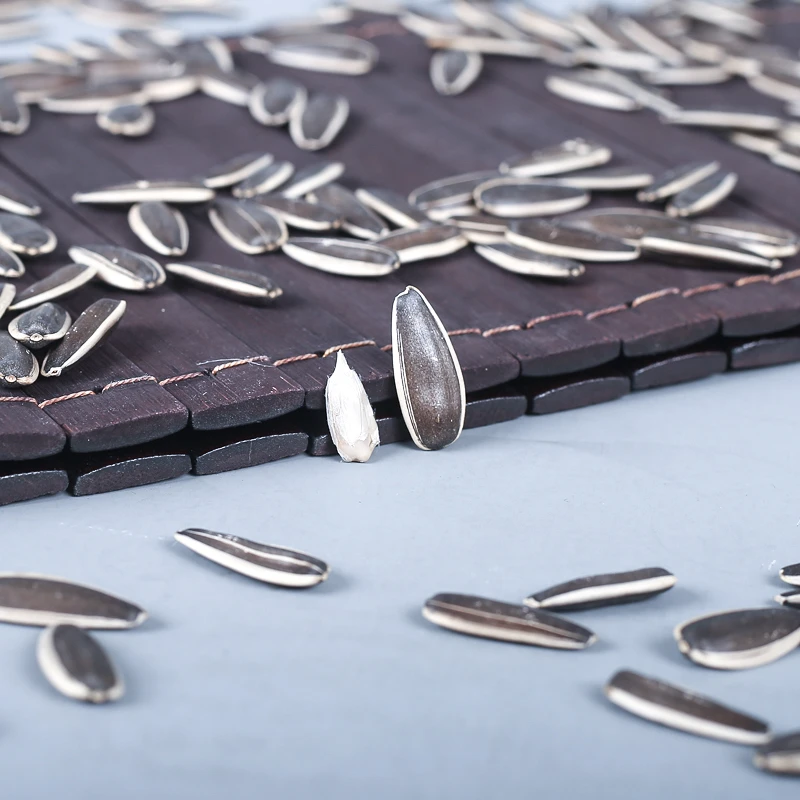
The performance of sunflower seeds is defined by several key parameters, varying with intended application. For human consumption, kernel size, oil content, and absence of hull damage are crucial. Oil content, typically measured using Soxhlet extraction or NMR, directly impacts nutritional value and processing efficiency. Kernel hardness, assessed by compression testing, influences processability during confectionary applications. For animal feed, protein content and digestibility are paramount. Bulk density, determined using a standardized container and weight measurement, is critical for storage and transportation logistics – variations in seed size and hull presence significantly affect density. Resistance to oxidation, measured by peroxide value (PV) and anisidine value (AV), determines shelf life and oil quality. The shear strength of the hull is a critical parameter in dehulling efficiency, influencing the cost-effectiveness of processing. Engineering considerations for bulk handling include minimizing dust generation (potentially explosive hazard) and preventing seed damage during conveying and storage. Regulatory compliance with maximum allowable levels of heavy metals (lead, cadmium) and mycotoxins (aflatoxins) is essential. Moisture content also significantly affects the seeds’ flowability and susceptibility to caking during storage.
Technical Specifications
| Parameter | Typical Range (Oil-Type Seeds) | Typical Range (Confectionery Seeds) | Test Method |
|---|---|---|---|
| Oil Content (%) | 42-58 | >50 | Soxhlet Extraction (AOCS Official Method) |
| Protein Content (%) | 18-25 | 20-28 | Kjeldahl Method (AOCS Official Method) |
| Moisture Content (%) | <10 | <8 | Oven Drying Method (AOCS Official Method) |
| Kernel Damage (%) | <5 | <2 | Visual Inspection & Seed Counter |
| Foreign Matter (%) | <1 | <0.5 | Visual Inspection & Seed Separator |
| Free Fatty Acids (as oleic acid) (%) | <1.5 | <1.0 | Titration Method (AOCS Official Method) |
Failure Mode & Maintenance
Sunflower seeds are susceptible to several failure modes during storage and handling. Lipid peroxidation, driven by exposure to oxygen, light, and elevated temperatures, leads to rancidity (off-flavor) and reduced oil quality. Mycotoxin contamination, particularly aflatoxins produced by Aspergillus species, is a significant safety concern, especially in humid climates. Physical damage (cracking, chipping) during handling or processing reduces seed quality and increases susceptibility to insect infestation. Insect infestation (e.g., storage beetles) can lead to significant losses and contamination. Hygroscopic nature of seeds can lead to moisture absorption, resulting in caking, mold growth and reduced shelf life. Maintenance strategies include proper storage in cool, dry, well-ventilated facilities. Regularly monitoring moisture content and temperature is crucial. Implementing an effective pest control program is essential. Periodic testing for mycotoxins and peroxide value is recommended. Appropriate packaging (moisture-barrier bags) can extend shelf life. First-in, first-out (FIFO) inventory management minimizes the duration of storage. Preventive maintenance on processing equipment (dehullers, sorters) reduces mechanical damage.
Industry FAQ
Q: What is the acceptable level of aflatoxin contamination in sunflower seeds destined for human consumption in the EU?
A: The European Union's regulation (EC) No 1881/2006 sets a maximum level of 2.0 micrograms per kilogram (µg/kg) for total aflatoxins (B1, B2, G1, G2) in sunflower seeds intended for direct human consumption. Compliance requires regular testing using validated analytical methods, typically HPLC with fluorescence detection.
Q: How does the hull percentage affect the oil yield and overall price of sunflower seeds?
A: Higher hull percentages generally result in lower oil yields, as the hull itself contains minimal oil. Confectionery seeds, which are typically hull-on, command a higher price due to their appearance and suitability for direct consumption. Oil-type seeds, often dehulled, are priced based on oil content and quality. The cost of dehulling must be factored into the overall economic assessment.
Q: What methods are used to determine the viability and germination rate of sunflower seeds for agricultural purposes?
A: Germination rate is assessed using a standard germination test, involving placing a defined number of seeds on moist filter paper or in a germination tray under controlled temperature and humidity conditions. Viability is determined by tetrazolium testing, which stains live cells red, allowing for differentiation between viable and non-viable seeds. Both tests are conducted according to ISTA (International Seed Testing Association) rules.
Q: What are the key differences between high-oleic and linoleic sunflower oil, and how do these differences impact the seed’s suitability for different applications?
A: High-oleic sunflower oil contains a higher proportion of oleic acid (typically >70%), making it more stable to oxidation and suitable for frying and high-temperature applications. Linoleic sunflower oil has a higher linoleic acid content, making it valuable for nutritional purposes but less stable. Seed varieties are specifically bred to produce oils with these different fatty acid profiles.
Q: How is the presence of genetically modified (GM) sunflower seeds regulated, and what documentation is required for international trade?
A: Regulations regarding GM sunflower seeds vary significantly by country. Many countries require labeling of GM foods, and some prohibit the import of GM seeds altogether. Documentation typically includes a certificate of origin, a statement confirming the absence of GM material (or disclosure if present), and results of PCR testing to verify the absence/presence of specific GM traits.
Conclusion
Sunflower seeds remain a globally significant oilseed crop, with bulk supply chains demanding rigorous quality control and adherence to stringent standards. Maintaining optimal oil content, minimizing kernel damage, preventing mycotoxin contamination, and ensuring compliance with international regulations are critical considerations for both suppliers and purchasers. Understanding the material science of seed composition, the nuances of manufacturing processes impacting quality, and the potential failure modes inherent in storage and handling is essential for maximizing value and minimizing risk.
Future trends will likely focus on breeding for improved oil quality (increased oleic acid content, reduced saturated fat), enhanced disease resistance, and optimized agronomic traits. Advancements in optical sorting technologies will enable more efficient removal of defective seeds. Furthermore, sustainable agricultural practices and traceability systems will become increasingly important to meet consumer demand for environmentally responsible sourcing. The ability to consistently deliver high-quality sunflower seeds will be a key differentiator in the competitive global market.
