Introduction
Sunflower seeds, Helianthus annuus, represent a significant commodity in the global food and oilseed market. Online factories specializing in their procurement, processing, and distribution form a crucial component of the agricultural supply chain. This technical guide provides a comprehensive overview of sunflower seed characteristics, manufacturing processes involved in their preparation for market, key performance indicators relevant to quality and safety, potential failure modes during processing and storage, and applicable industry standards. The increasing demand for readily available, high-quality sunflower seeds via online platforms necessitates a rigorous understanding of the underlying science and engineering principles governing their production. Current industry pain points revolve around maintaining consistent seed quality across varying agricultural yields, ensuring effective de-hulling and cleaning processes, minimizing lipid oxidation during storage, and adhering to increasingly stringent food safety regulations. This guide is intended for procurement managers, quality control engineers, food scientists, and facility operators involved in the sunflower seed industry.
Material Science & Manufacturing
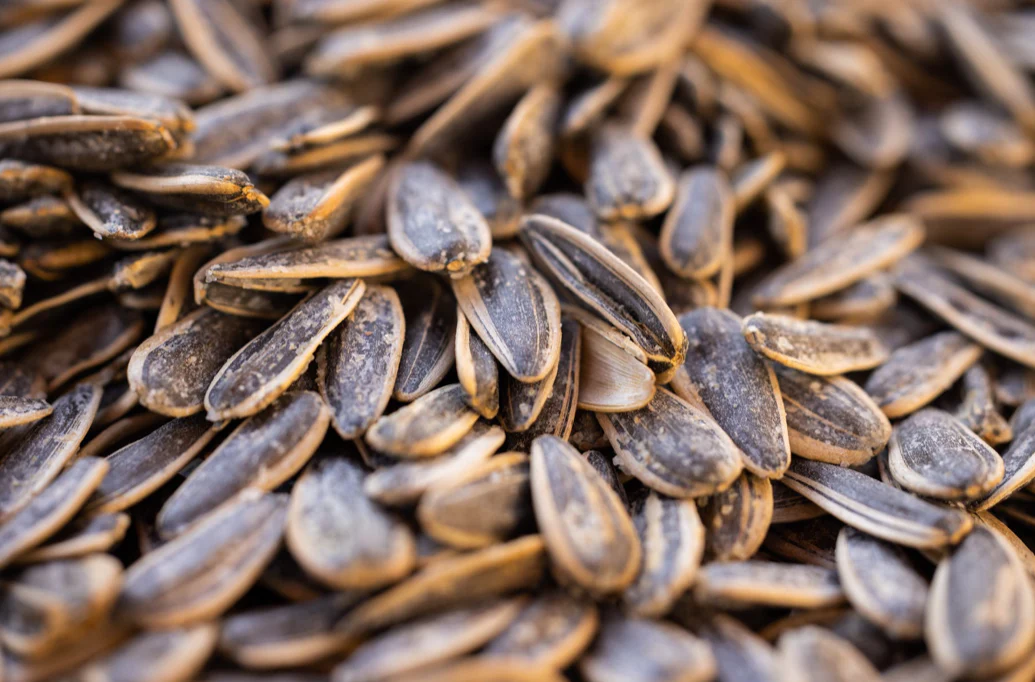
Sunflower seeds are comprised of several key components influencing their processing and final quality: the kernel (cotyledon), hull (pericarp), and embryonic root. The kernel consists primarily of lipids (40-55%), proteins (18-25%), carbohydrates (15-20%), and fiber (5-10%). Lipid composition varies by variety but predominantly includes linoleic acid (around 60%), oleic acid (around 20-40%), and palmitic acid. The hull provides physical protection and contributes to fiber content. Manufacturing begins with harvesting, typically via combine harvesters. De-hulling is a critical step, often employing impact and friction methods. Seed cleaning removes foreign material (stalks, leaves, dirt) using screens, aspirators, and gravity separators. Drying is crucial to reduce moisture content to around 8-10% to prevent mold growth and lipid oxidation. This is commonly achieved using forced-air dryers, controlling temperature and airflow to avoid kernel damage. Further processing may include sizing (grading by kernel size) and coating (e.g., with salt or flavorings). Key parameter control focuses on maintaining hull damage below 5% during de-hulling, achieving uniform moisture content during drying (±1%), and minimizing kernel breakage during cleaning and sorting. Raw material quality, particularly initial seed moisture content and presence of contaminants, significantly influences processing efficiency and final product quality. Seed varieties differ significantly in hull tightness; tighter hulls require more aggressive de-hulling forces, increasing kernel damage risk.
Performance & Engineering
Performance evaluation centers around key indicators such as oil yield, protein content, moisture content, free fatty acid (FFA) content, peroxide value (PV), and hulling rate. Oil yield is directly related to lipid content and extraction efficiency. Protein content impacts nutritional value and is often a specification for animal feed applications. Moisture content is critical for storage stability; elevated levels promote microbial growth and lipid oxidation. FFA and PV are measures of lipid degradation; high values indicate rancidity and reduced oil quality. Hulling rate reflects processing efficiency and impacts the proportion of kernel recovered. Engineering considerations include material selection for processing equipment to minimize abrasion and contamination (typically stainless steel). Force analysis is crucial in de-hulling to optimize impact energy and minimize kernel damage. Environmental resistance considerations include dust control measures to prevent explosions in drying and cleaning facilities. Compliance requirements address food safety (HACCP, GMP) and traceability (ensuring origin and processing history). Proper ventilation and temperature control are essential to prevent condensation and mold growth in storage facilities. The design of drying systems must account for seed bed porosity and airflow resistance to achieve uniform drying without overheating.
Technical Specifications
| Parameter | Unit | Typical Value (Oilseed Variety) | Typical Value (Confectionery Variety) |
|---|---|---|---|
| Oil Content | % (dry basis) | 48-55 | 40-45 |
| Protein Content | % (dry basis) | 20-24 | 22-26 |
| Moisture Content (Storage) | % | ≤ 8.5 | ≤ 8.0 |
| Free Fatty Acid (FFA) | % (oleic acid basis) | ≤ 1.0 | ≤ 0.5 |
| Peroxide Value (PV) | meq O2/kg | ≤ 5.0 | ≤ 3.0 |
| Kernel Size (Diameter) | mm | 10-16 | 16-20 |
Failure Mode & Maintenance
Common failure modes include kernel cracking during de-hulling, hull fragments remaining after cleaning, lipid oxidation resulting in rancidity, and microbial contamination (mold growth). Kernel cracking reduces yield and quality. Residual hull fragments impact taste and appearance. Lipid oxidation is accelerated by high temperatures, moisture, and exposure to oxygen. Microbial contamination poses a food safety risk. Fatigue cracking in processing equipment (e.g., de-hullers, screens) can lead to downtime and product contamination. Delamination of coatings can occur due to inadequate adhesion or exposure to moisture. Oxidation of metallic components in processing equipment can introduce metallic contaminants. Preventative maintenance includes regular inspection and replacement of worn parts (screens, impact plates), lubrication of moving components, cleaning of dust collection systems, and monitoring of dryer temperatures and airflow. Storage facilities should be inspected regularly for leaks, pests, and temperature fluctuations. Lipid oxidation can be minimized by storing seeds in airtight containers under nitrogen atmosphere at low temperatures (≤ 10°C). Regular quality control testing (FFA, PV, moisture content) is essential to detect and address potential issues before they impact product quality. Proper sanitation procedures are critical to prevent microbial contamination.
Industry FAQ
Q: What are the critical factors influencing sunflower oil quality, and how are they monitored during online factory processing?
A: Sunflower oil quality is primarily determined by fatty acid composition, peroxide value, and free fatty acid content. We monitor fatty acid profiles via gas chromatography, ensuring compliance with customer specifications. Peroxide value and free fatty acid content are regularly measured using standardized wet chemistry methods, with strict limits enforced to prevent rancidity. We also meticulously control processing temperatures and exposure to oxygen to minimize lipid oxidation, employing nitrogen flushing in storage vessels.
Q: How do you ensure traceability of sunflower seeds from origin to delivery for online orders?
A: We implement a comprehensive traceability system leveraging lot numbers assigned at the point of origin (farm). Each processing batch receives a unique identifier linked to the originating lot. This information is maintained throughout the entire process—de-hulling, cleaning, drying, and packaging—and is accessible via barcode scanning. This allows us to track the complete history of each seed lot, facilitating rapid recall if necessary and assuring customers of product authenticity.
Q: What measures are taken to prevent foreign material contamination during the online factory’s processing and packaging stages?
A: We employ a multi-stage cleaning process involving screens, aspirators, gravity separators, and optical sorting technology to remove foreign material. Processing equipment is constructed from food-grade stainless steel and undergoes regular sanitation. Packaging lines are enclosed and equipped with metal detectors to identify and reject any contaminated products. Rigorous quality control inspections are conducted at each stage to ensure compliance with food safety standards.
Q: What are the primary challenges associated with maintaining consistent seed quality when sourcing from diverse agricultural regions?
A: Variability in climate, soil conditions, and farming practices across different regions leads to variations in seed size, oil content, and moisture content. We mitigate this by establishing long-term relationships with vetted suppliers, implementing stringent quality control criteria for incoming raw materials, and utilizing blending strategies to achieve consistent product specifications. We also provide farmers with guidance on best agricultural practices to improve seed quality.
Q: How does your online factory address the risk of aflatoxin contamination in sunflower seeds?
A: Aflatoxin contamination is a serious concern. We implement a comprehensive risk management program, starting with sourcing seeds from regions with low aflatoxin prevalence. We conduct regular testing of raw materials and finished products using ELISA (Enzyme-Linked Immunosorbent Assay) to detect aflatoxins. Strict quality control procedures, including proper drying and storage, are implemented to minimize the growth of aflatoxin-producing fungi. Any contaminated lots are immediately rejected and removed from the supply chain.
Conclusion
The successful operation of sunflower seed buy online factories relies on a deep understanding of the interplay between material science, engineering principles, and stringent quality control measures. Effective de-hulling, drying, and cleaning processes are critical to maximizing yield and minimizing losses. Maintaining optimal storage conditions is paramount to prevent lipid oxidation and microbial contamination. By adhering to industry standards and implementing robust traceability systems, these factories can ensure the delivery of safe, high-quality sunflower seeds to consumers.
Future advancements in sunflower seed processing are likely to focus on optimizing de-hulling efficiency through advanced impact technologies, implementing real-time monitoring of seed quality parameters using spectroscopic techniques, and developing sustainable packaging materials to reduce environmental impact. Continued investment in research and development is crucial to address evolving consumer demands and regulatory requirements within the dynamic sunflower seed market.
