Introduction
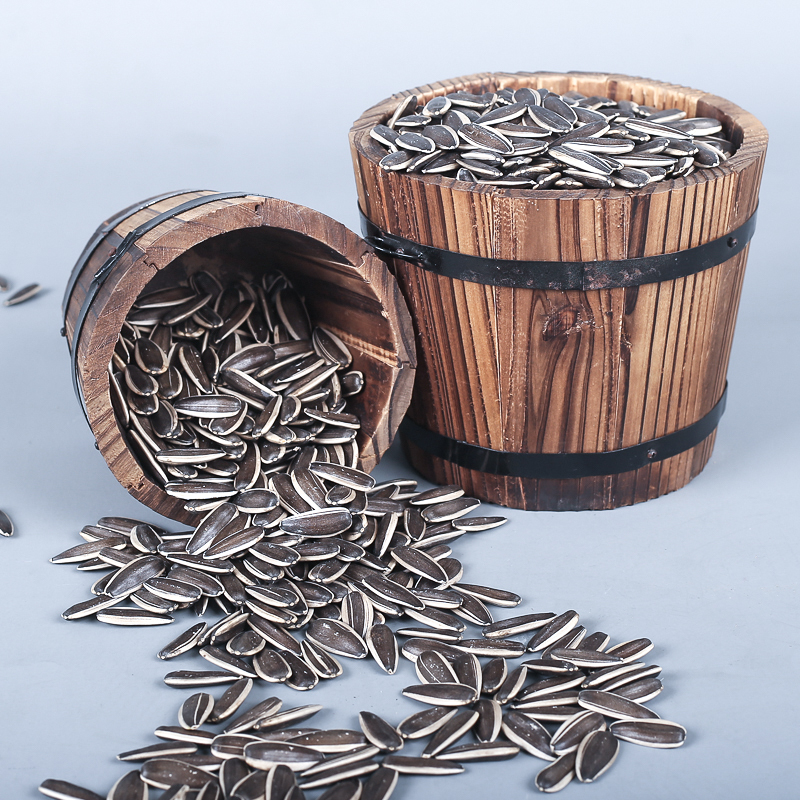
Sunflower seeds, Helianthus annuus, represent a significant commodity in the global agricultural market, particularly for online export. This technical guide details the critical considerations for exporters specializing in sunflower seeds, focusing on quality control, storage, logistical aspects, and adherence to international standards. Sunflower seeds are broadly categorized as confectionary (in-shell or hulled for direct consumption) and oilseed (primarily for oil extraction). The success of online export hinges on maintaining seed viability, minimizing damage during transport, and fulfilling stringent phytosanitary requirements. This document addresses these challenges from a material science and logistical engineering perspective, positioning sunflower seed exportation within the larger context of global food supply chains. The core performance metrics – oil content, protein levels, moisture content, and freedom from contaminants – dictate market value and customer satisfaction.
Material Science & Manufacturing
Sunflower seeds are comprised primarily of lipid (oil) content (35-58%), protein (18-25%), carbohydrates (15-20%), and fiber (around 10%). The seed coat, or hull, is composed of cellulose and lignin, providing physical protection. Seed maturity significantly influences oil content and protein profile. Manufacturing processes relevant to export involve cleaning, drying, sizing (grading), and packaging. Drying is crucial; moisture content must be reduced to 8-10% to prevent fungal growth and aflatoxin contamination during storage and transport. Drying methods include forced-air drying, utilizing controlled temperature and airflow to minimize protein denaturation and lipid oxidation. Grading separates seeds by size and density, ensuring uniformity. Packaging typically employs multi-layer polyethylene or polypropylene bags, sometimes with inner liners containing oxygen absorbers and desiccants. Control parameters during drying are critical: temperature (not exceeding 60°C to prevent oil degradation), airflow rate, and drying time. Oil quality, as measured by fatty acid composition (oleic, linoleic, palmitic acids) and peroxide value (an indicator of oxidation), is heavily influenced by drying conditions. Hull strength is also a key parameter; brittle hulls lead to increased damage during handling. Storage facilities must maintain low humidity and temperature to retard lipid peroxidation and preserve seed viability. Pre-treatment with food-grade antimicrobial agents may be considered, contingent upon regulatory approvals.

Performance & Engineering
The performance of sunflower seeds during export is dictated by their ability to withstand logistical stresses – vibration, impact, compression, and temperature fluctuations. Force analysis reveals that seeds exhibit brittle fracture behavior, making them susceptible to cracking under localized stress. Packaging design must incorporate cushioning materials to absorb impact forces during handling and transportation. Environmental resistance is paramount; seeds are vulnerable to moisture uptake, leading to fungal growth and aflatoxin production. Hermetic packaging, coupled with desiccants, minimizes moisture ingress. Temperature control during transport is also vital; prolonged exposure to high temperatures accelerates lipid oxidation and reduces seed viability. Compliance requirements include adherence to phytosanitary regulations (ISPM 15 for wood packaging materials) and food safety standards (e.g., maximum allowable levels of aflatoxins). Structural integrity of packaging is engineered to withstand stacking loads during containerization. Container loading patterns are optimized to distribute weight evenly and minimize compression forces on lower layers of bagged seeds. Furthermore, proper ventilation within containers is crucial to prevent condensation buildup. Simulation modeling, using finite element analysis (FEA), can be employed to assess packaging performance under various loading and environmental conditions.
Technical Specifications
| Parameter | Confectionary Sunflower Seeds | Oilseed Sunflower Seeds | Unit |
|---|---|---|---|
| Oil Content (Dry Basis) | 40-50 | 45-58 | % |
| Protein Content (Dry Basis) | 20-25 | 18-23 | % |
| Moisture Content | 8-10 | 8-10 | % |
| Kernel Damage (Broken Kernels) | < 2 | < 5 | % |
| Foreign Matter | < 1 | < 1 | % |
| Aflatoxin B1 (Maximum Allowable) | 2 ppb | 2 ppb | parts per billion |
Failure Mode & Maintenance
Common failure modes for exported sunflower seeds include: 1) Lipid Oxidation & Rancidity: Caused by exposure to oxygen, light, and elevated temperatures, leading to off-flavors and reduced nutritional value. Mitigation: Hermetic packaging, nitrogen flushing, antioxidant addition (within regulatory limits). 2) Fungal Contamination & Aflatoxin Production: Favored by high moisture content and inadequate storage conditions. Mitigation: Proper drying, hermetic storage, antifungal treatments (approved for food use). 3) Physical Damage (Cracking, Abrasion): Resulting from improper handling, inadequate packaging, or excessive vibration during transport. Mitigation: Robust packaging, cushioning materials, optimized loading procedures. 4) Insect Infestation: Occurring during storage or transport. Mitigation: Insecticide treatment (approved for food use, adherence to maximum residue limits), controlled atmosphere storage. 5) Germination Loss: Due to prolonged storage or adverse environmental conditions. Mitigation: Maintaining optimal storage temperature and humidity, ensuring seed viability testing before export. Maintenance involves regular monitoring of storage conditions (temperature, humidity, CO2 levels), periodic seed quality testing (oil content, protein content, aflatoxin levels), and prompt corrective action upon detection of any deviations from specifications. A comprehensive quality control program, incorporating HACCP principles, is essential.
Industry FAQ
Q: What is the acceptable level of moisture content for sunflower seeds intended for long-term storage during export?
A: The acceptable moisture content for long-term storage is consistently between 8% and 10%. Exceeding this range dramatically increases the risk of fungal growth, particularly Aspergillus flavus, which produces aflatoxins. Monitoring moisture content during drying and throughout storage is critical. Regular testing using calibrated moisture meters is recommended, and adjustments to drying procedures should be made if levels exceed the specified range.
Q: How do I ensure compliance with international phytosanitary regulations (ISPM 15) regarding wood packaging?
A: ISPM 15 mandates that all wood packaging materials (pallets, crates, etc.) used in international trade must be treated and marked to prevent the spread of pests. Acceptable treatment methods include heat treatment (HT) and fumigation with methyl bromide (MB), though MB is being phased out due to environmental concerns. Wood packaging must bear a visible and durable mark indicating the treatment type and the country of origin.
Q: What are the key considerations for selecting appropriate packaging materials for sunflower seeds to prevent lipid oxidation?
A: Packaging materials should provide a barrier to oxygen, light, and moisture. Multi-layer polyethylene or polypropylene bags with an inner liner containing oxygen absorbers are commonly used. The use of metallized films or aluminum foil layers can further enhance the barrier properties. Vacuum packaging or nitrogen flushing can also reduce oxygen levels within the package. Material thickness and seal integrity are crucial to prevent oxygen permeation.
Q: What analytical methods are used to assess the quality of sunflower seeds before export, specifically regarding oil content and aflatoxin levels?
A: Oil content is typically determined using Soxhlet extraction or near-infrared (NIR) spectroscopy. Aflatoxin levels are quantified using high-performance liquid chromatography (HPLC) with fluorescence detection. These analyses should be performed by accredited laboratories following validated methods. Regular quality control testing is essential to ensure compliance with buyer specifications and regulatory standards.
Q: What is the impact of temperature fluctuations during transport on the quality of sunflower seeds, and how can this be mitigated?
A: Temperature fluctuations can accelerate lipid oxidation, reduce seed viability, and promote moisture condensation. Mitigation strategies include utilizing refrigerated containers ("reefers") to maintain a consistent temperature throughout transport, proper insulation of containers, and minimizing exposure to direct sunlight. Real-time temperature monitoring devices can provide valuable data to ensure temperature control is maintained.
Conclusion
Sunflower seed exportation requires a nuanced understanding of both the material science governing seed quality and the logistical engineering principles necessary for safe and efficient transport. Maintaining optimal moisture content, preventing lipid oxidation, and adhering to stringent phytosanitary regulations are paramount. A comprehensive quality control program, encompassing regular testing, robust packaging, and meticulous monitoring of storage and transport conditions, is essential for success in the global market.
Future trends in sunflower seed export will likely focus on sustainable packaging materials, improved traceability systems utilizing blockchain technology, and the development of seed varieties with enhanced oil content and improved storage characteristics. Furthermore, increased consumer demand for non-GMO sunflower seeds will necessitate robust supply chain verification procedures. Adopting these advancements will be crucial for exporters to maintain a competitive edge and meet evolving market demands.
